At the Edge of the Sky: Notes from Ladakh
Ladakh - India's northernmost province - is famously referred to as the Land of High Passes. Sandwiched between Kashmir to its left and Aksai Chin to its right, it boasts some of the nation's harshest terrains, a valiant history and a remarkable cultural blend. Despite the unforgiving geography, there are perhaps very few places that can match the scenic grandeur of the ever-changing landscapes that it cradles. I was finally able to plan a visit to Ladakh in the Summer of '26. This was a family tour after a hiatus, so it was all the more special! We booked a package through NatureWings, a travel agency based out of Kolkata.
The plan was to enter Ladakh via the Srinagar route, as it is considered to be both more worthwhile and constitutes a shorter journey. This was one of my longer trips of late, spanning around nine days. Nine days felt ambitious on paper - but Ladakh has a way of justifying every hour, as I would soon realize.
Entering the Paradise on Earth: Srinagar exploration
Our journey started on 23rd May. While I was to travel from Chennai (the polar opposite to Srinagar), my parents were slated to start from Kolkata. We eventually met in Delhi and had a flight together towards Srinagar.
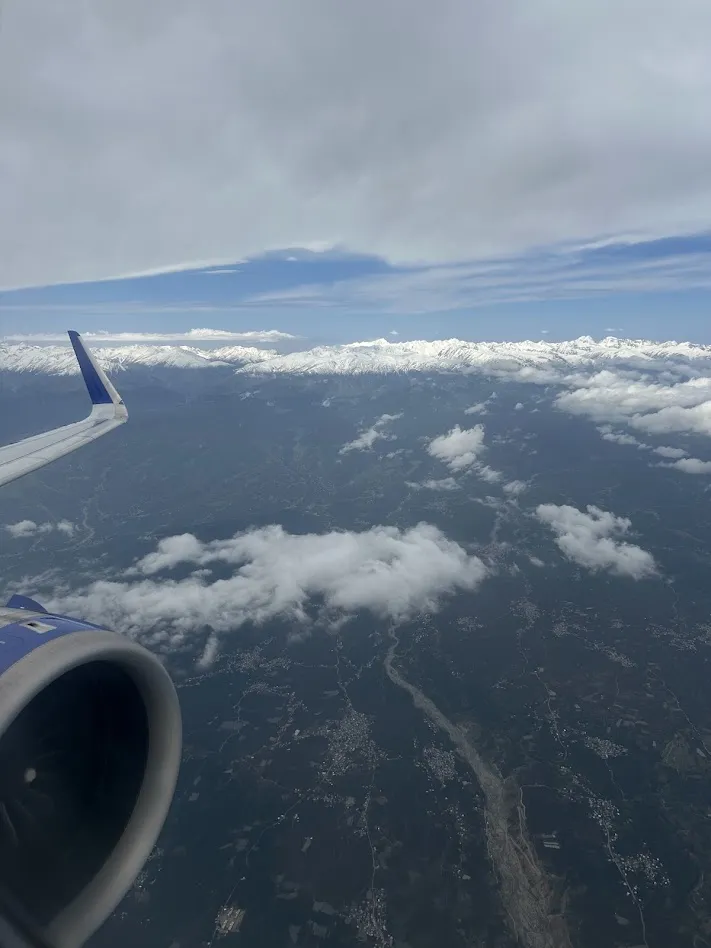
The IndiGo flight we boarded had a halt at Jammu airport. We sat through the break and experienced the strong security measures firsthand. It was also time to bid goodbye to prepaid SIM(s) as they do not work in J&K/Ladakh. Soon after taking off from Jammu, the alpine landscape of Kashmir allures the eye from above; almost as if it is some form of a divine welcome to the 'paradise on earth'. The Himalayan ranges are clearly visible in the distance, towering over the city of Srinagar from afar.
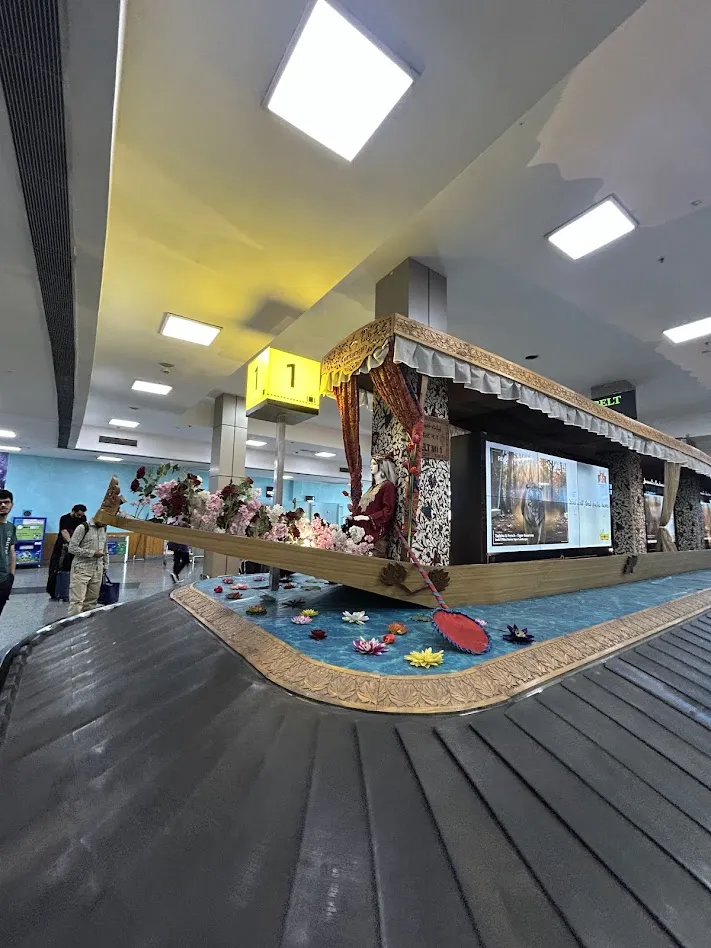
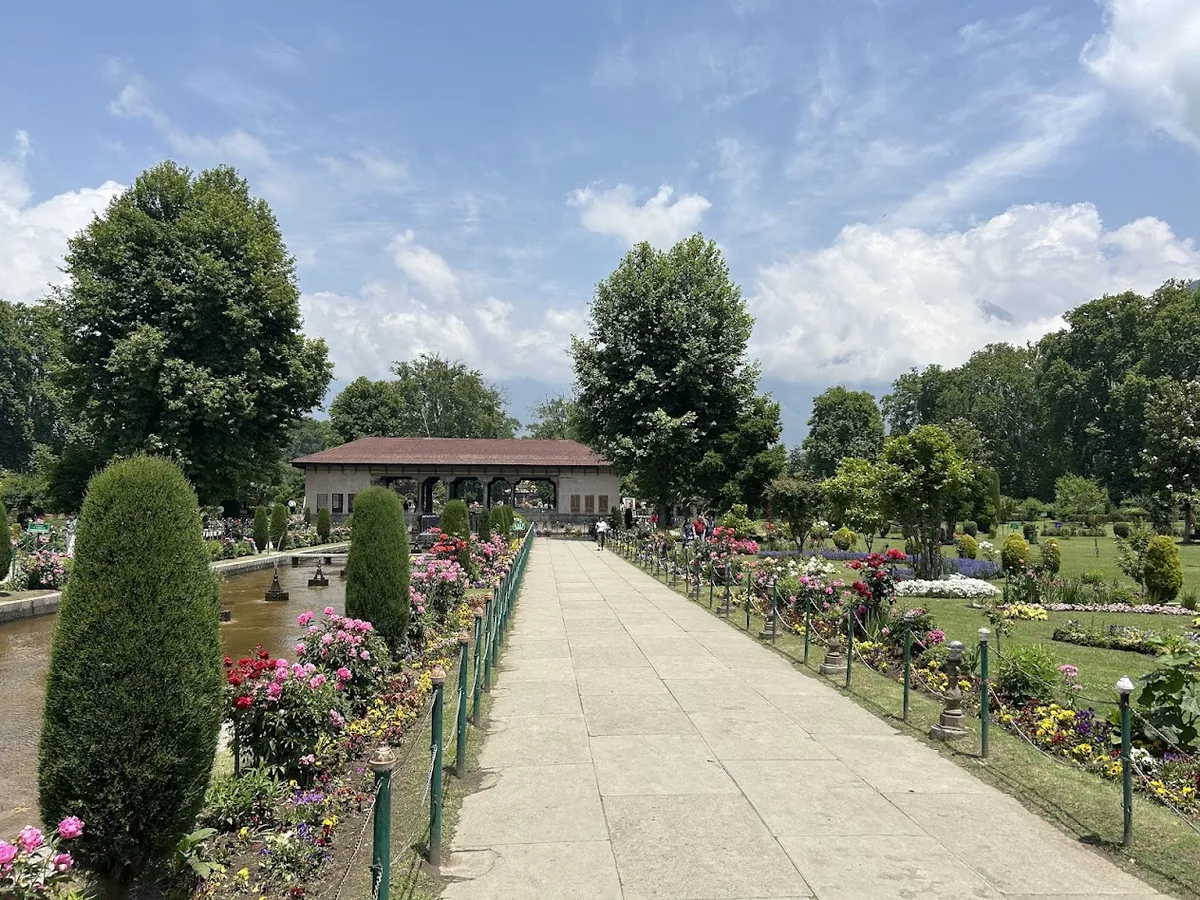
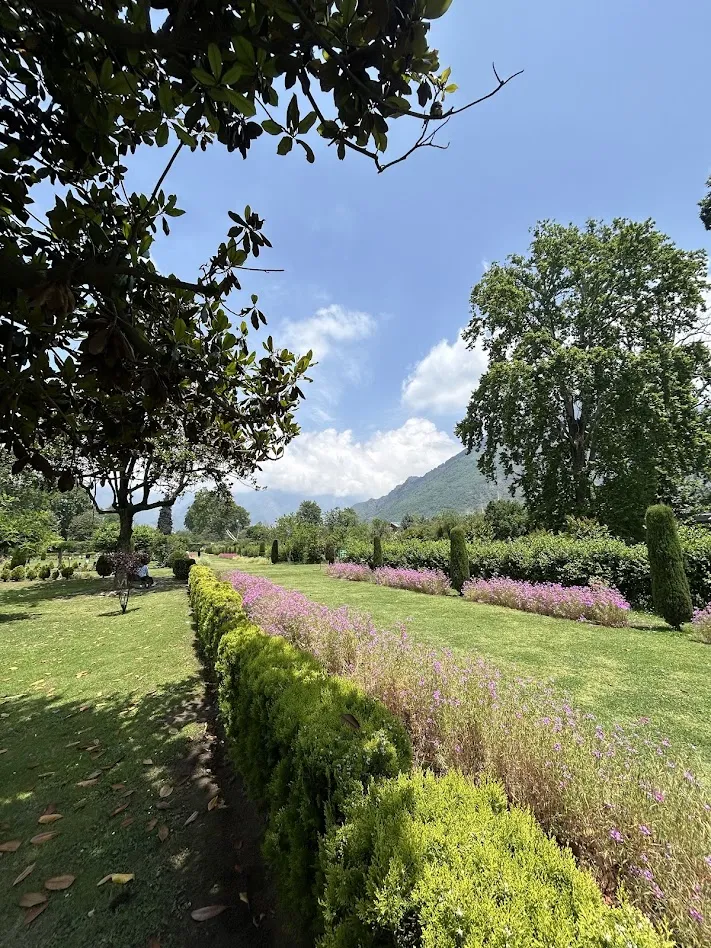
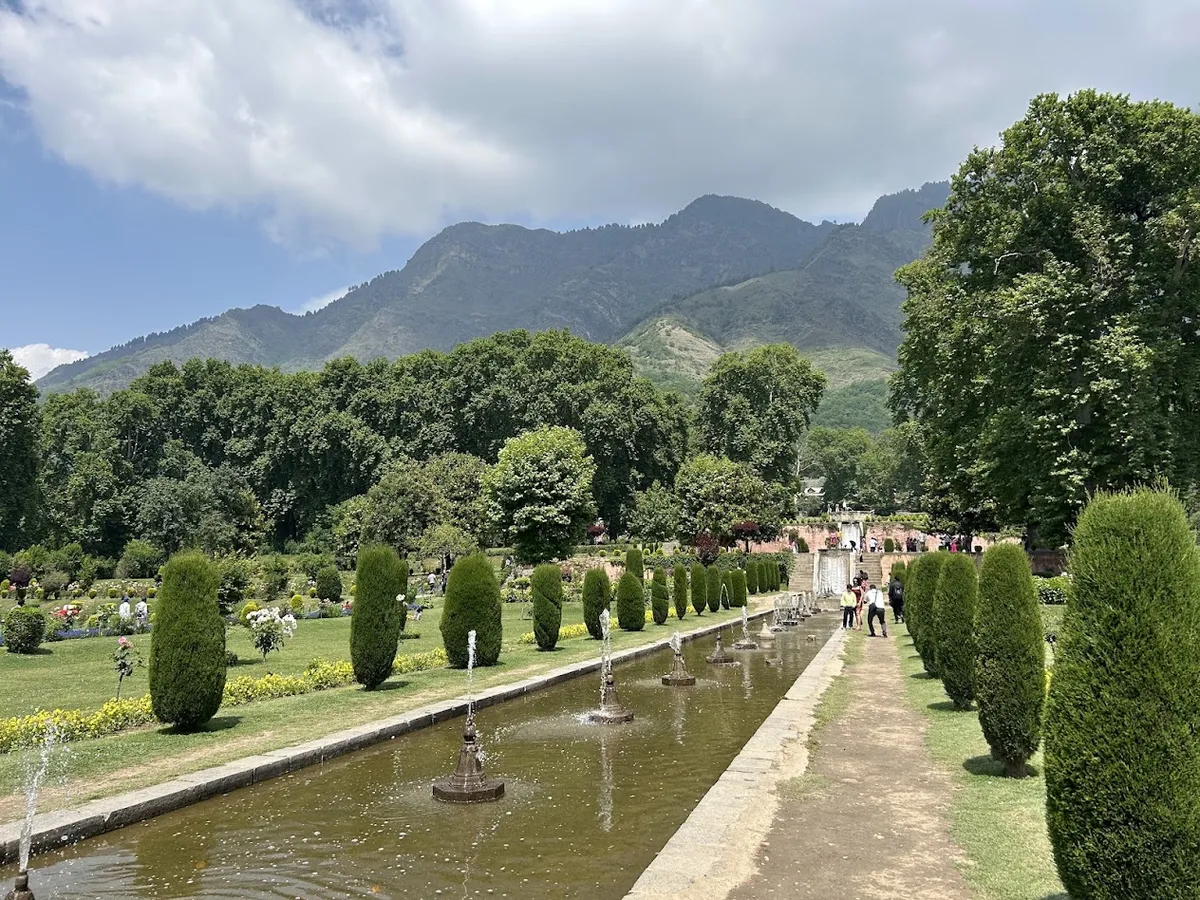
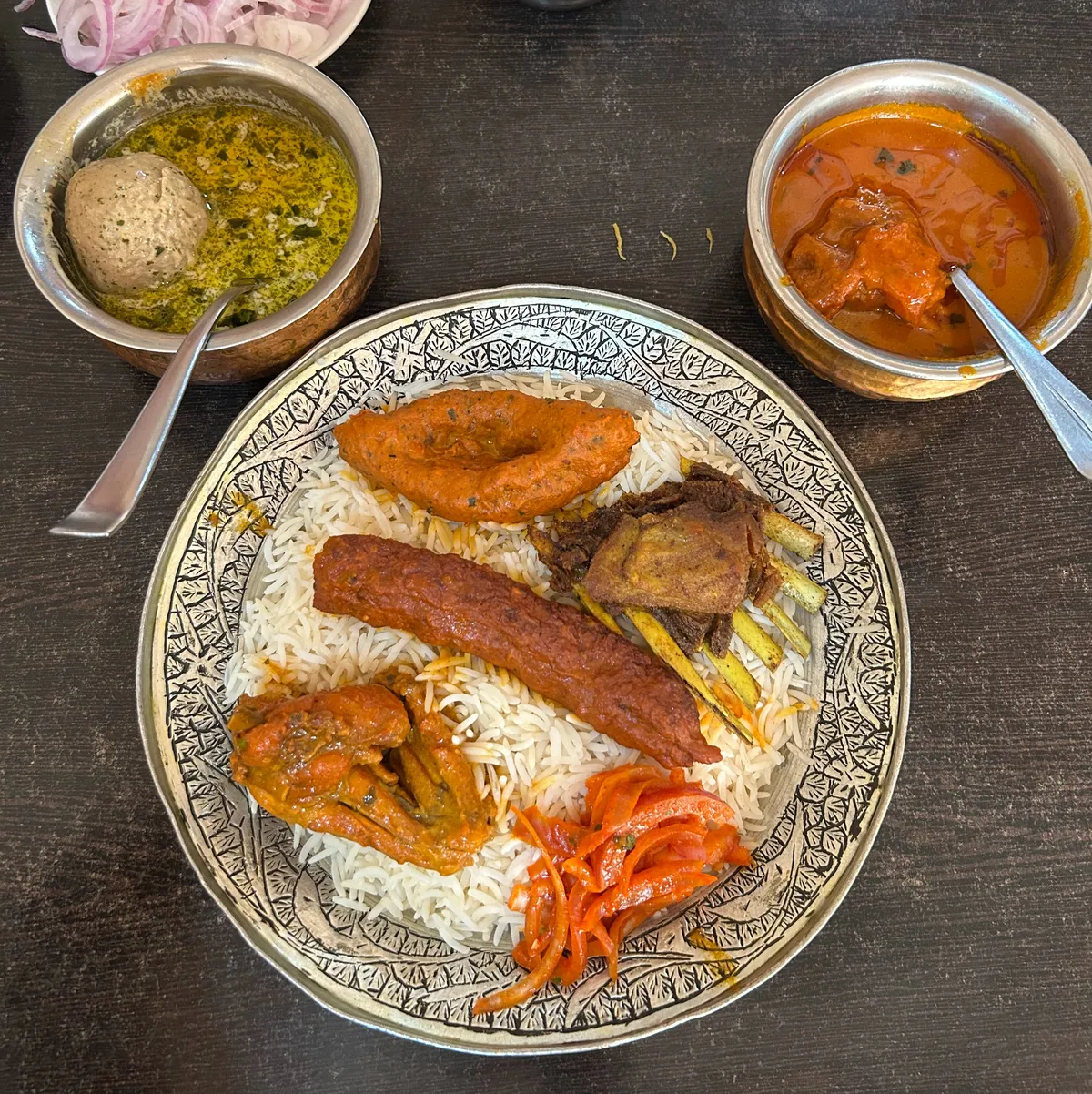
The flight had a scheduled arrival around 11, with lots of time to spare before sundown. We had an Innova assigned for our travel and had Mubashir bhai, a local tour operator, along with us for the next couple of days. Mubashir suggested that we do the sightseeing first before checking into the hotel, and with our hearts full of excitement, we set out on the exploration! We started off with the Mughal (Shalimar) Gardens, followed by the Nishat Gardens. I was floored by how well-maintained the gardens were: it was as if a lush green carpet was rolled out, dotted with pretty flowers and occasionally interrupted by fountains. This set the perfect tone for what was to come for the rest of Kashmir the next day. It took us a few hours to cover both the gardens, and soon after, had a fulfilling traditional Kashmiri Wazhwan (full-course meal).
Post-lunch, we wound our way up to the Shankaracharya temple, perched atop a hill overlooking the Dal Lake. It features a short climb uphill to reach the shrine, but the view atop is worth the journey. It was almost evening by the time we were done with the visit - and that meant it was time for the Dal Lake, finally.
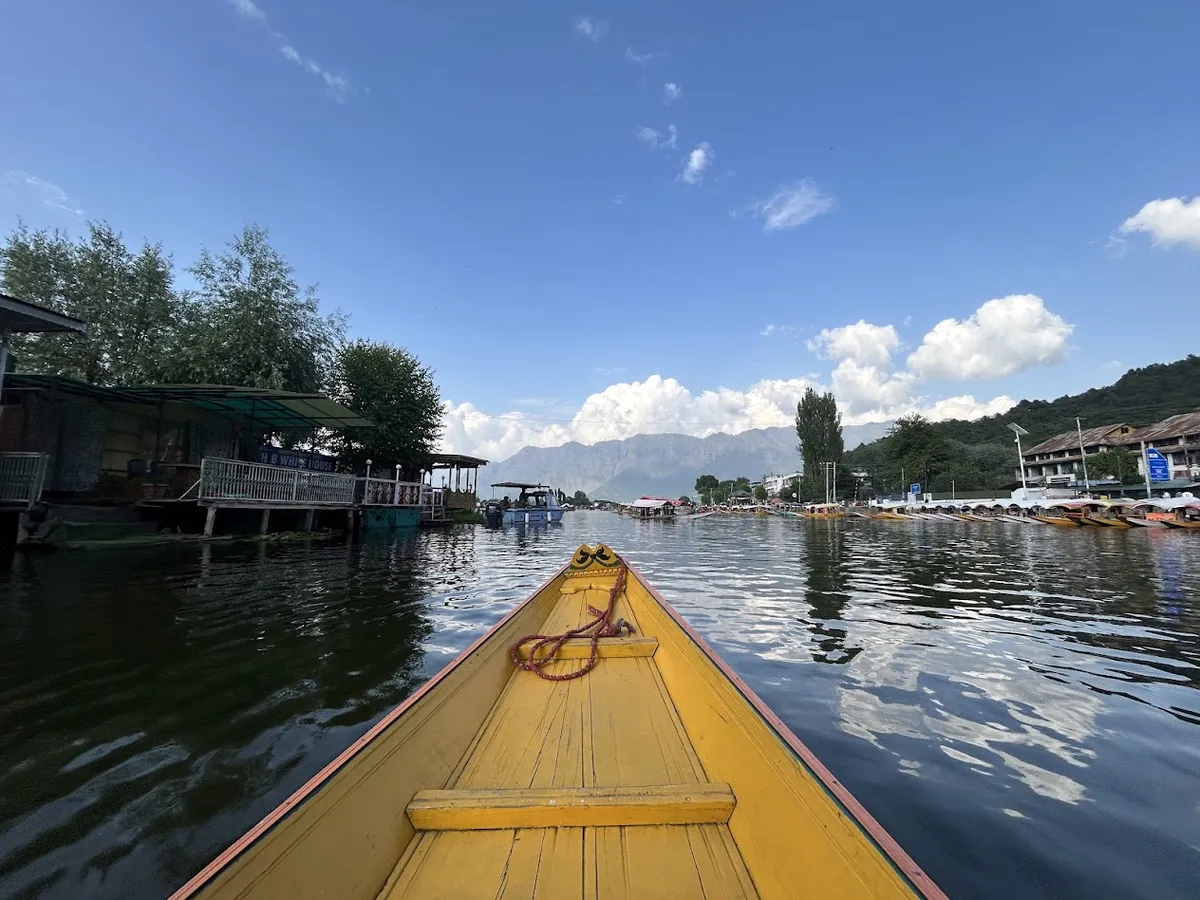
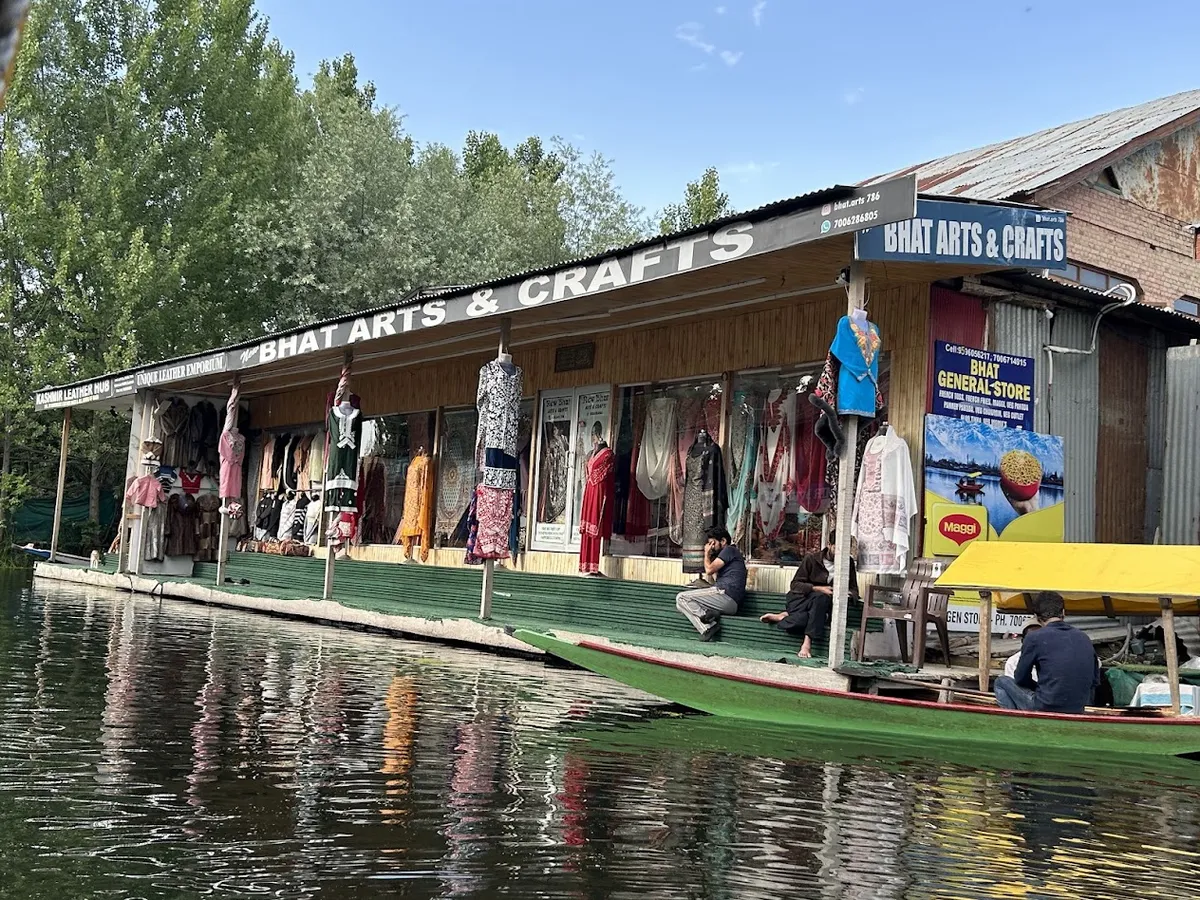
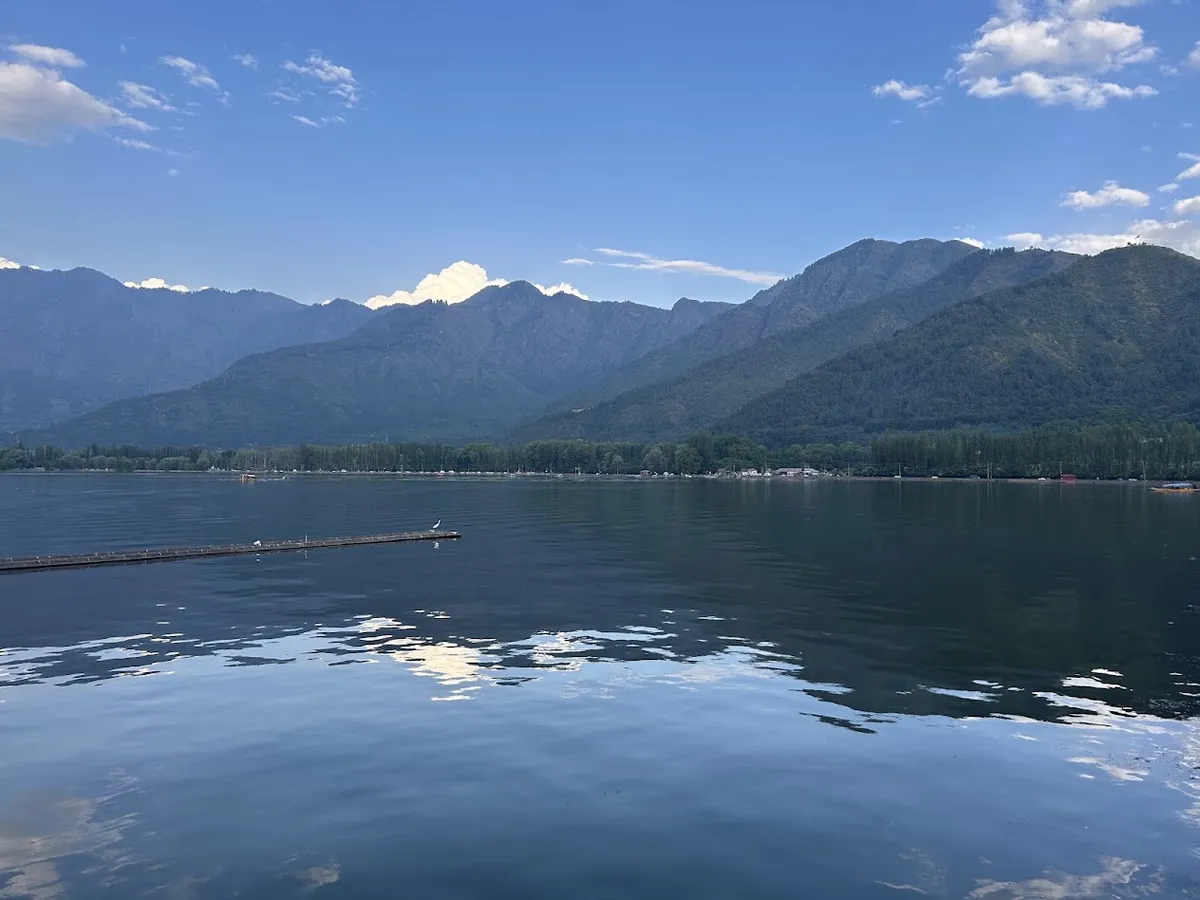
The Dal Lake is admiringly beautiful, especially near dusk. The mountain shadows blend into the reflective waters of the lake; flanked by elegant shikaras (boats) that decorate it. It's a complete market ecosystem of its own: shikaras take you around the lake, while vendors 'dock' into your shikara to sell you eatables and goods. There's even a floating market where you could purchase items or souvenirs to take back. I will always remember the amazing kahwa that I sipped while enjoying the magnificent views all around!
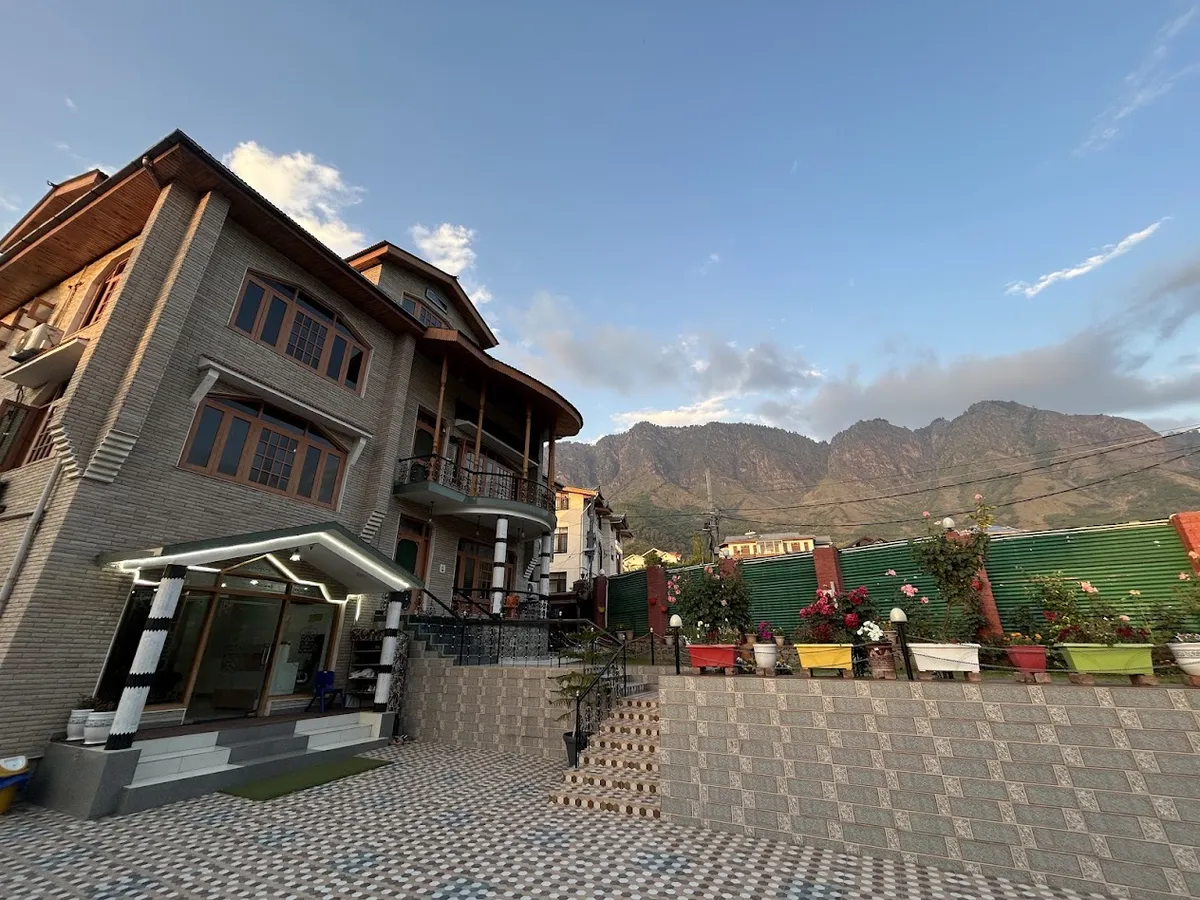
Finally, the consistent streak of day-long activities was catching up to our energy levels. Parking ourselves at our hotel (City Hills) for the evening, we prepared to get some rest for the long road journeys that would begin starting the next day. It was after all, the day where we were about to venture into Ladakh!
Into the Barren: Leaving Kashmir for Ladakh
Next morning, we woke up early as it was a long journey towards Kargil. After having a quick breakfast at our hotel, we left with Mubashir, our guide, around 9 AM. The travel from Srinagar onto Kargil involves one of the most extraordinary visual transitions I've ever witnessed. For a good while, the Sindh (Indus) River keeps pace alongside you, winding through the hills as Srinagar slowly disappears behind.
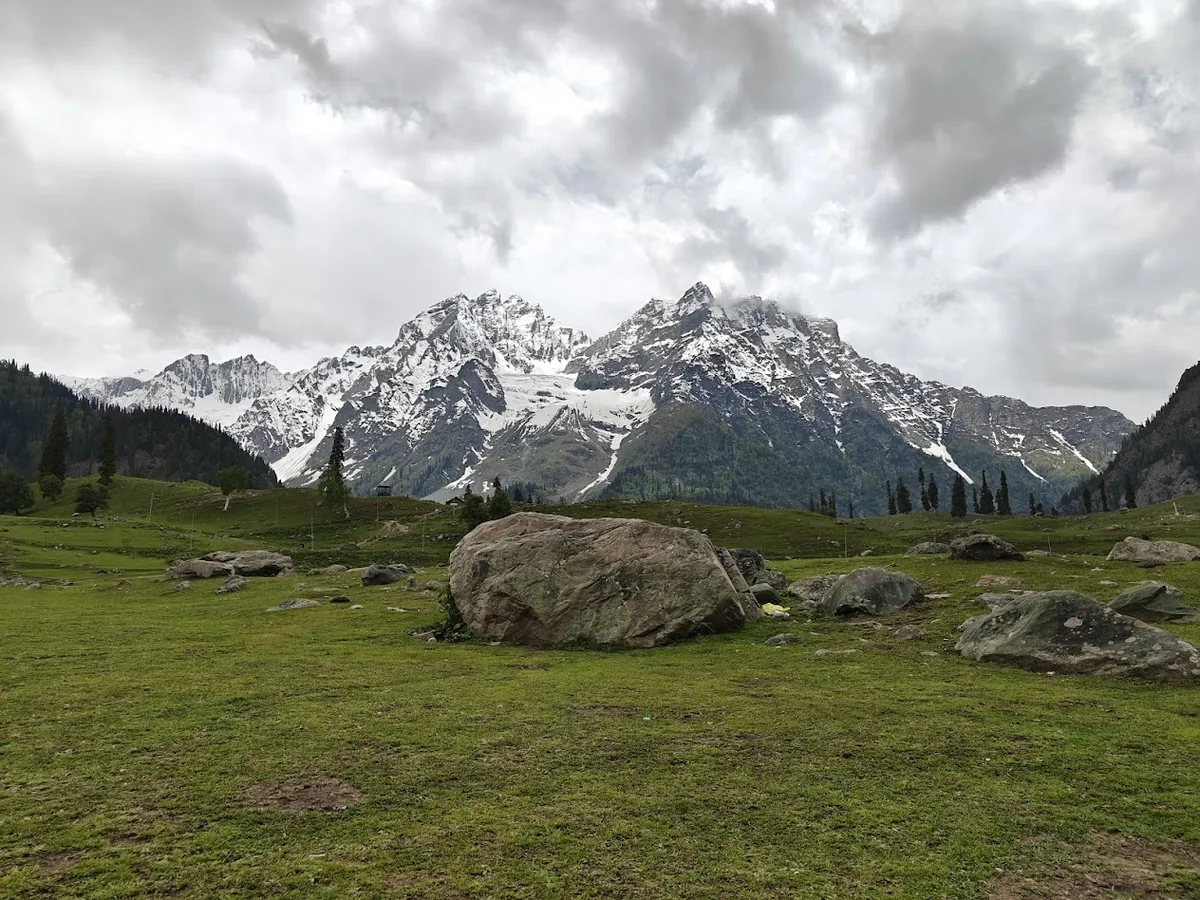
The route notably passes through Ganderbal, Sonmarg and finally the Zojila pass before crossing over to the Union Territory of Ladakh. The first major stop on the way was in the mesmerizing meadows of Sonmarg. I can't describe the feeling in mere words! On a relatively sunny day, the mountain peaks were capped with just enough snow to look like ice-cream cones - dark brown beneath, white-tipped and gleaming above. Even better was the valley in itself: a perfectly green, undulating terrain with winds blowing from all across. Almost a Bollywood scene, really - Shah Rukh was the only thing missing, ha-ha!
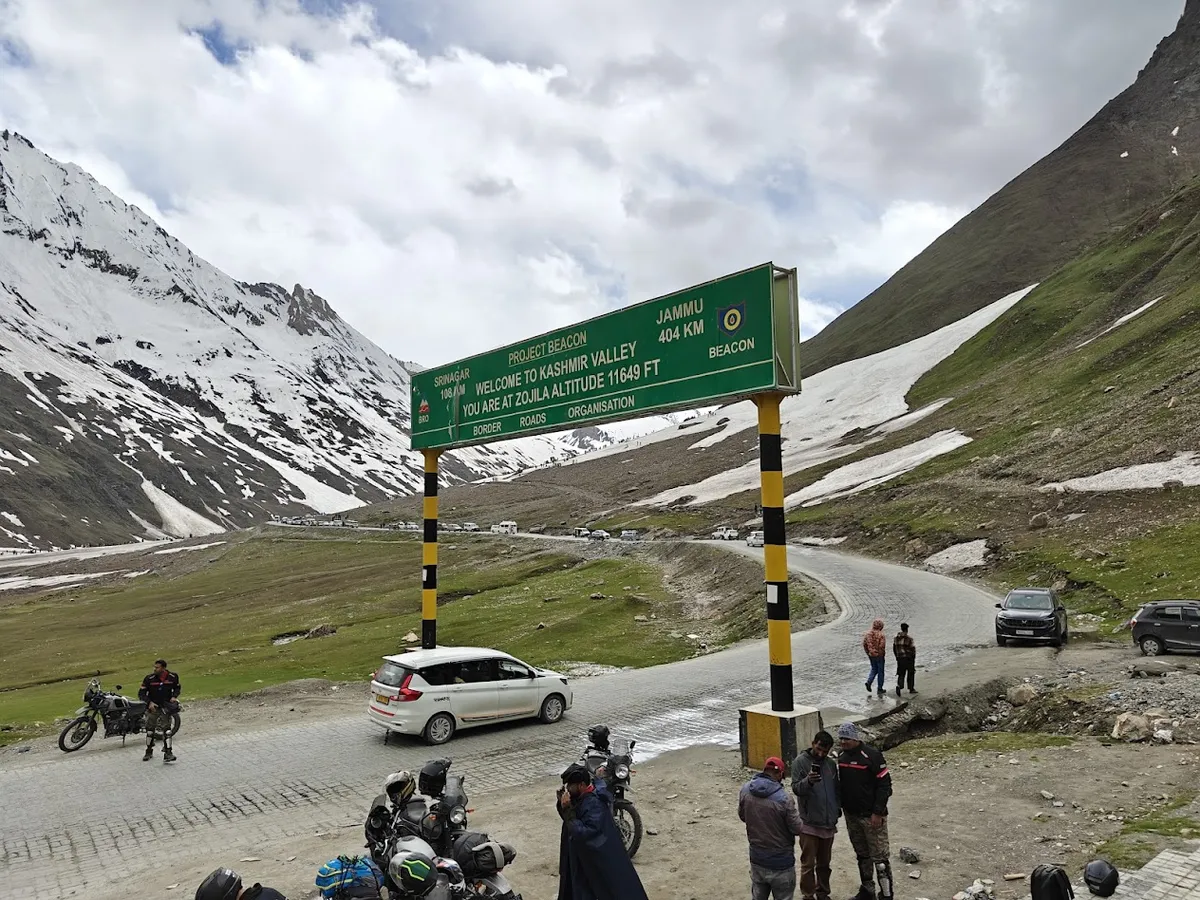
The border between the Jammu & Kashmir, and the UT of Ladakh, is demarcated by the high-altitude pass at Zojila. We were lucky - snow still lingered this late into May. The excitement was palpable; it was situated north of 11,000ft. The air had a chill edge to it, and the terrains had started metamorphosing from the characteristic green of the Kashmir valley into the homogenous brown of Ladakh. I doubt any other state border in India announces itself quite so dramatically. We spent some time at Zojila, enjoying the snowy views for the first time (there was so much more ahead, of course) on this trip. Given its strategic importance, the Union Government has now inaugurated an all-weather tunnel link between Baltal (J&K) and Minamarg (Ladakh) along the NH-1, spanning almost fourteen kilometers.
Soon after, we were on our way, and it was almost four in the evening. Our next destination was the Kargil War Memorial in the Drass sector. Kargil was the center-point of the conflict between India and Pakistan in 1999, when adversarial intruders had captured the heights towering over Kargil. The War Memorial is a tribute to our valiant soldiers and the several battle companies that gave their lives to protecting our nation. As I went inside, I realized how difficult it must have been in the early summers of 1999, when the area was far less developed. Famous tops such as the Tiger Hill, Tololing and Point 4875 are visible in the backdrop. Here are some pictures from the visit.
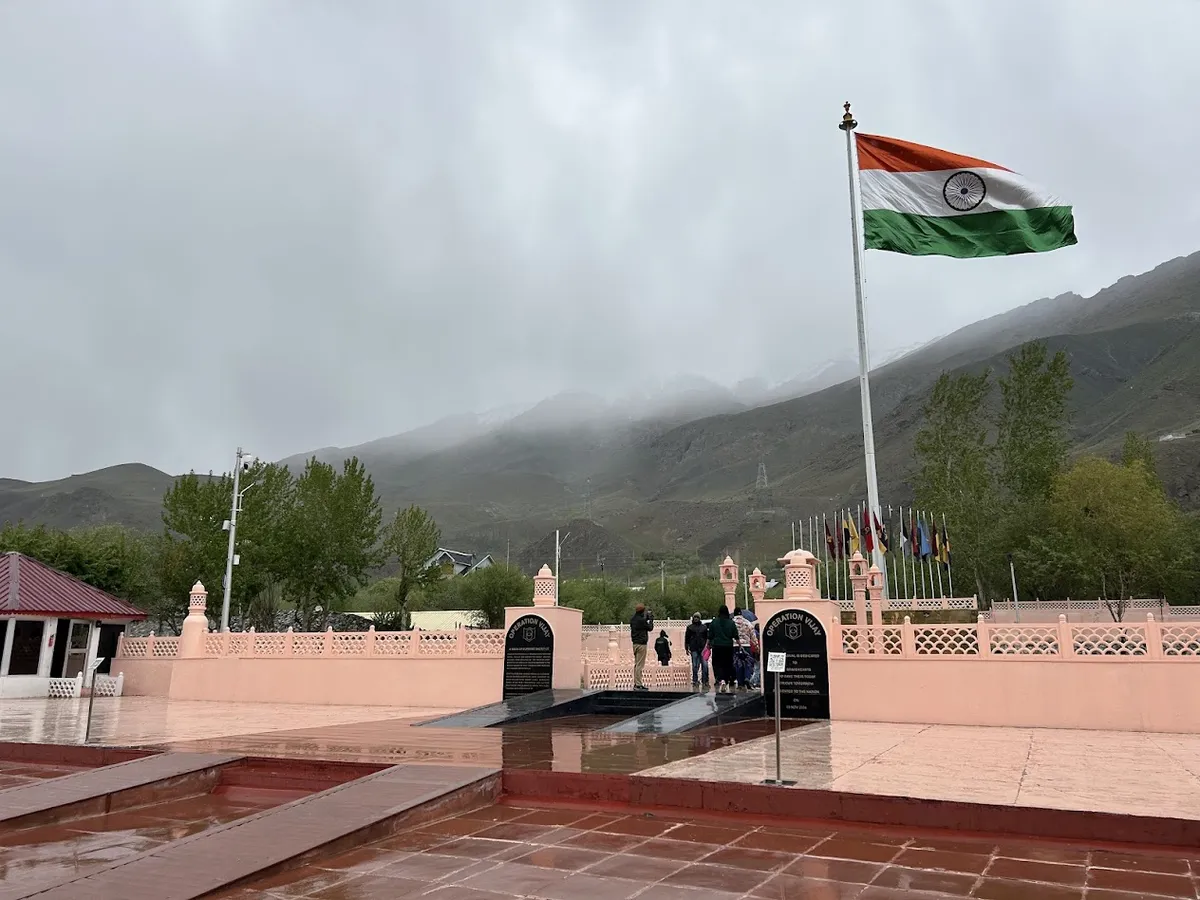
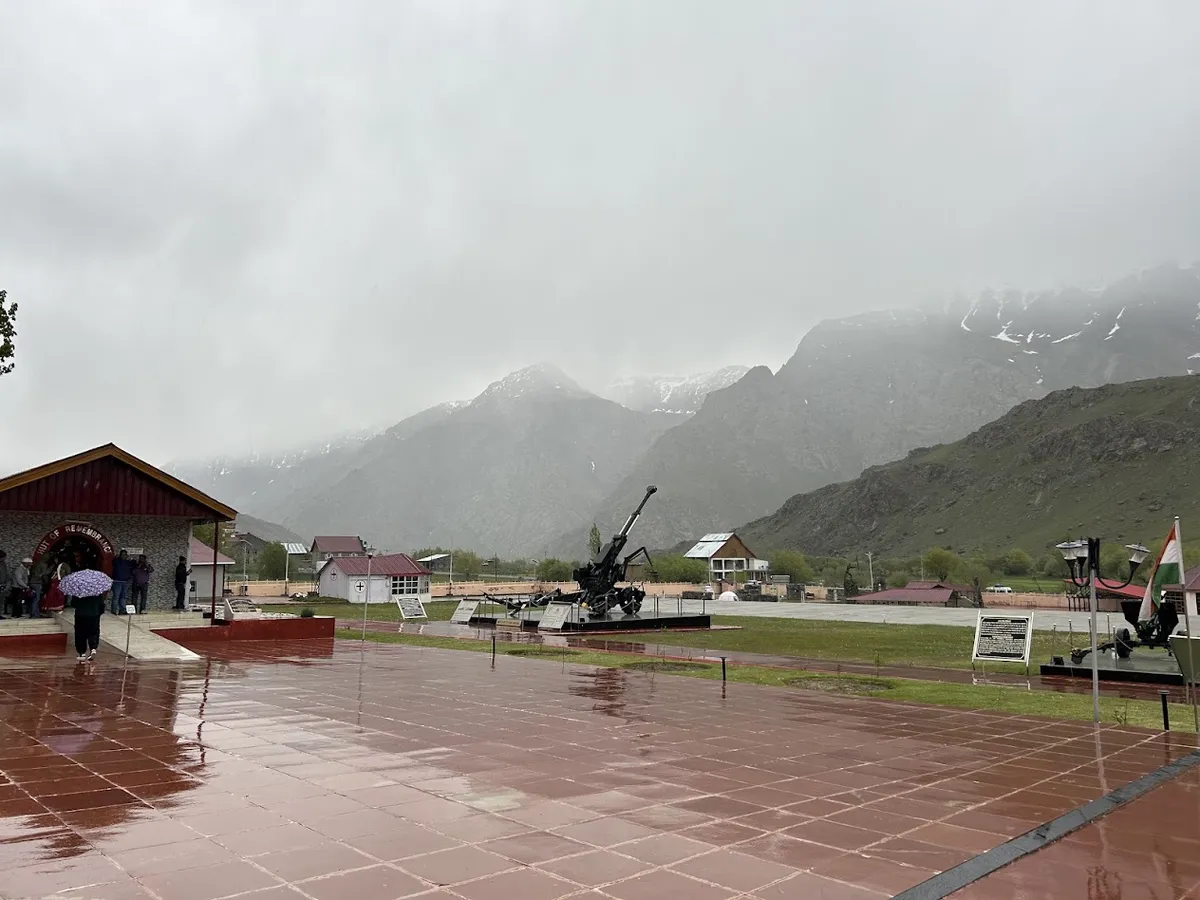
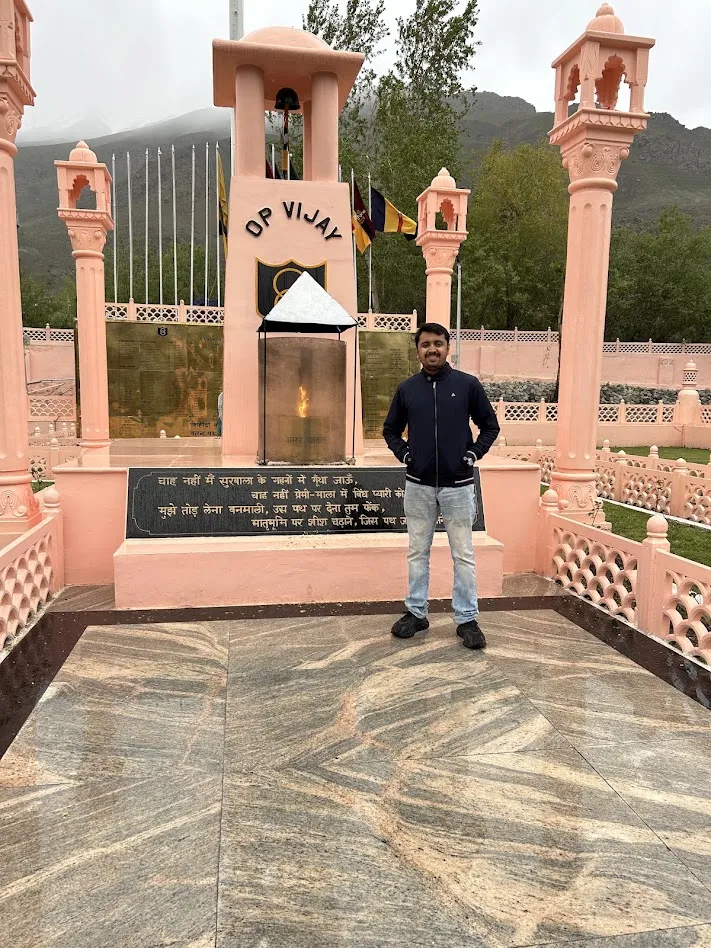
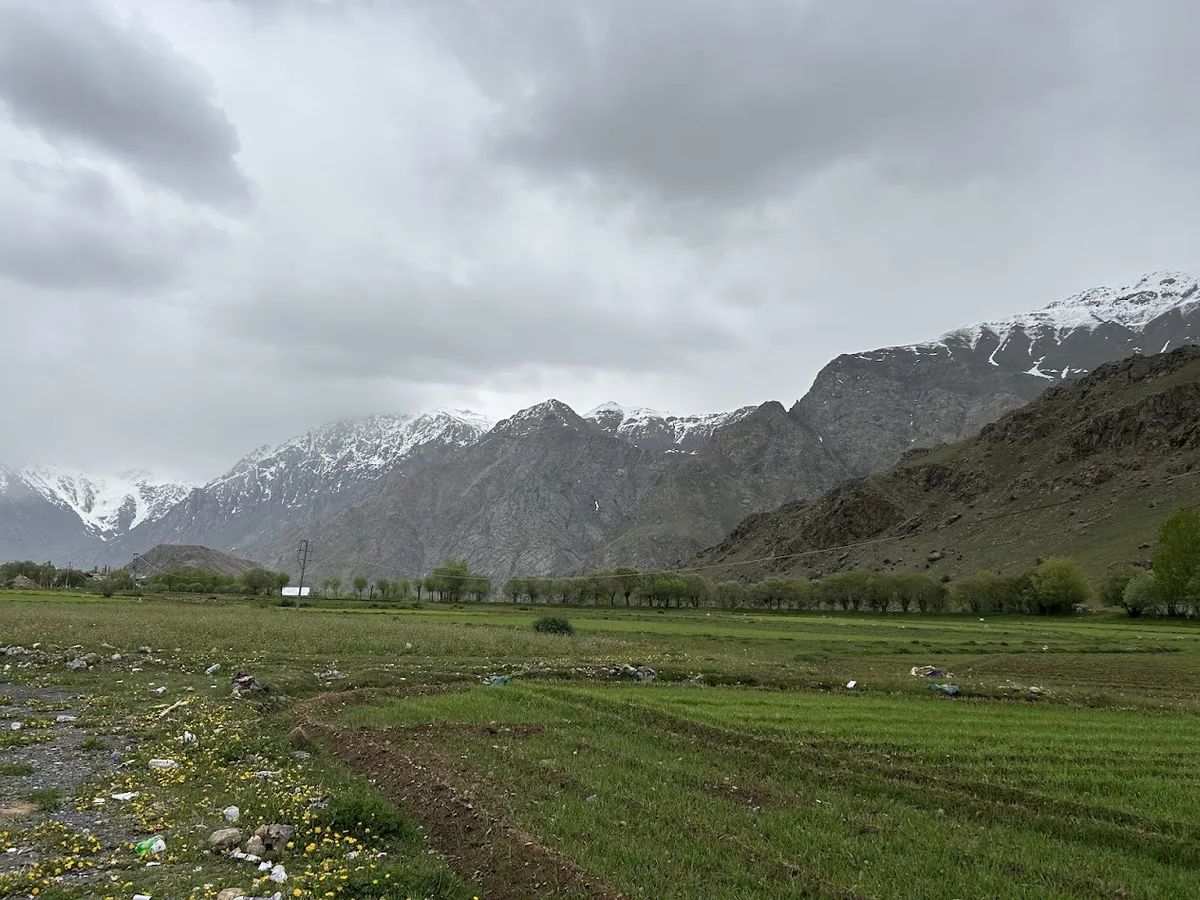
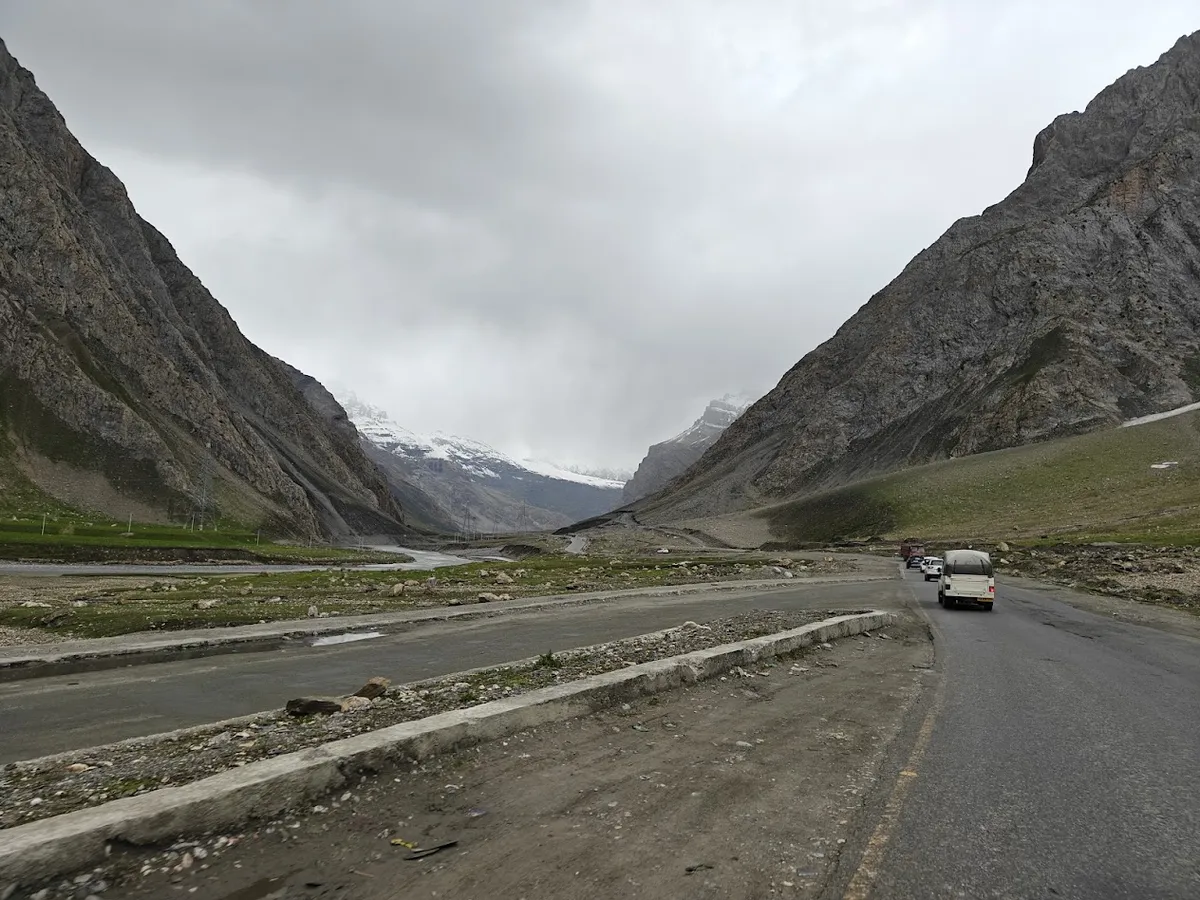
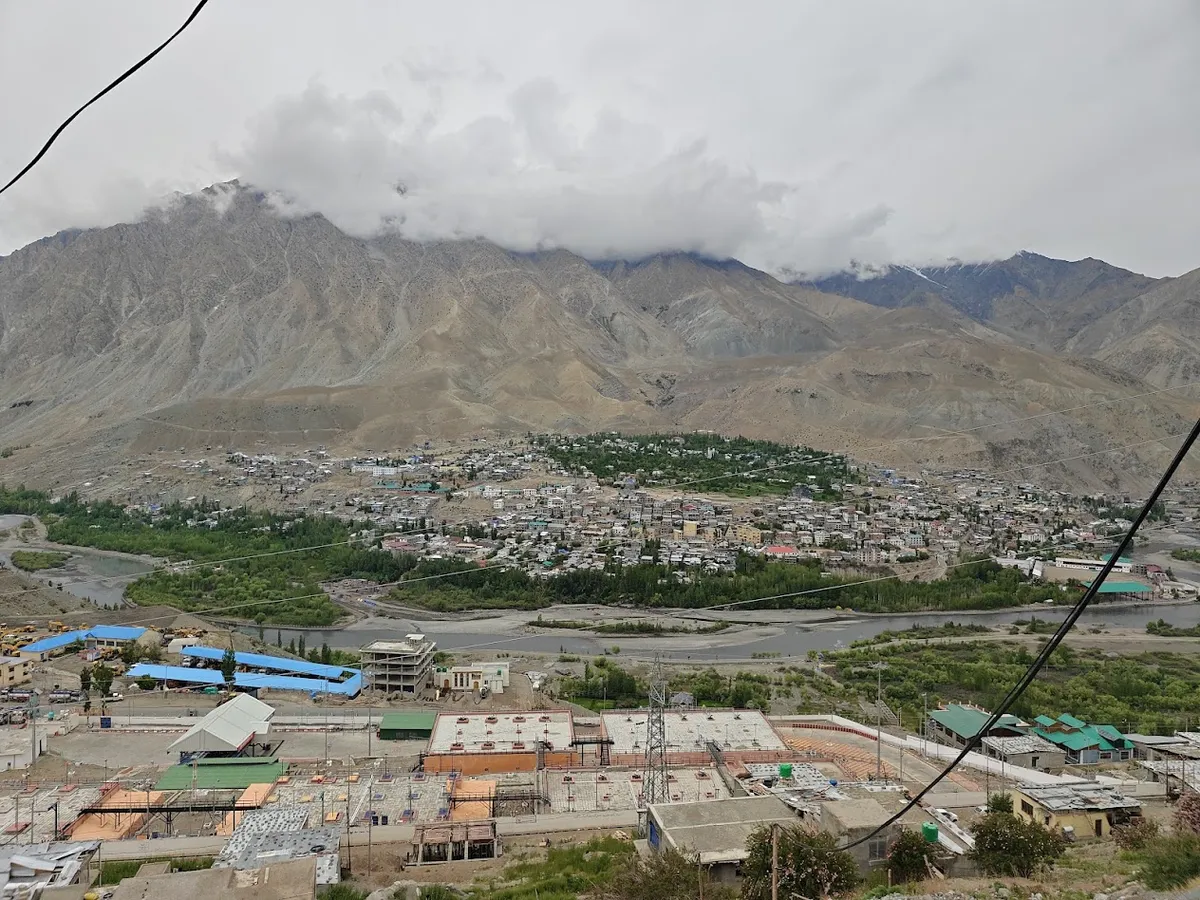
With the clock striking five and the sunlight dimming, we started the final leg of our travel towards Kargil. The roads are very well-maintained, so driving is a very pleasant activity. We checked into our hotel soon after and proceeded to walk for a couple of kilometers to acclimatize ourselves to the higher altitude.
Julley Leh: The Capital City
On day three, the plan was to start towards Leh. It was another day of checkpoints, viewpoints and winding mountain roads - but with Leh at the end of it, nobody was complaining. We left the hotel post a sumptuous breakfast.
Along the way, while climbing to the Namikala Top, we drove straight into our first snowfall of the trip - fat, unhurried flakes drifting across the windshield, the world outside going quietly white. I managed to capture it on my device for you to relish. We also had a stop at Fotula Top, which is the highest pass on the Srinagar-Leh highway.
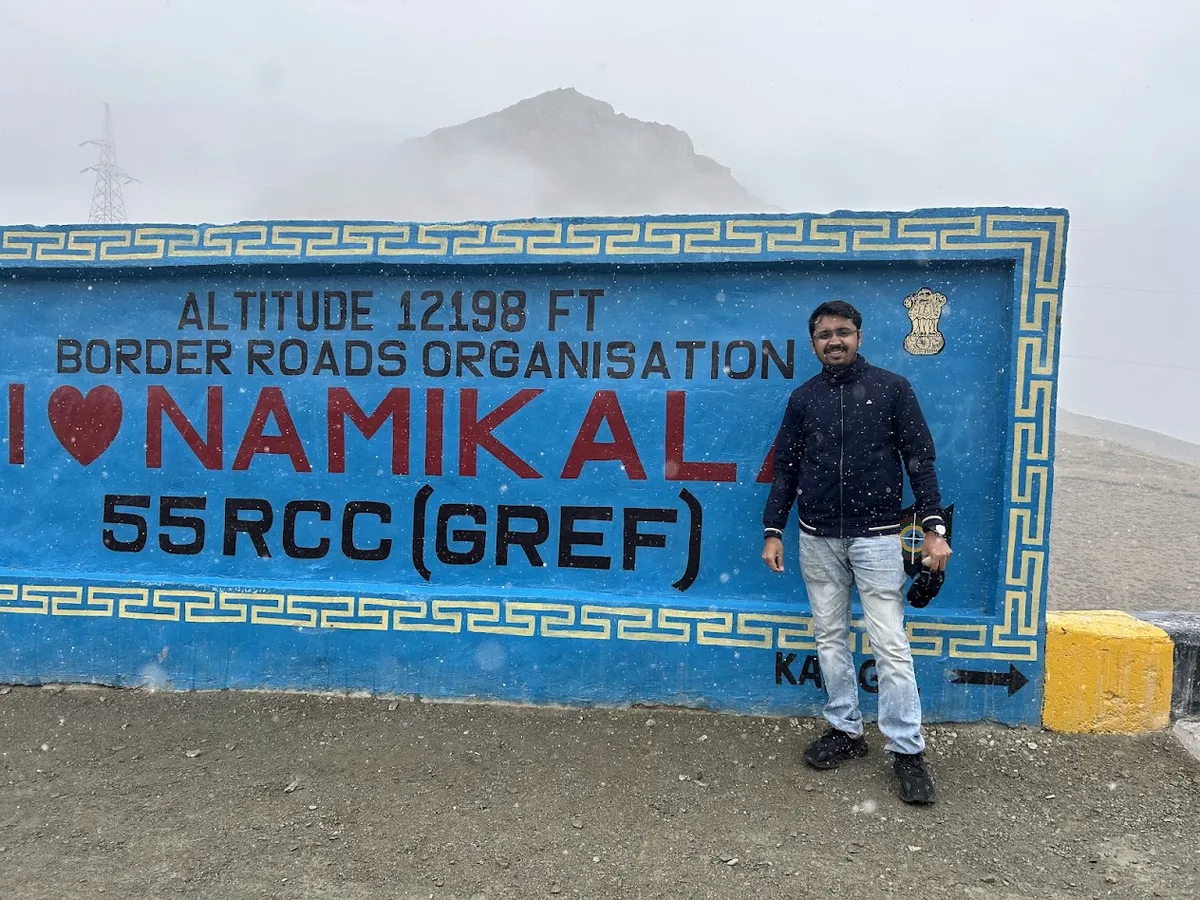
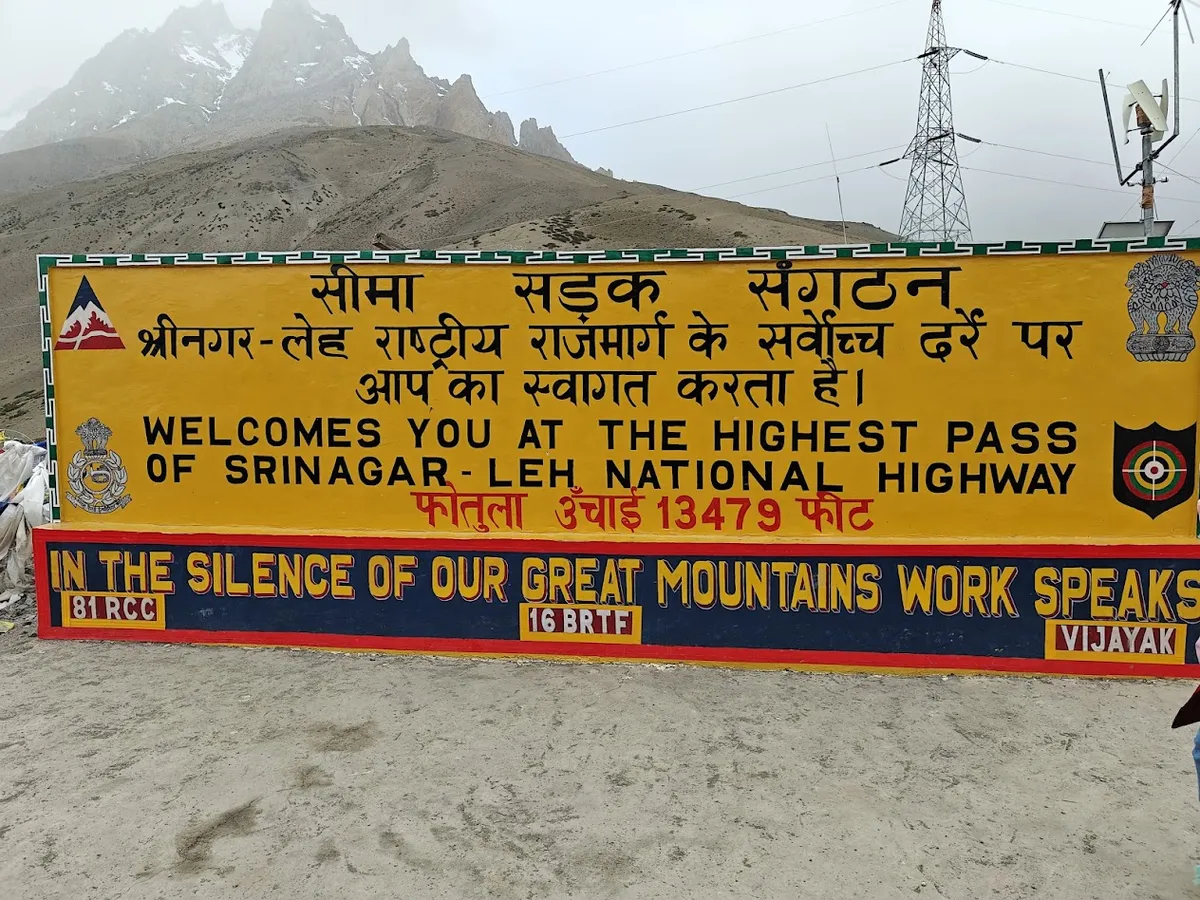
As we began the descent from Fotula Top, the snowfall gradually came to a halt, bringing back the relentless overcast skies. Weather can be moody in the hills, as they say. The next stop was at the historic Lamayuru Monastery. All I can recall was the wind - relentless and cutting. The monastery walls were a welcome shelter. It was such a sight. As always, monasteries bring their own sense of tranquility: they are places of reflection in a world of disquiet.
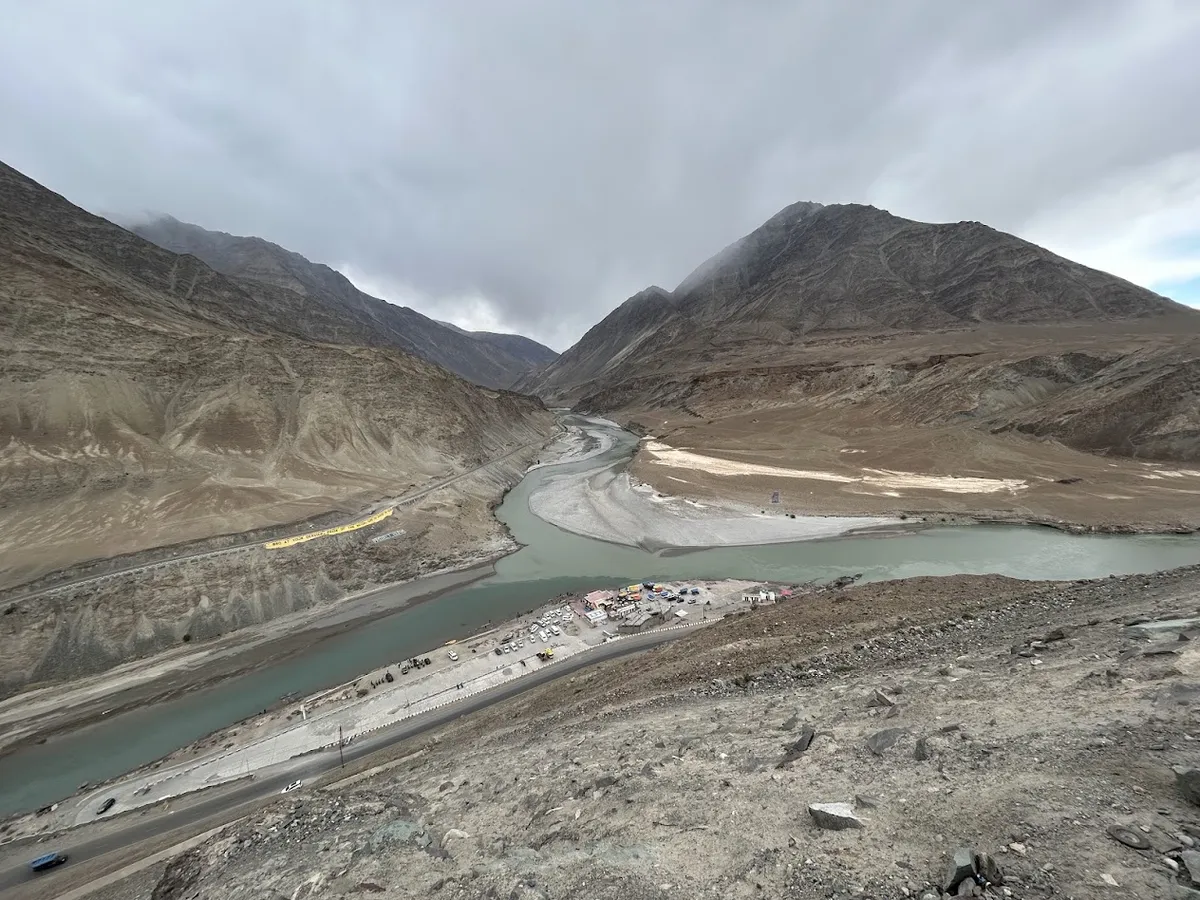
Touring Ladakh is all about the journey and hardly about the destination. The views along the way are incredible. Perhaps the best-known of the roads is a stretch of land called the Lakeer. The term is a Hindi/Urdu reference to a straight-line, which represents the road's path surrounded by barren, sandy terrains. We had our car parked for a while there and stopped to process the beauty of nothing: a straight road through a barren land had never looked so dramatic. Shortly after comes the Sangam Point - where the Indus and Zanskar rivers meet but refuse to mingle, their colours telling them apart: the Zanskar a muddy brown, the Indus a striking turquoise.
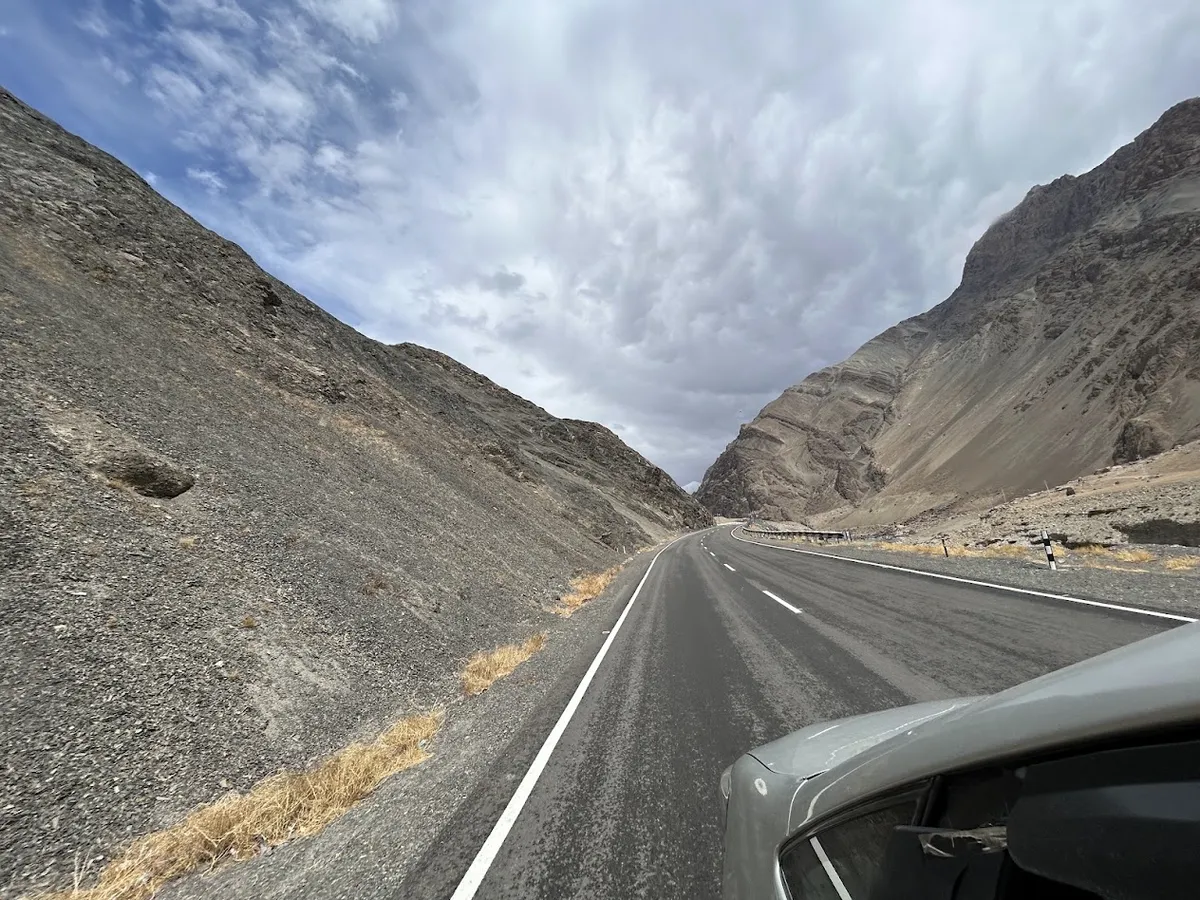
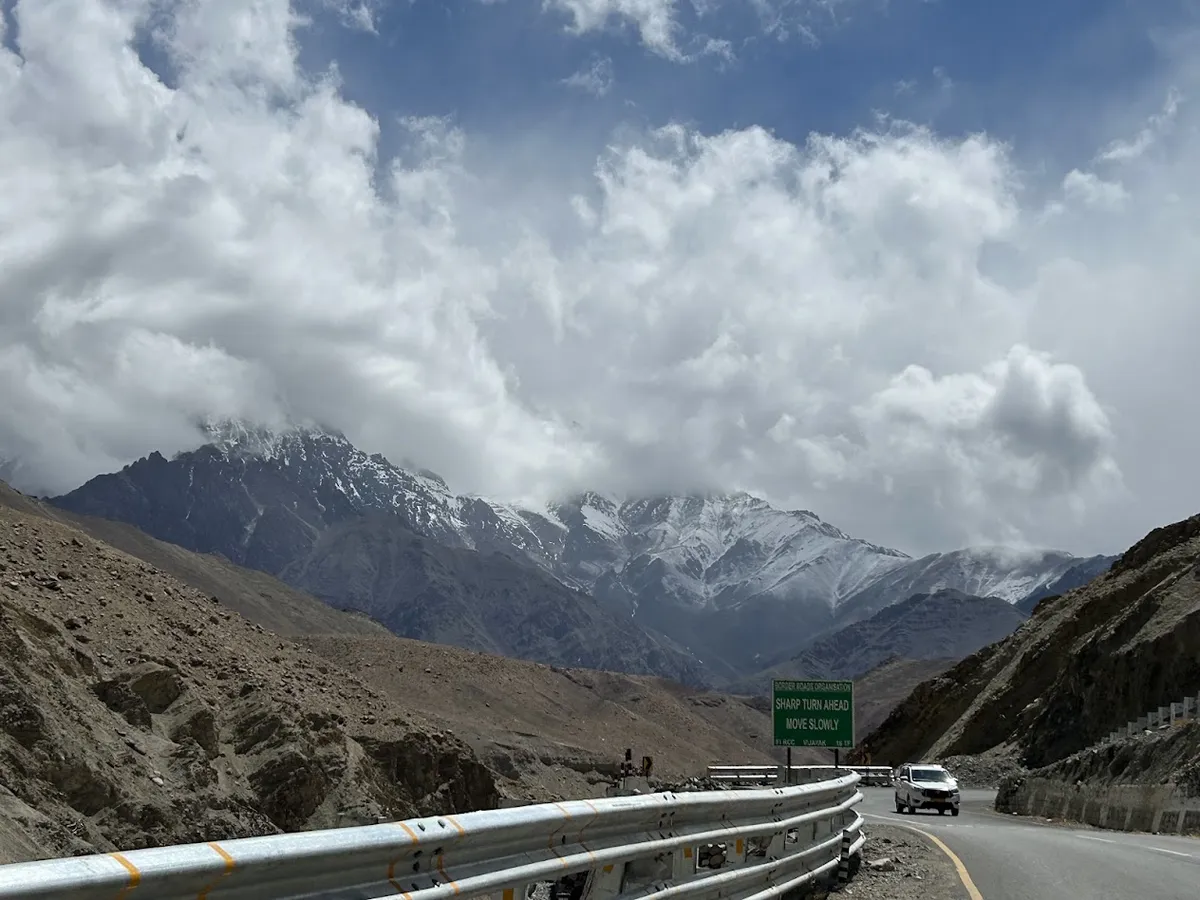
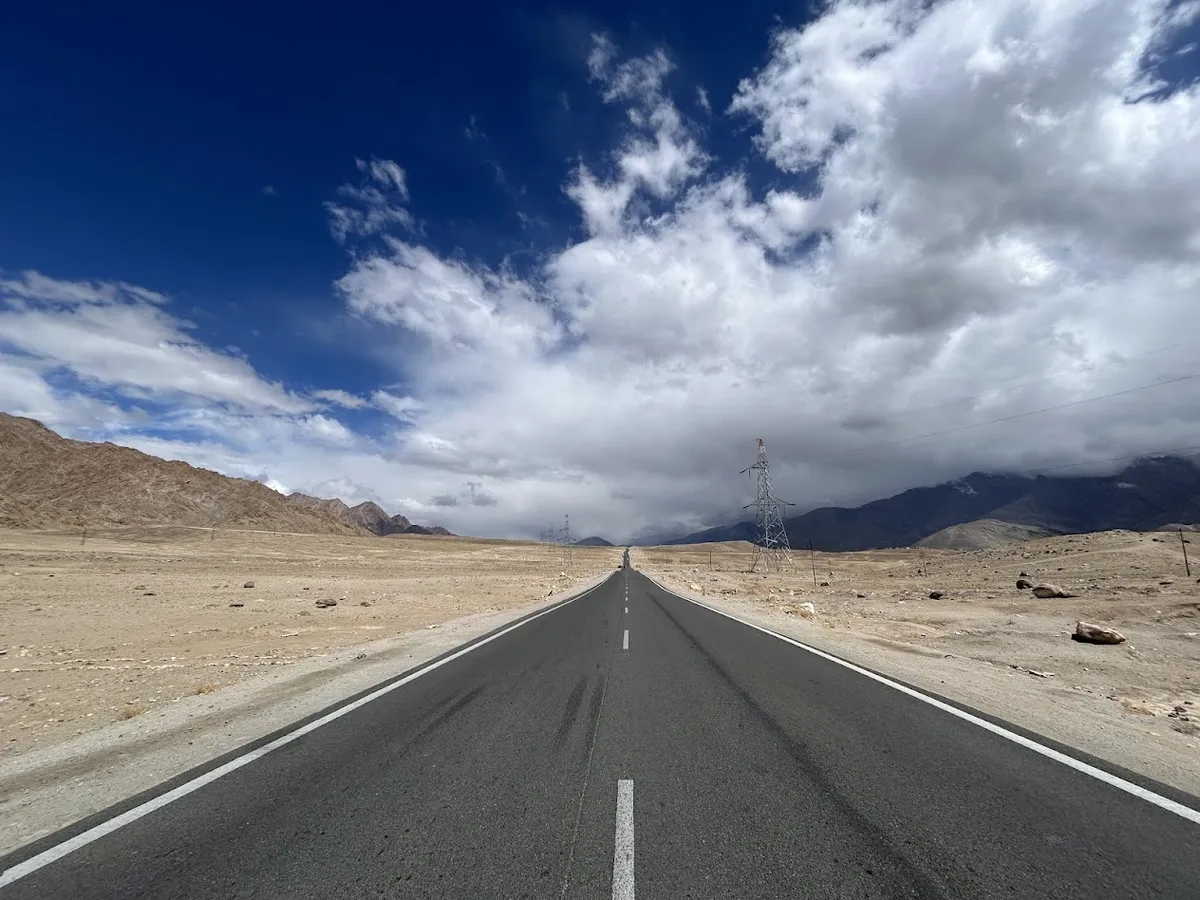
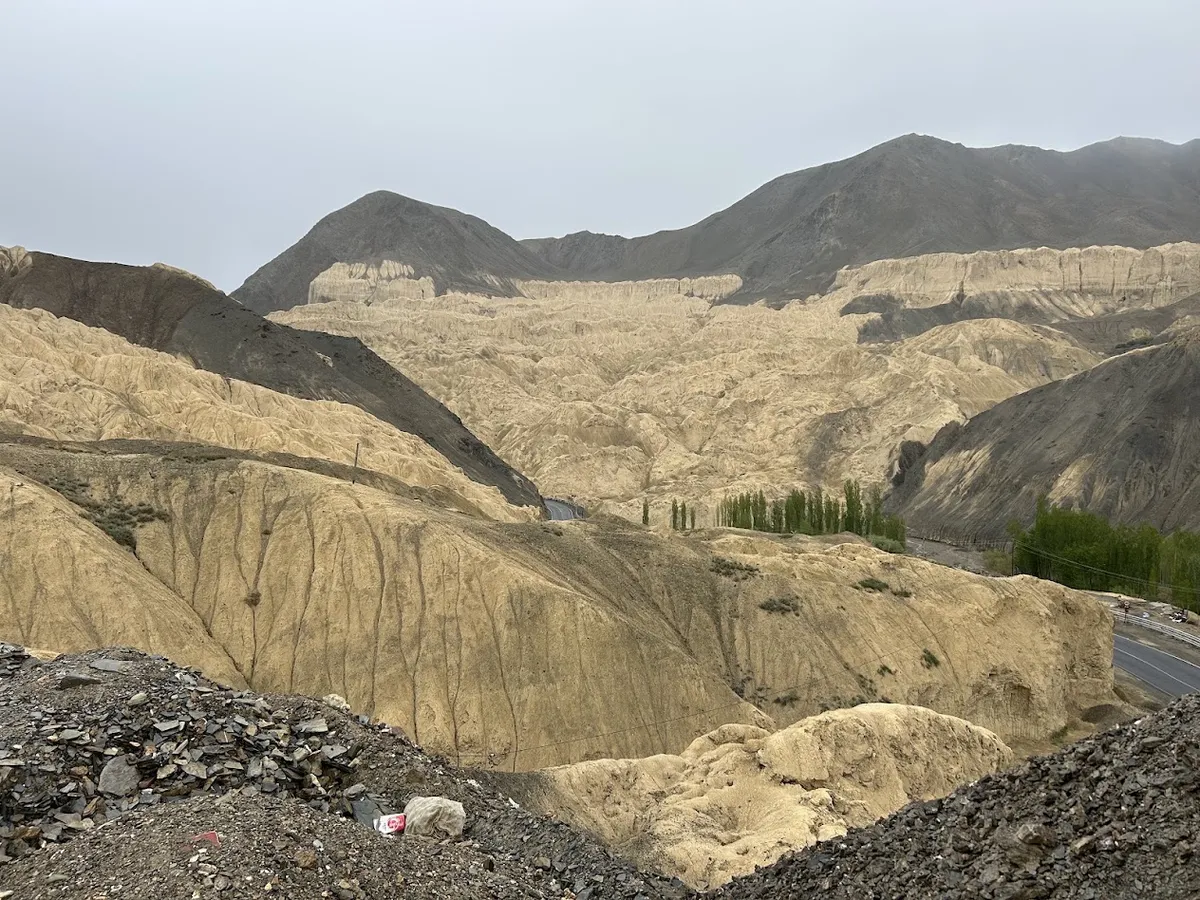
There were a few more spots along the way before reaching Leh, such as the Magnetic Hill and the Gurudwara. We finally made it to Leh around 5 in the evening and were welcomed with another round of kahwa to satiate ourselves. While there was still some time for us to visit the local market, we decided to take some rest as we would have some time in Leh during our return leg as well.
Sand in the Mountains: Nubra Valley & Turtuk
If I were to tell you that there are heaps of sand dunes in the middle of a cold mountain valley, it would sound unnatural to most. But that is what Hunder is all about - a desert at the heart of Ladakh, replete with stunning panoramic views. The best part of it perhaps was that to reach Hunder from Leh, one has to cross the Khardung La pass - the second-highest motorable road in the world.
Mubashir had dropped us at Leh and had to return back to Kargil. We had a new person that would guide us through the next few days, an energetic chap called Nazeer. Nazeer hailed from Kargil, but had an innate understanding of the mountains across Ladakh. Khardung La, situated at an altitude of 18,000ft, was a personal check-list that I was happy to tick off. The views around also started becoming snowy-white, which added to the charm.
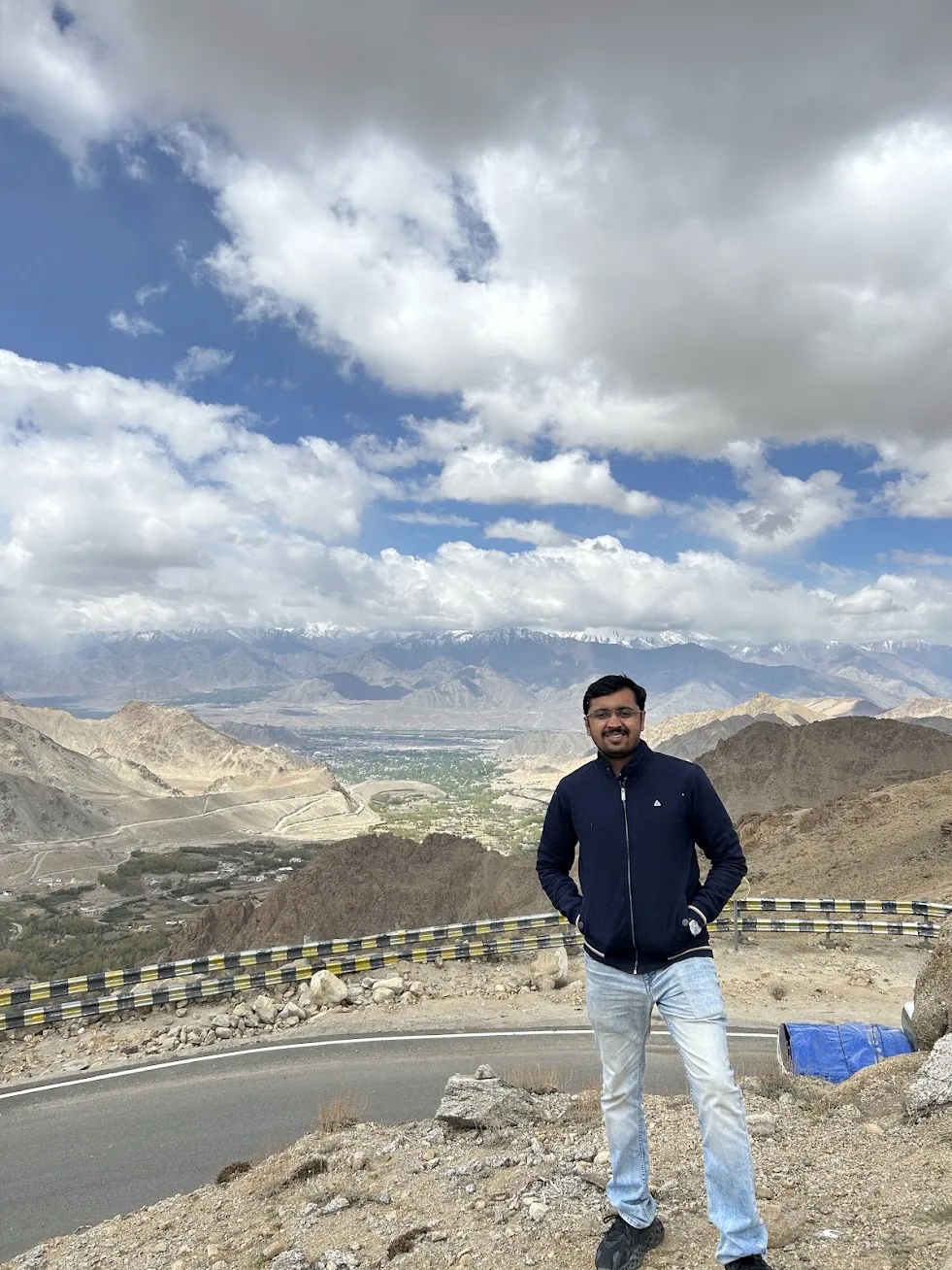
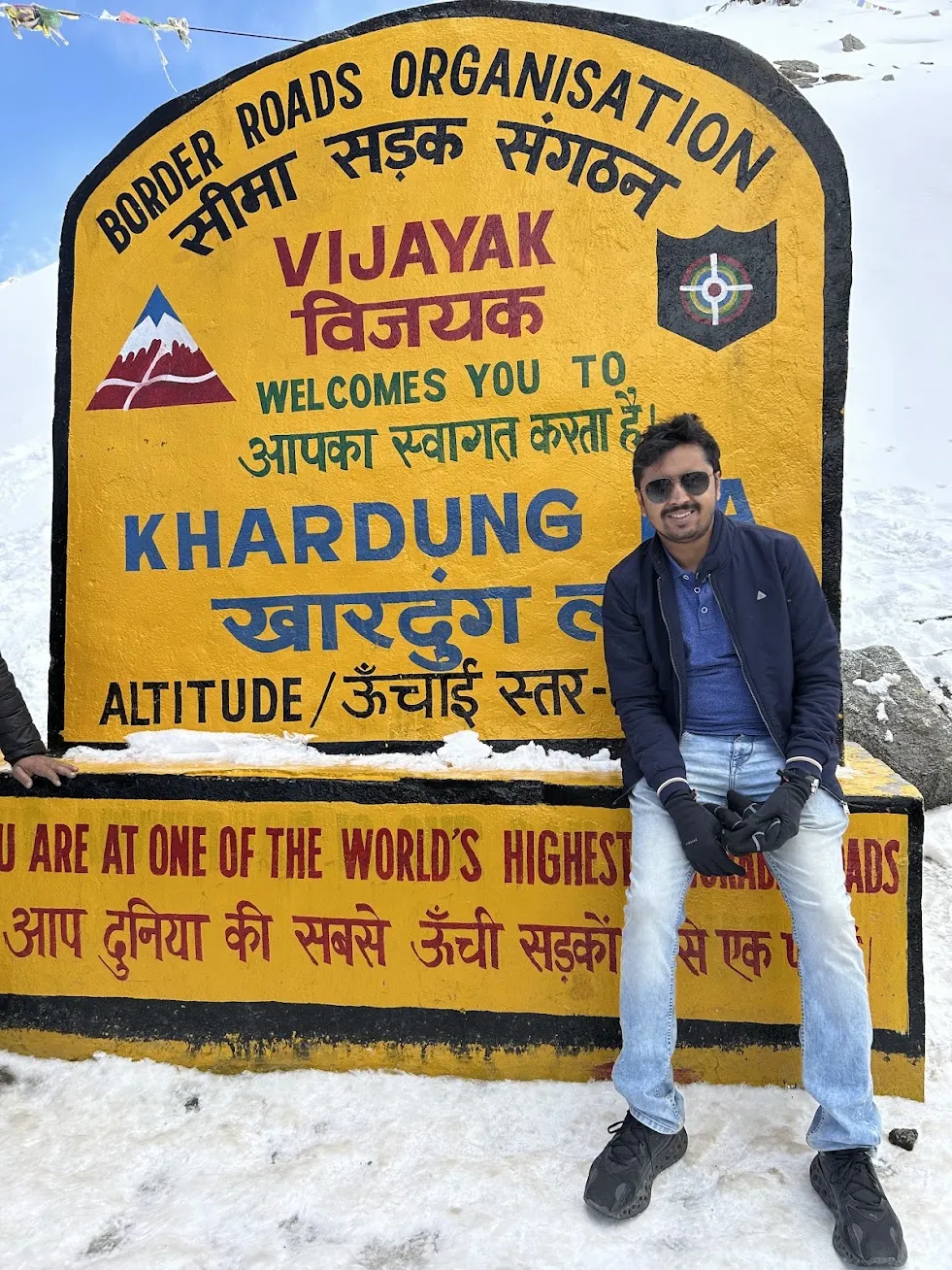
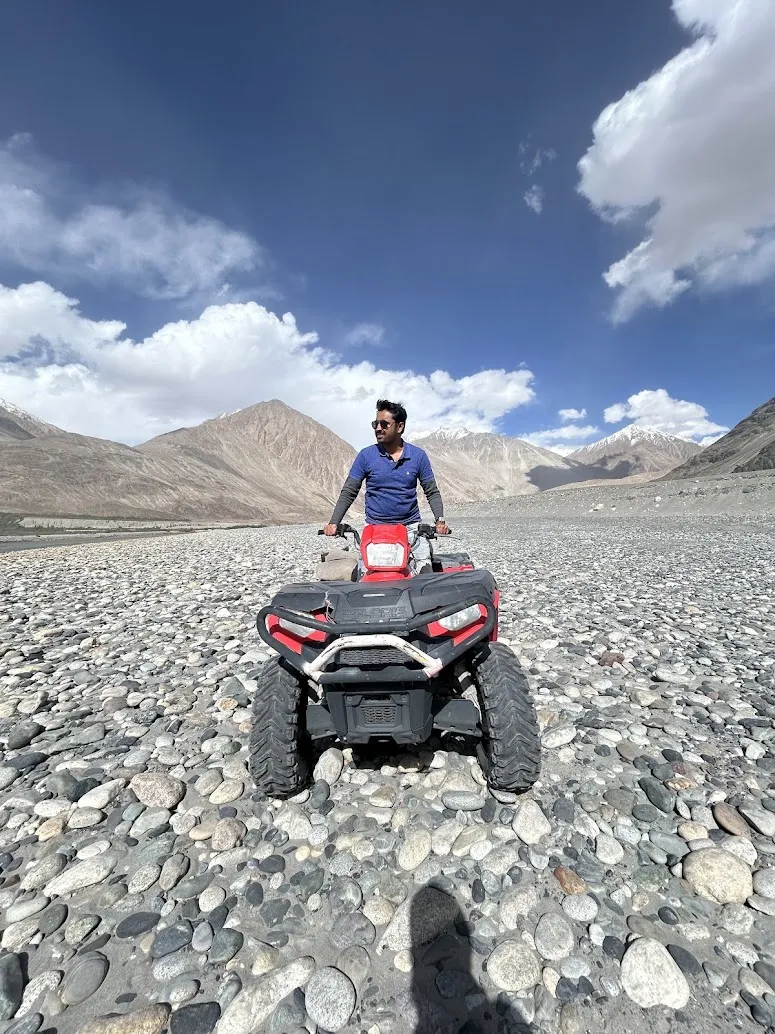
Crossing Khardung La, one descends onto the monotonous brown terrains faster than one can realize. After stopping for lunch, we proceeded towards Nubra. There are some adventure activities available at Nubra - of which an ATV off-road ride and a long zipline activity are the most famous. I was enthusiastic to try it - and boy did I have some fun! The activity area is essentially an arid land with a stream flowing next to it, but is amazing for offroading. We next proceeded towards the revered Diskit Monastery, perched atop a local hill, overlooking the valley below. The sands in the distance were blowing with wanton will; creating a shroud of dust when looked from above.
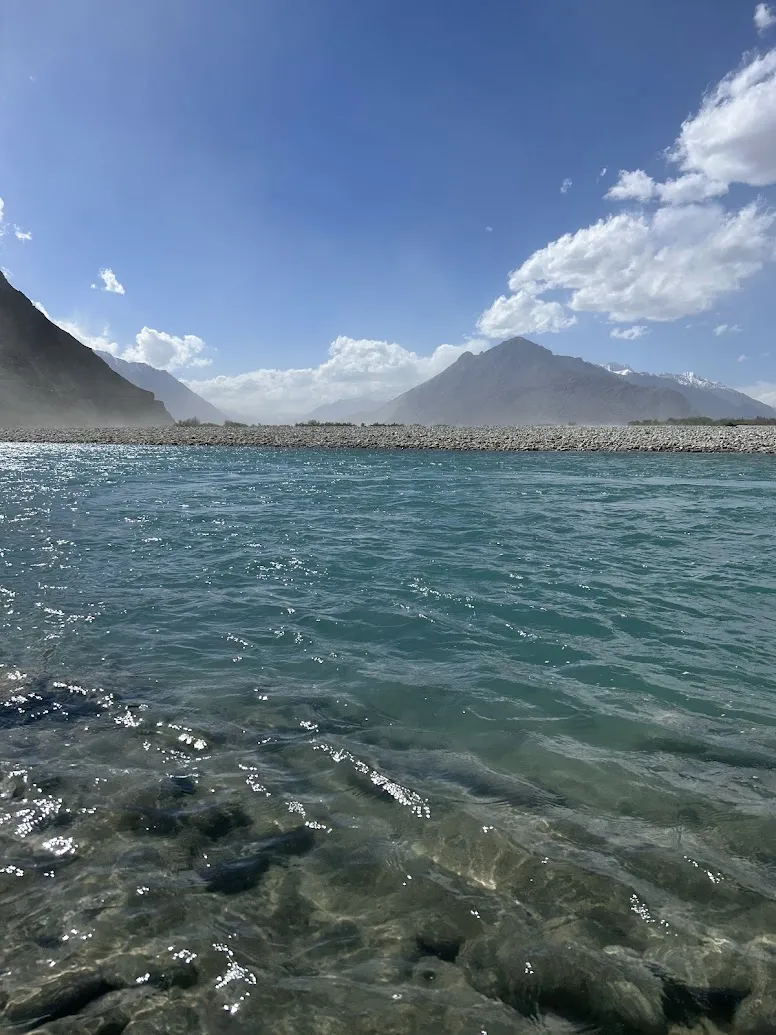
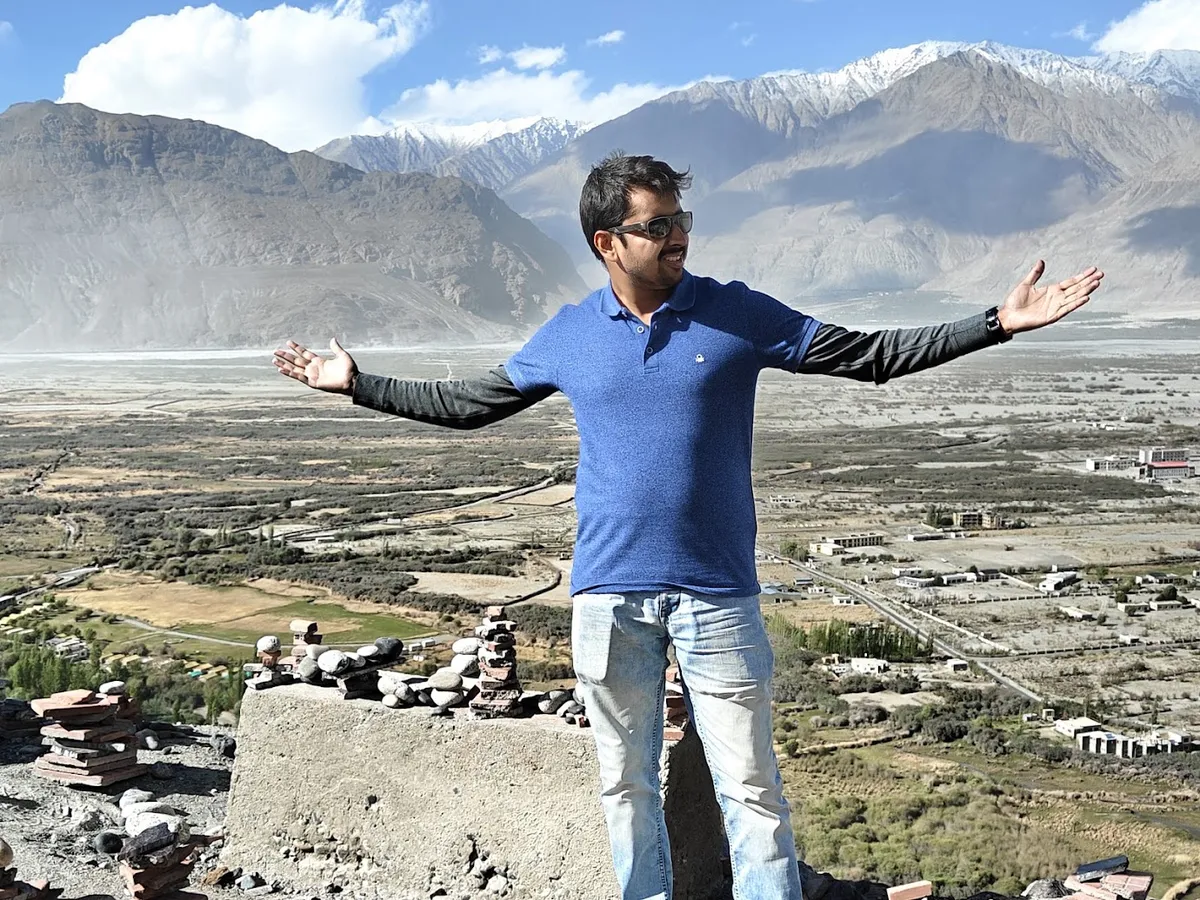
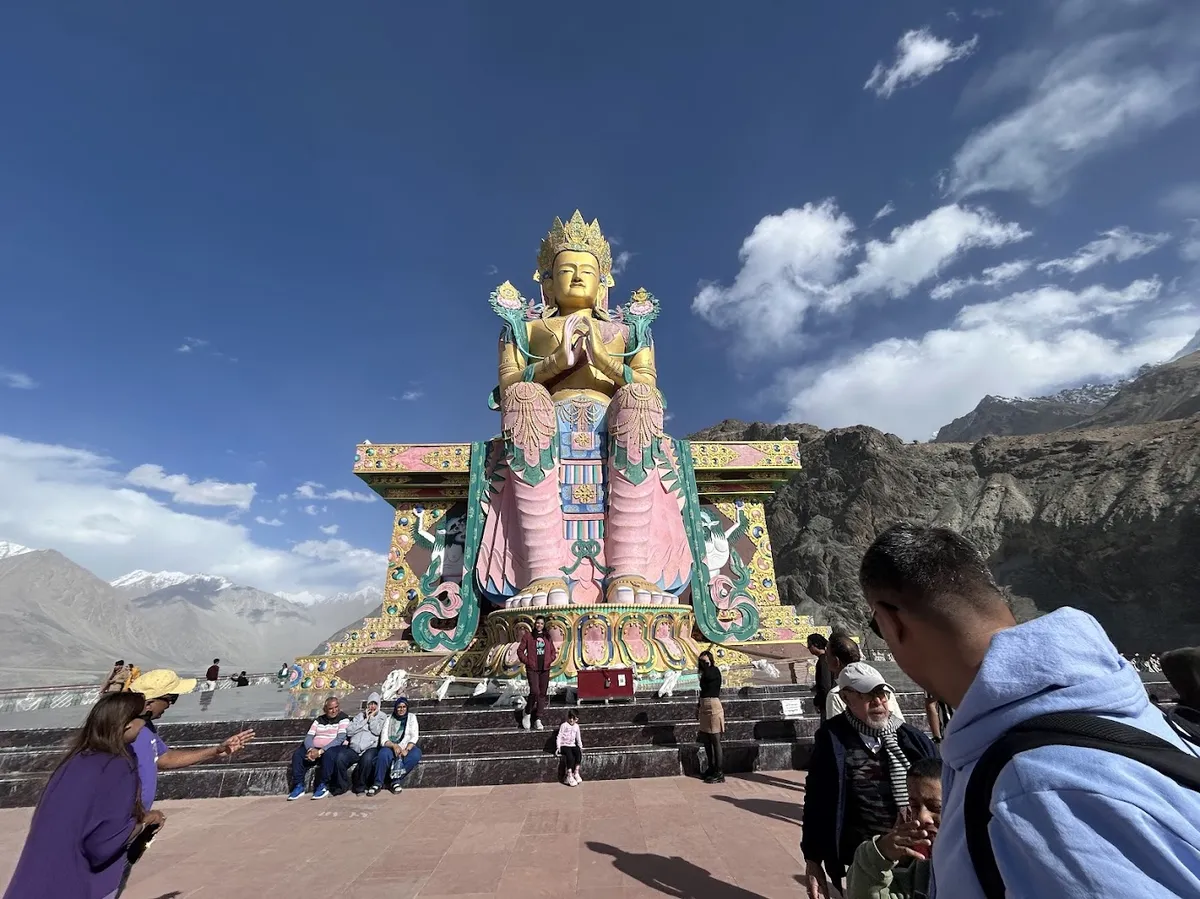
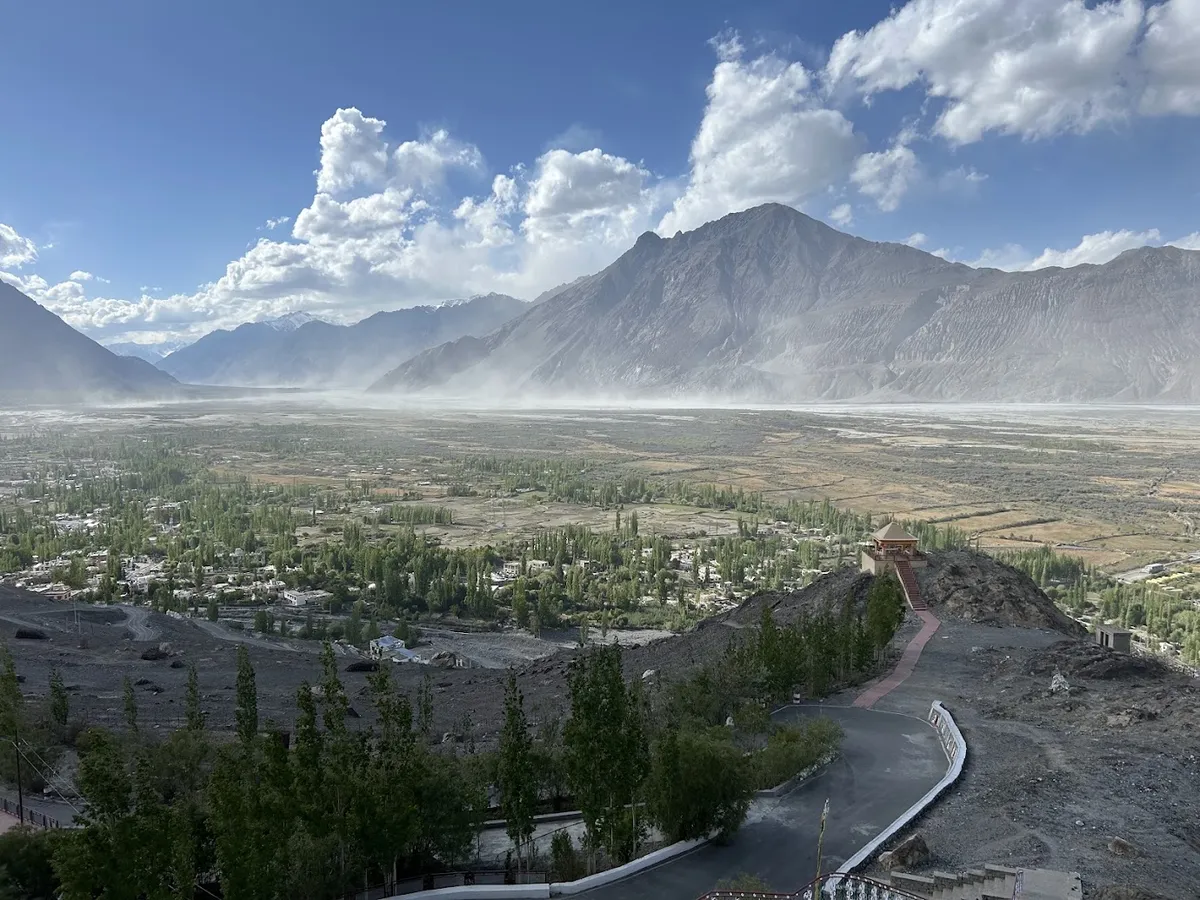
Finally, we reached the town of Hunder around evening, where we were to rest for the night. Hunder is a village with no reliable electricity supply; most hotels were solar powered and depended on cooking fuel to sustain life. Dinner was simple - the remoteness allows for nothing else - but after a day of non-stop travel, it was exactly what we needed.
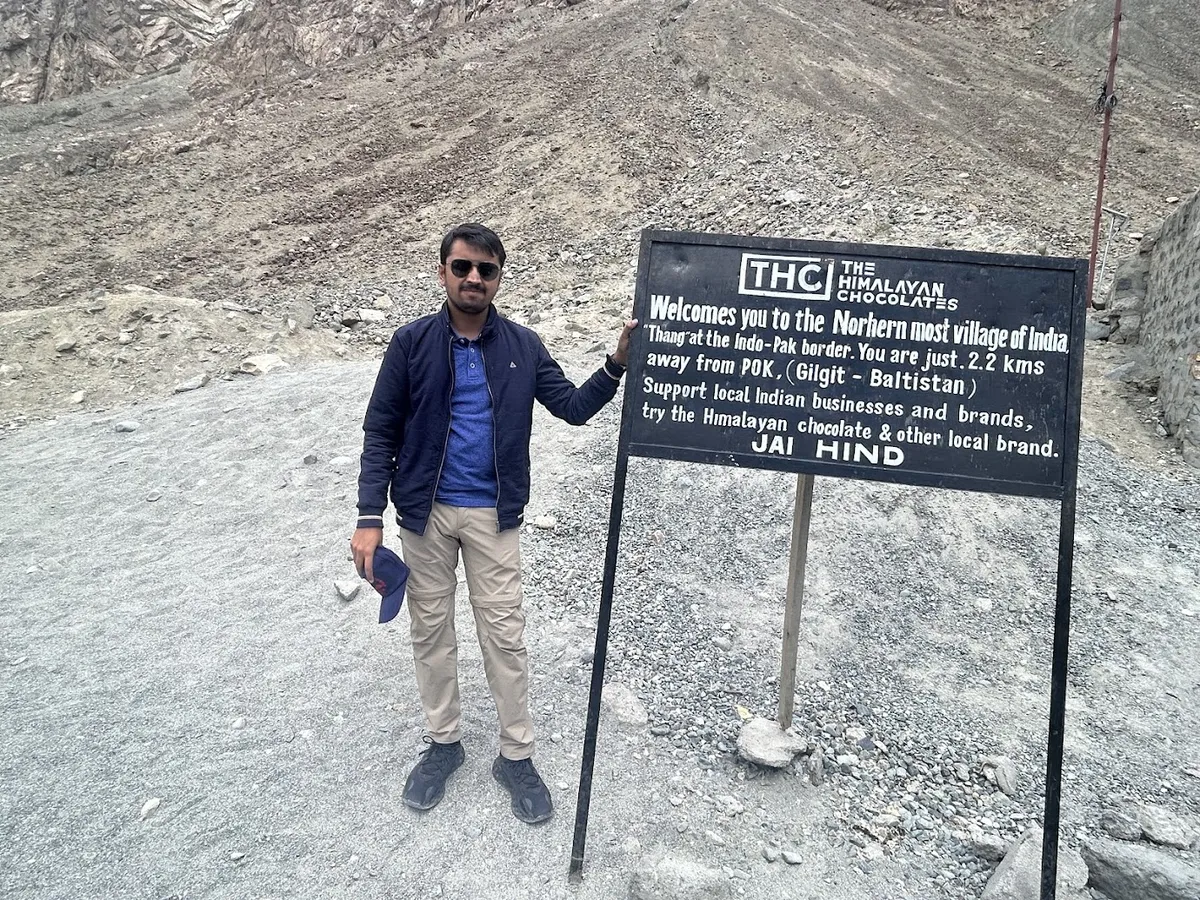
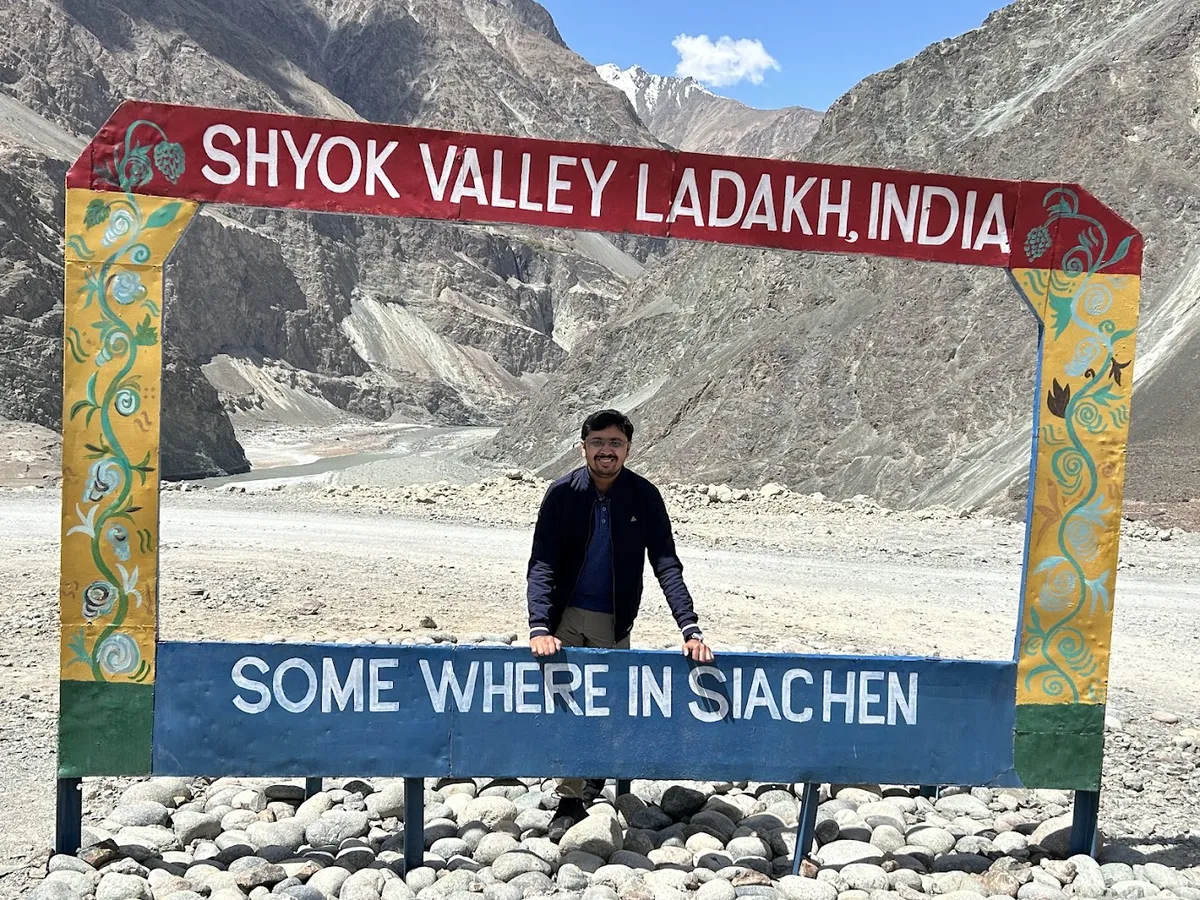
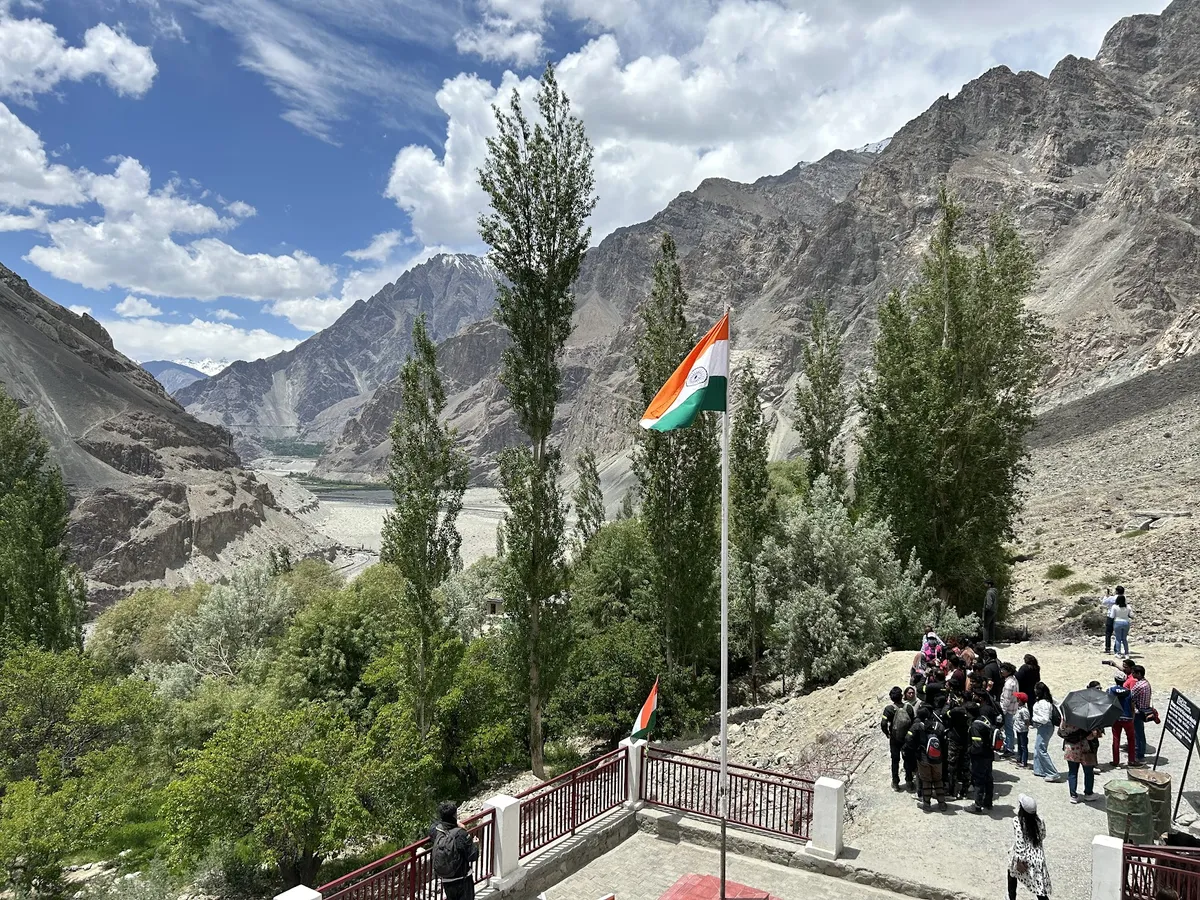
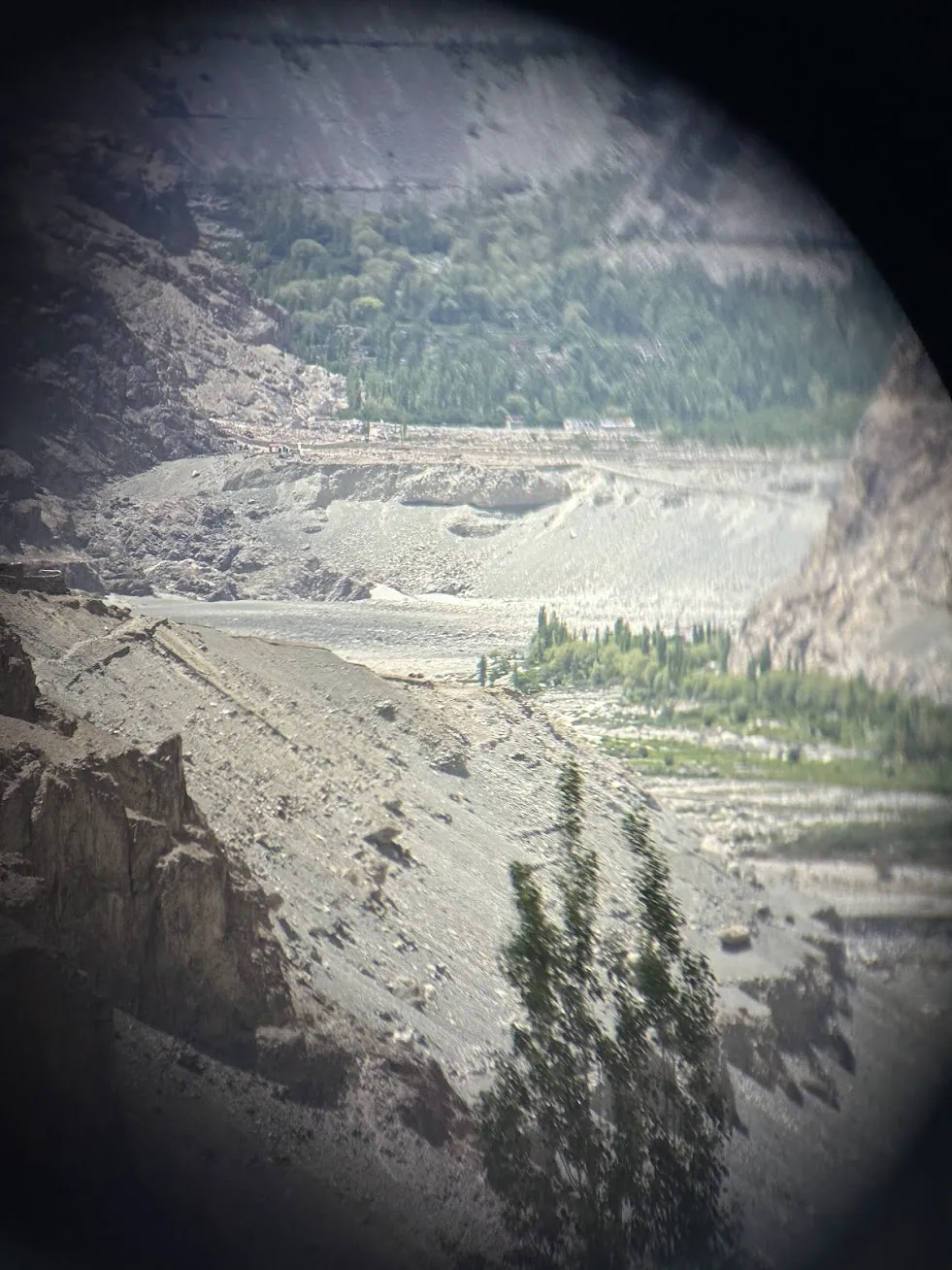
Next morning, the plan was to proceed towards Turtuk, a border village between India and Pakistan. We made Hunder a base, so we would eventually return to Hunder after the day-trip to Turtuk. Turtuk offers a peek into the shared culture of Gilgit-Baltistan. Till 1971, Turtuk was part of Pakistan, when overnight its political reign moved to the Indian Union. Its people speak the same Balti language as their now-Pakistani neighbours in Frano, the village bordering it on the other side. I marked the visit by trying some authentic Balti cuisine - Moskot - buckwheat pancakes served with almond puree.
On the way back - I was pleasantly surprised to find a Decathlon outlet (perhaps their highest?) snuck quietly in the middle of nowhere! Below are some photos of the day's escapades.
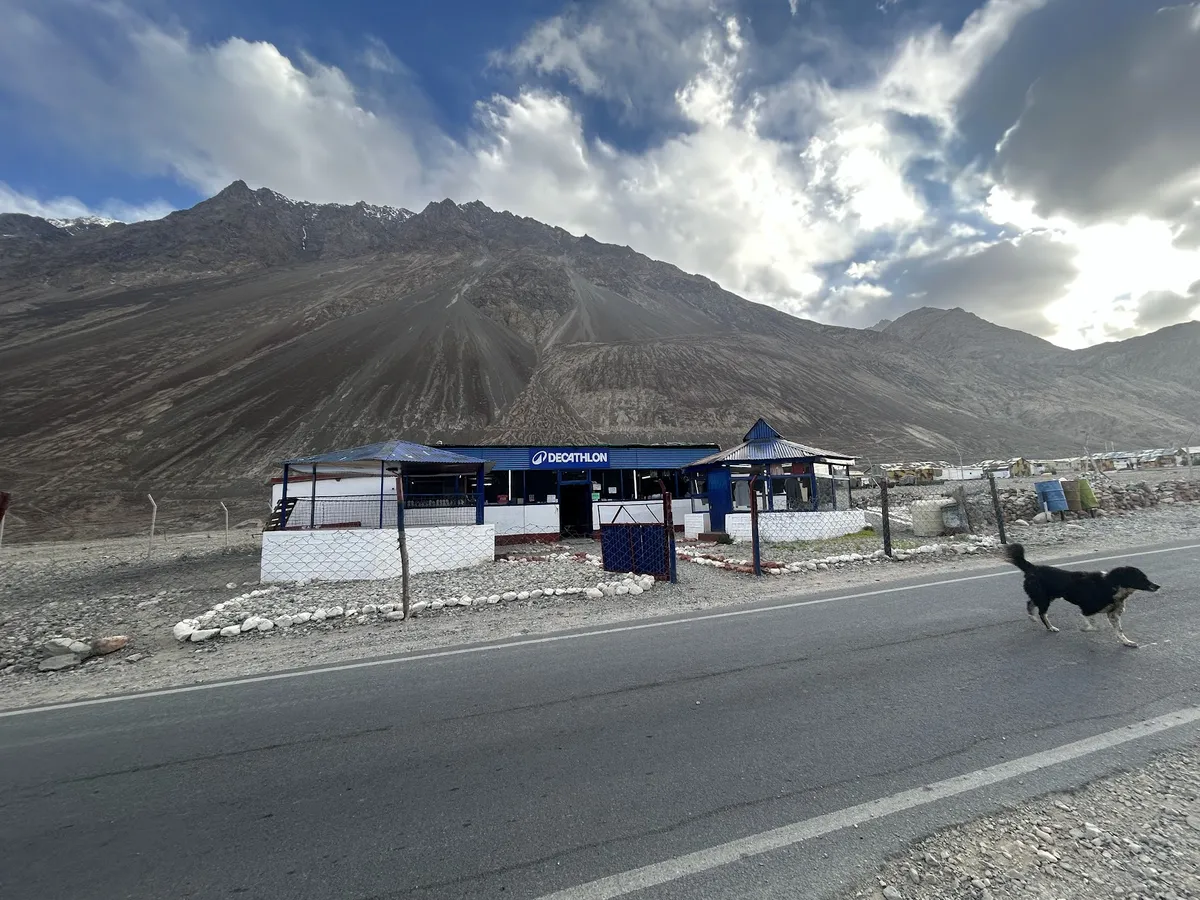
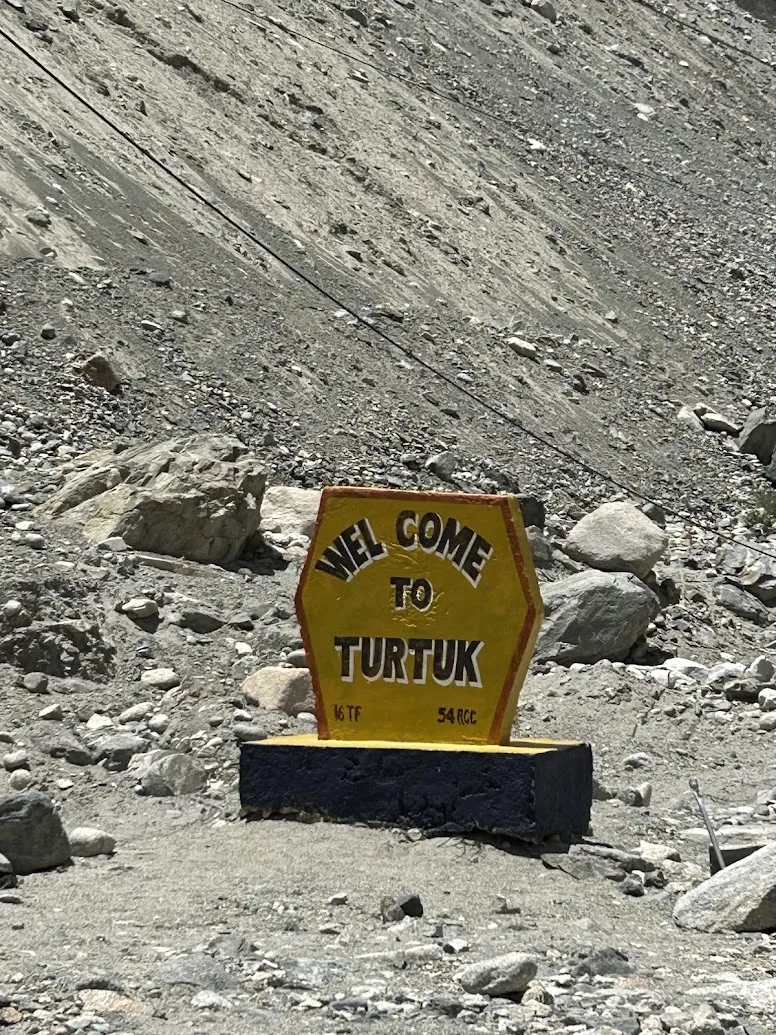
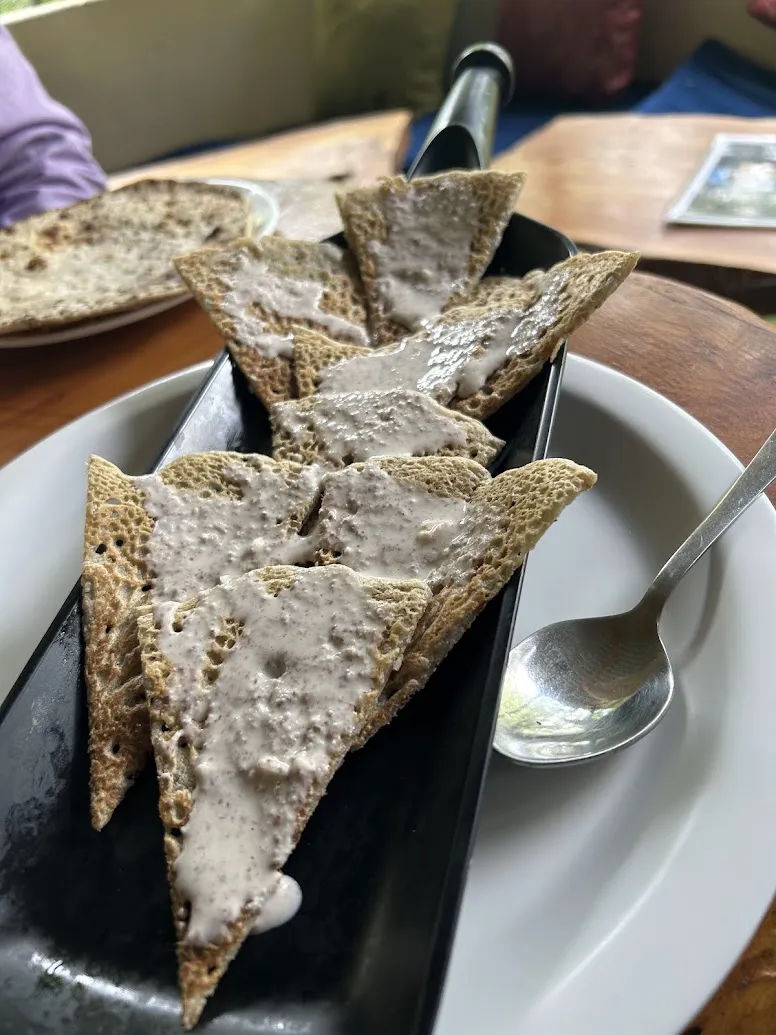
Land of the Night Skies: Exploring Pangong and Hanle
The trip so far had been fantastic, clearly. But what came ahead of us, left no desires unfulfilled. The Pangong lake is a high-altitude brackish lake that holds immense strategic, and spiritual importance. It has also sat at the heart of the long-running India-China territorial dispute - a geopolitical fault line disguised as paradise. Before we left for Pangong, there was the famous Bactrian camel ride that we could not miss. We went early in the morning when the activity starts up. Climbing onto the humps is more graceless than it looks, but once you settle in and feel the camel's slow, swaying rhythm, it's quietly wonderful.
There was a fair amount of not-so-friendly roads on today's share of our journey. I remember holding onto the support to ensure I remain stable, even with a seatbelt on! Hats off to the bikers who dare to cross the stretch, especially ones doing solo. It must extract every single ounce of energy to make it from Hunder to Pangong all by yourself. We reached Pangong around the evening. Pangong strips things back - no reliable electricity, no mobile signal worth speaking of, no frills of any kind. And yet it catches you completely off guard: a vast, glittering lake at the top of the world, looking like it has no business being there!
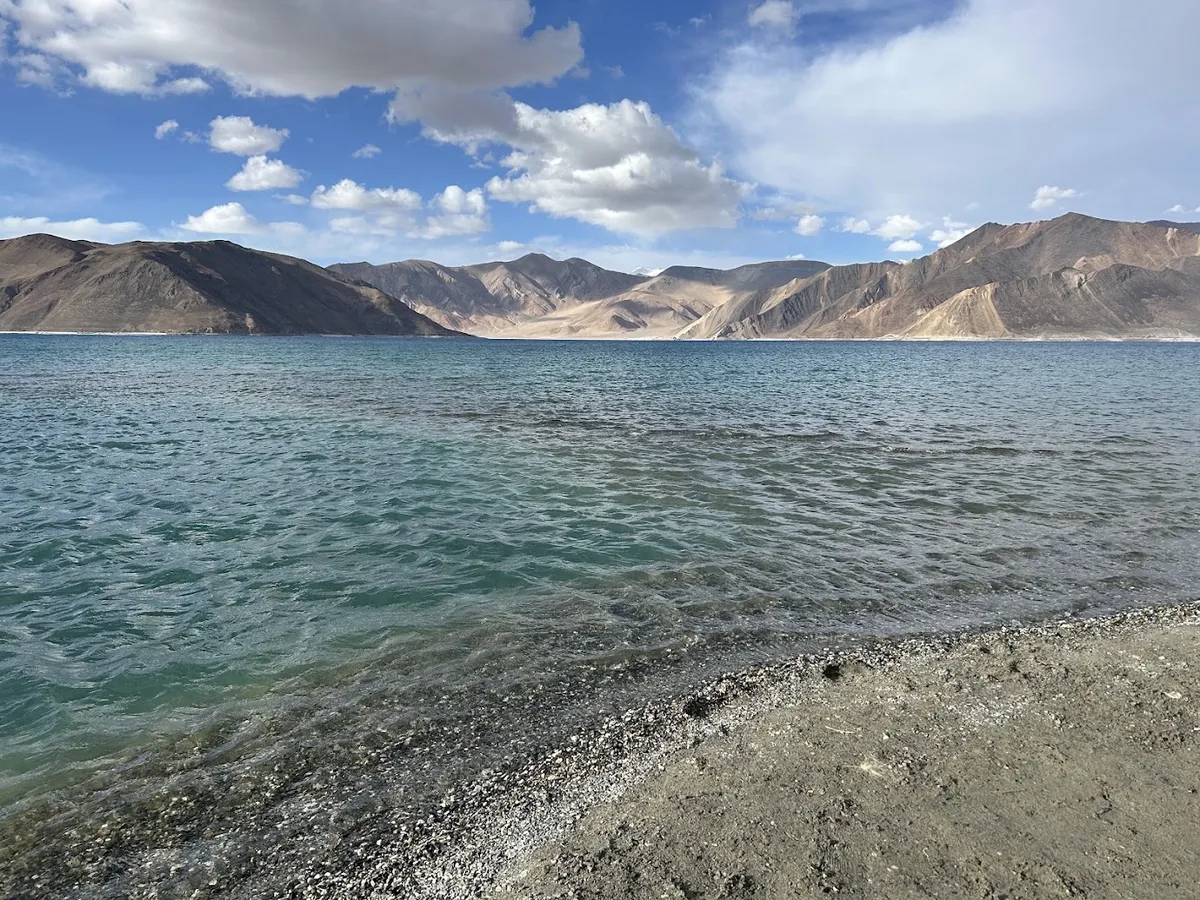
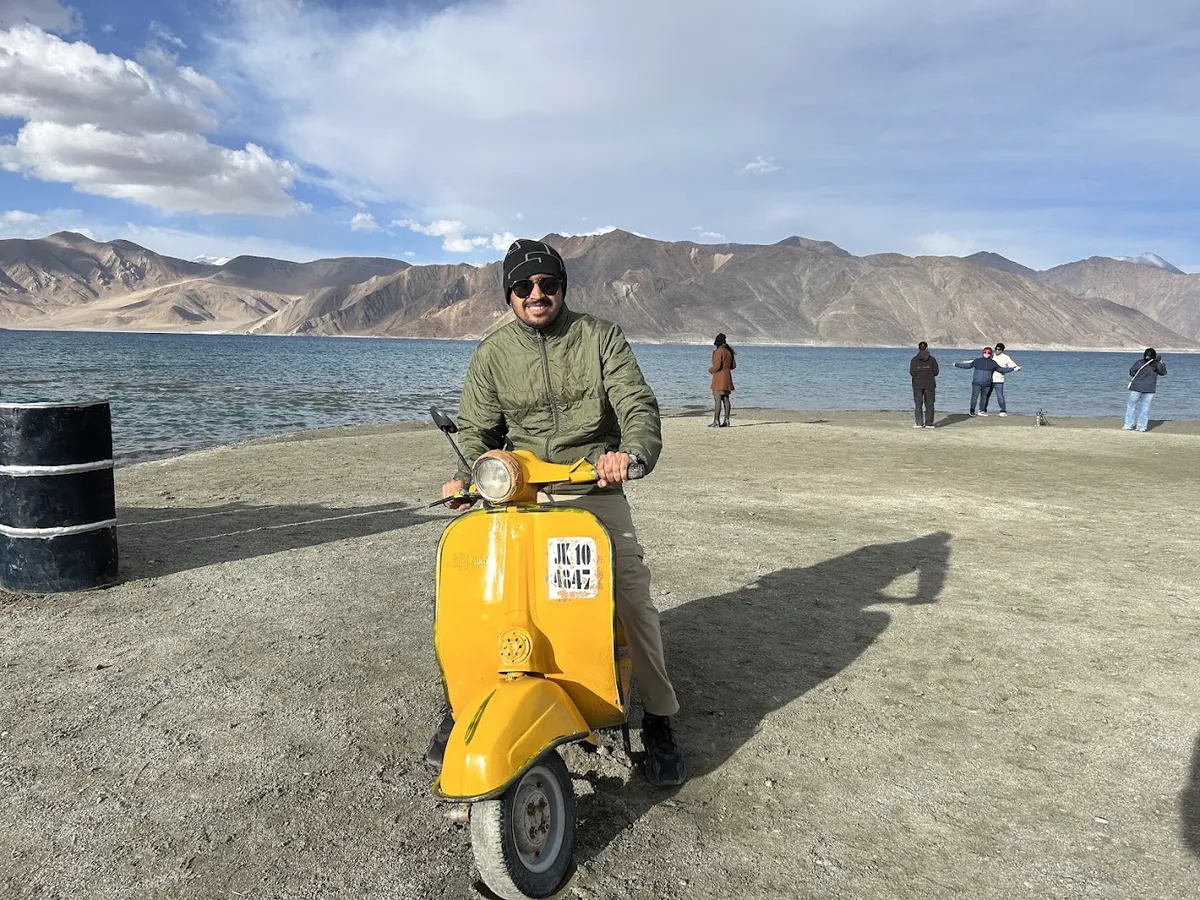
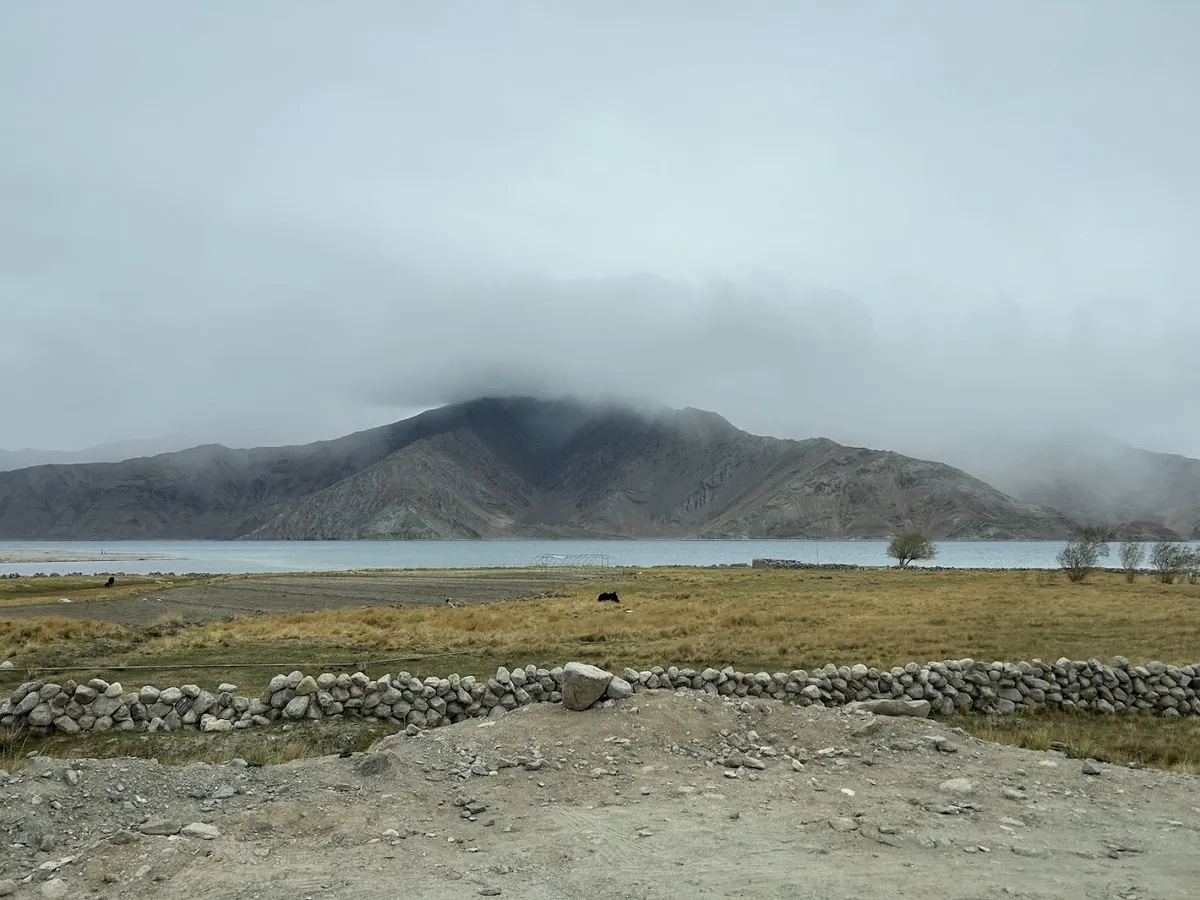
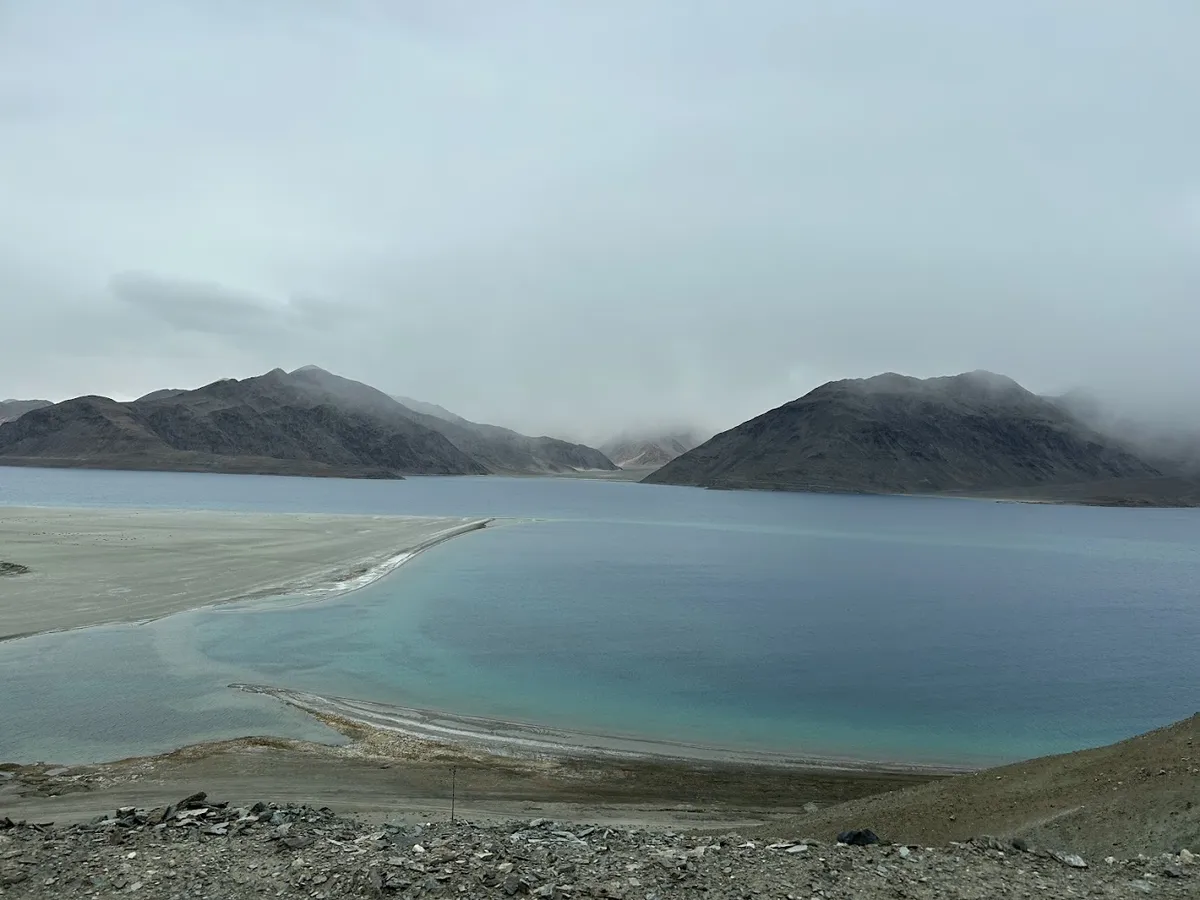
That night felt extremely cold. Winds rage near the lake; our accommodation was a cottage a few hundred meters off the lake. I could literally hear the gusts at night. Even though I had two layers of blankets with me, it was impossible to not feel the chill. Eventually I settled into sleep. I wonder the hardships of the people who continue to live there day in and day out - the army of course, or their hospitality industry counterparts who are paid far less and mostly untrained for the altitudes when they arrive.
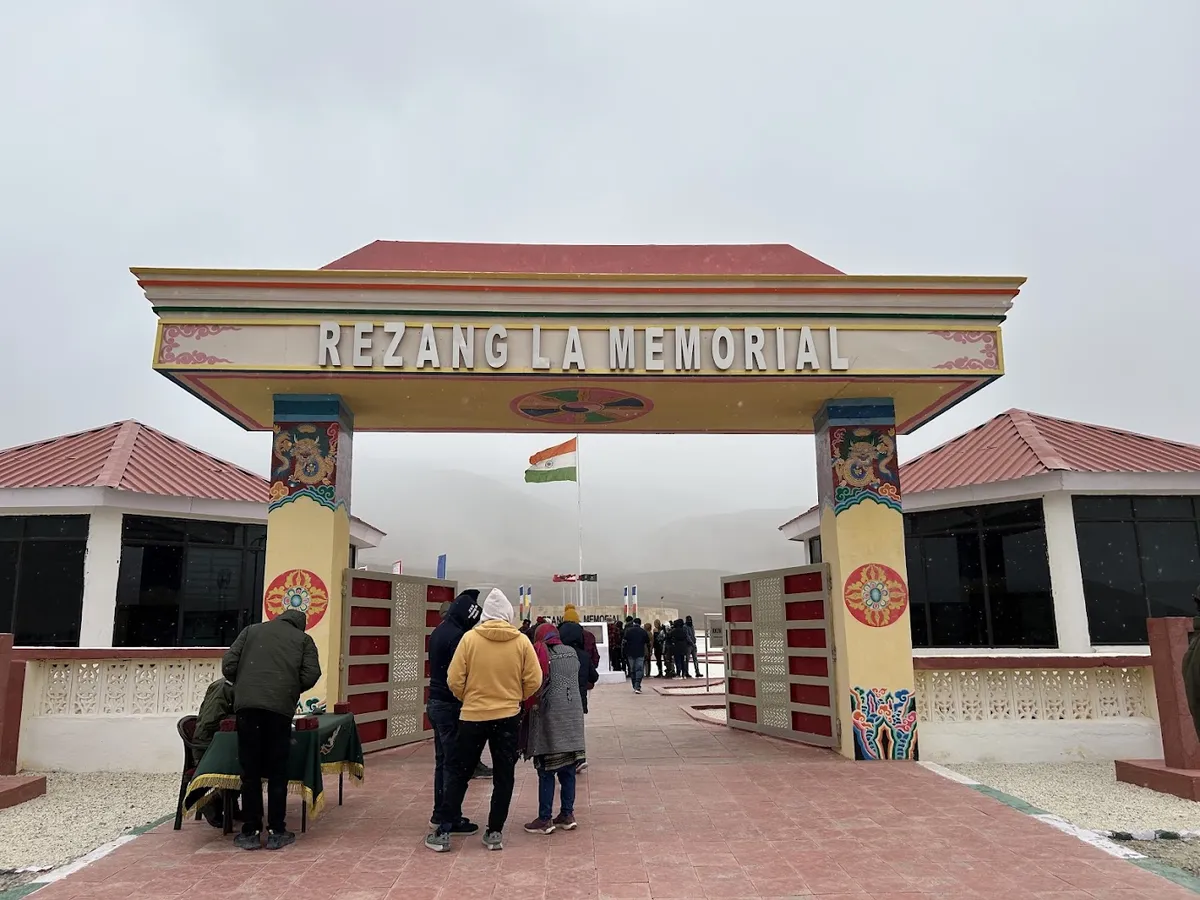
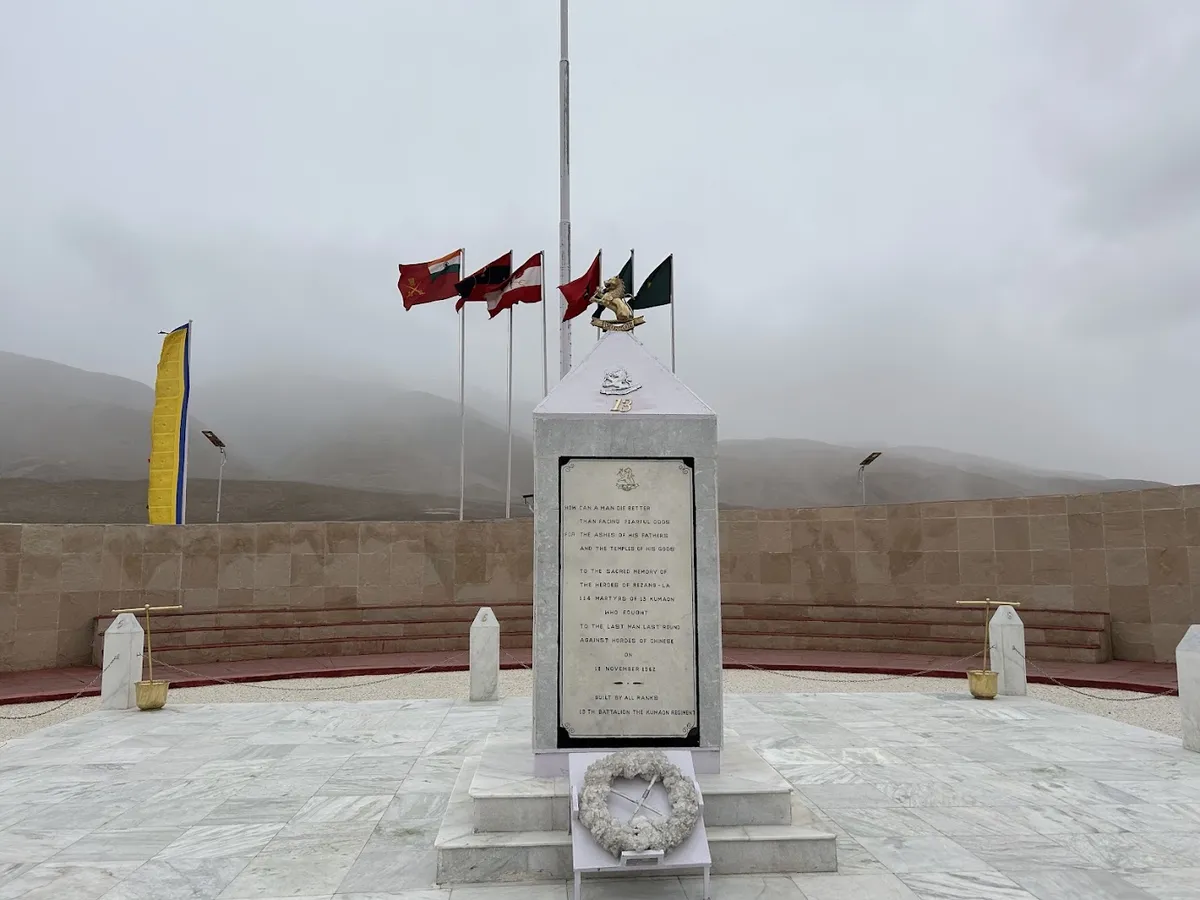
The morning-after was covered in fog emanating from over the lake. It was as if a blanket of white fog had dawned on us. Having a light breakfast, we made our move towards our final destination (not the final day yet!) Hanle. Hanle is known all over for being one of India's only dark-sky reserves. Nested at 14,500ft, it provides a perfect window to capture a sneak peek into the wonders of the universe. However, on the way, we had two scheduled visits planned. The Rezang-la War Memorial came first on the itinerary.
Rezang-la is a memorial site to pay tribute to the heroes of the 1962 Indo-China war. The site commemorates the Battle of Rezang-La, fought in 1962, where 120 Indian soldiers fought to their last against thousands of Chinese intruders, with nothing but their vintage World War-II era rifles. It was truly moving to see how our heroes gave up their lives fighting off the enemy, widely regarded as one of the most remarkable 'last-stands' ever fought.
How can man die better than facing fearful odds,
for the ashes of his fathers, and the temples of his Gods?
- Inscription at Rezang-La
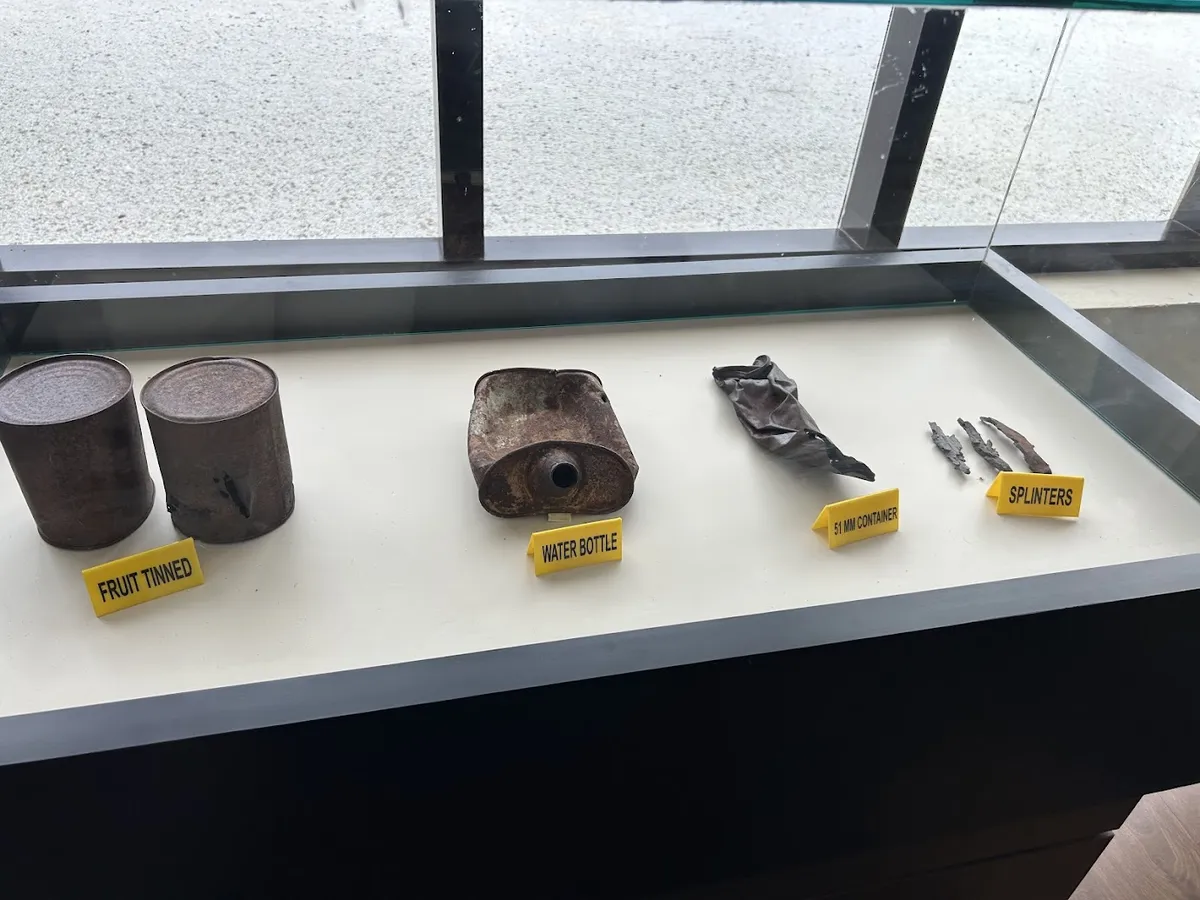
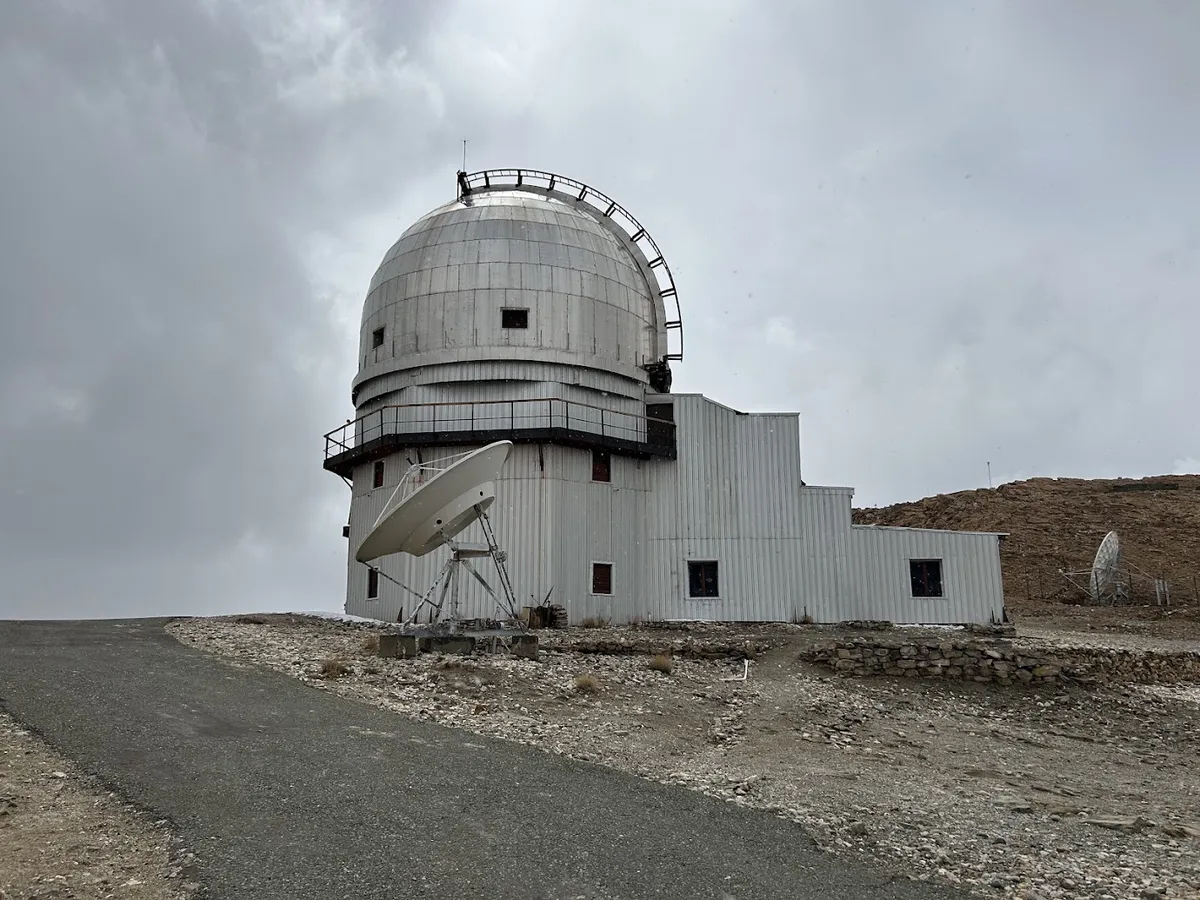
After starting from Rezang-La, we drove straight for several hours until we reached Hanle. Due to the holiday season, we found out that several other people had also camped at Hanle. Fortunately, we had a homestay booked for us from earlier, arranged by the agency. Before settling into the comfort of the homestay, we ventured to the one prime attraction I always wanted to cover: The Indian Astronomical Observatory! The observatory is remotely controlled by the Indian Institute of Astrophysics. However, when I visited the observatory, it was shut owing to a persistent coat of light snowfall. Still, the visit was worthwhile as I could venture inside an operational telescope for the first time!
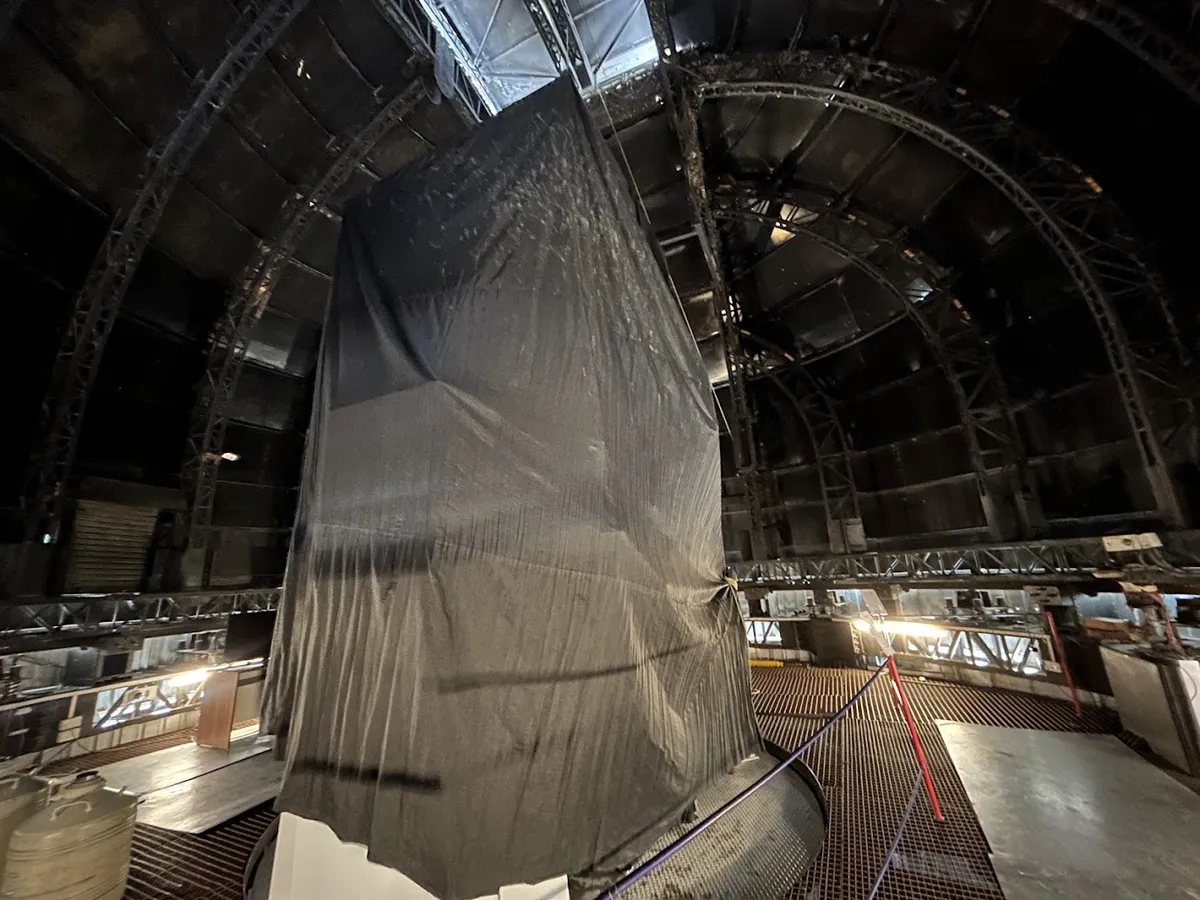
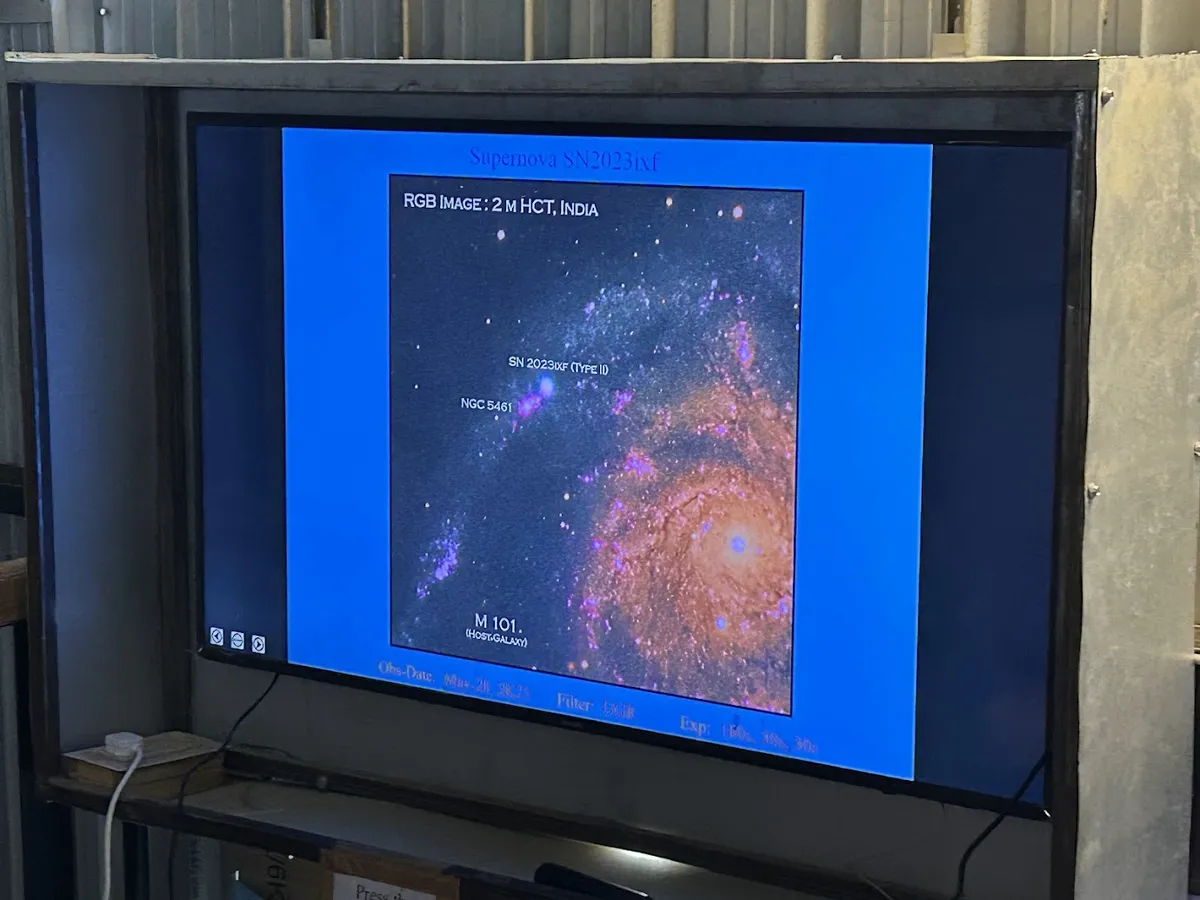
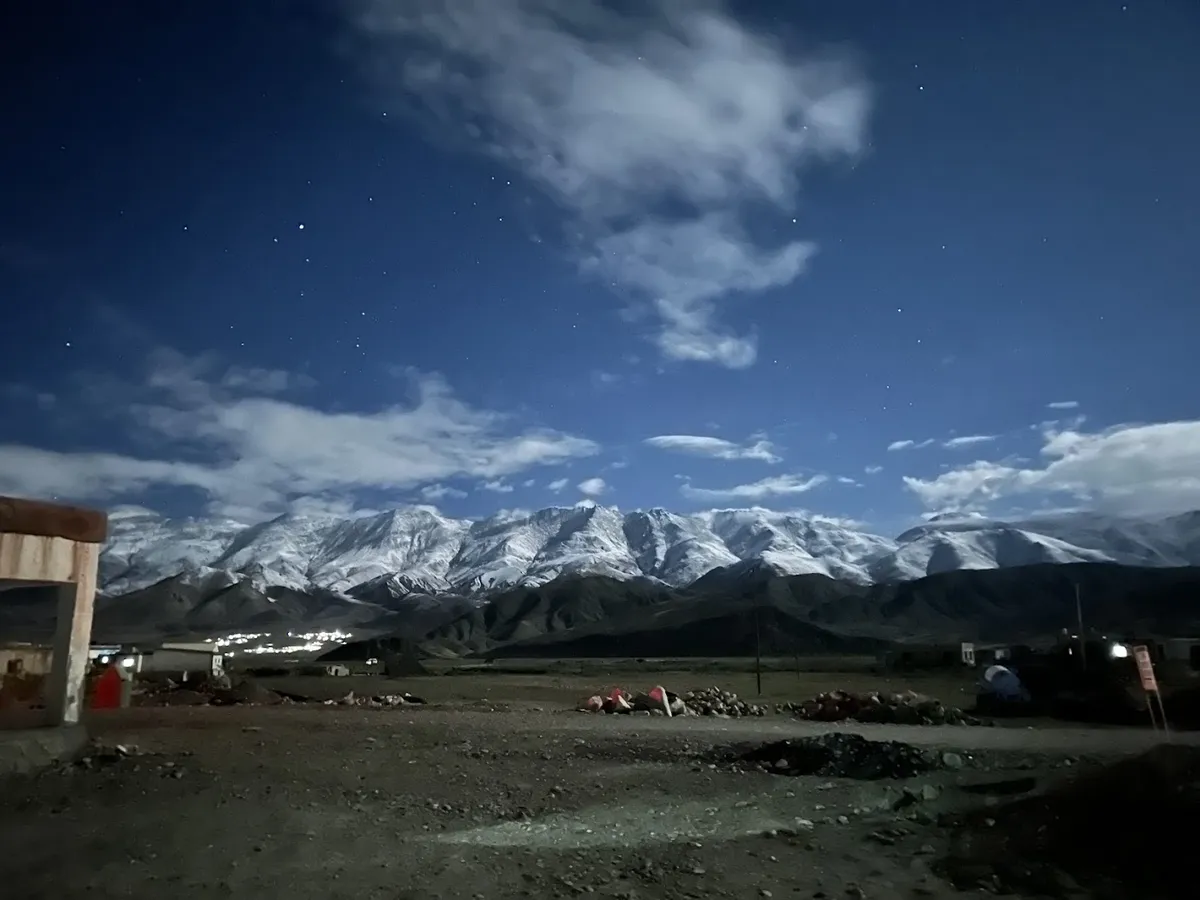
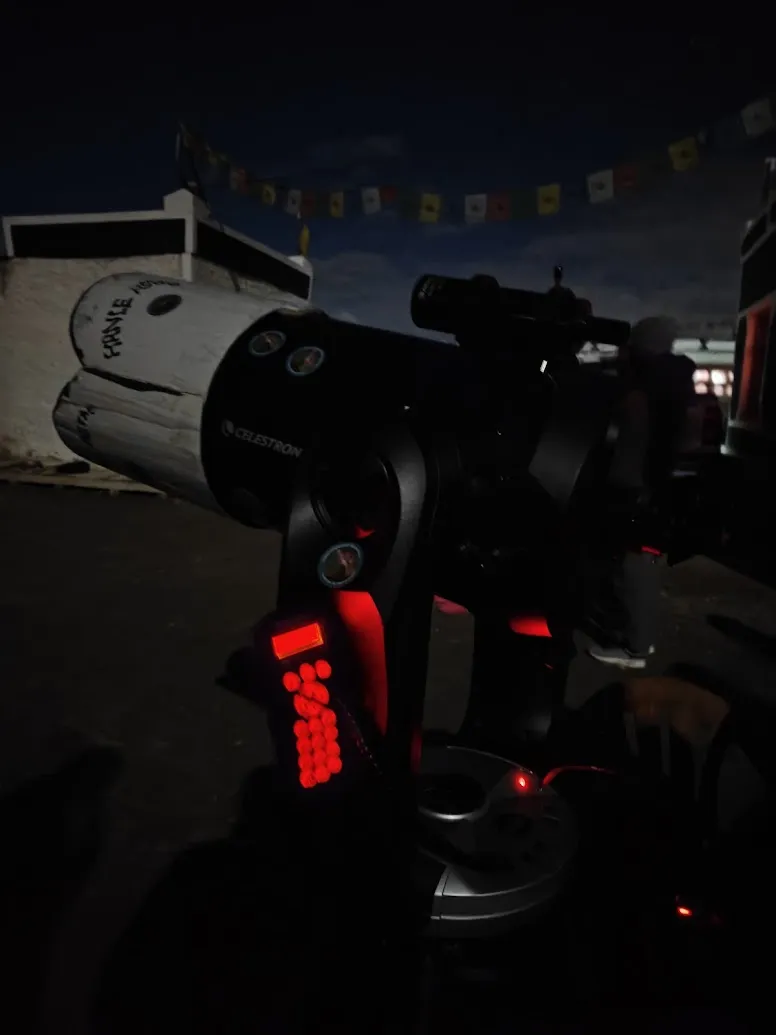
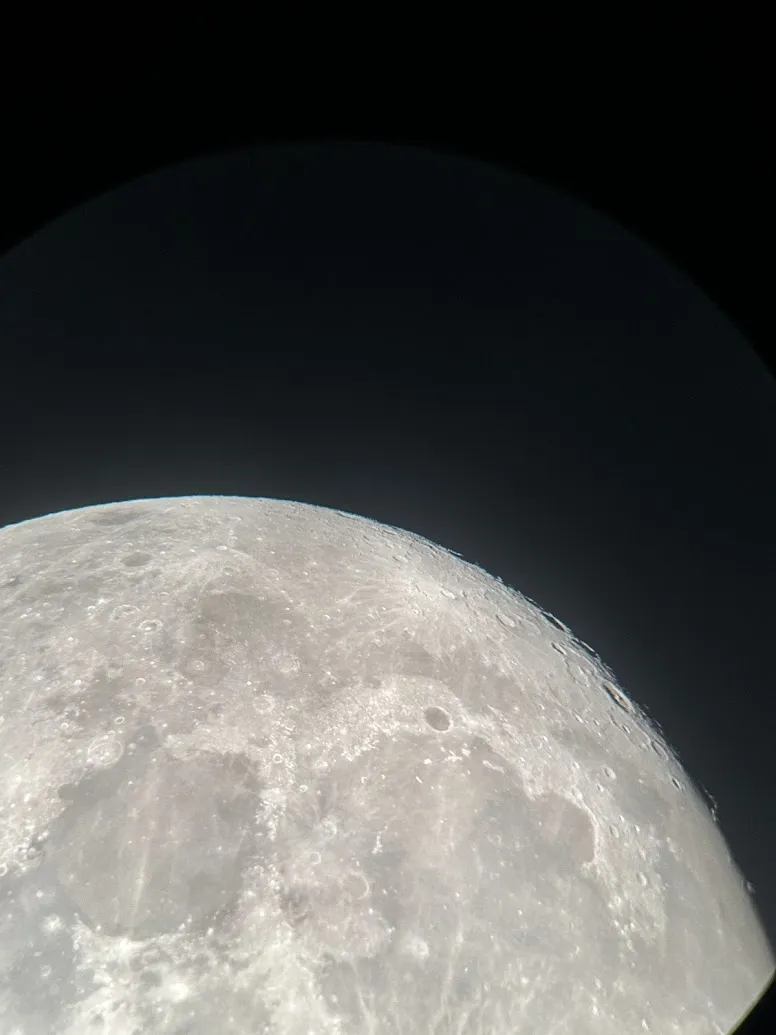
At night, I also had the unique opportunity to watch the heavens with the aid of a telescope. Owing to its higher apparent magnitude, we could spot Jupiter, and Saturn with its rings. I also watched the craters on the moon. I've had a refractor Celestron telescope when I was younger; but this was a Celestron of a different order entirely - motorised, remote-controlled, and locked onto the sky with a precision that made my childhood scope feel like a toy. Sharing some snaps:
The Long Way Back: Leh
It was finally the time when we had covered all of our destinations - Srinagar, Kargil, Leh, Hunder, Turtuk, Pangong and now Hanle. What a tour it had been so far, almost akin to a marathon of sorts! That night, while we slept, the heavens opened up and blessed Hanle with a paint of fresh snow. The snowfall was quite heavy. When exiting Hanle towards Leh - this was our penultimate day of the tour - we were amazed to find heaps of snow all over. The same place was as dry as a desert the earlier day. Nature can truly metamorphose faster than anybody else.
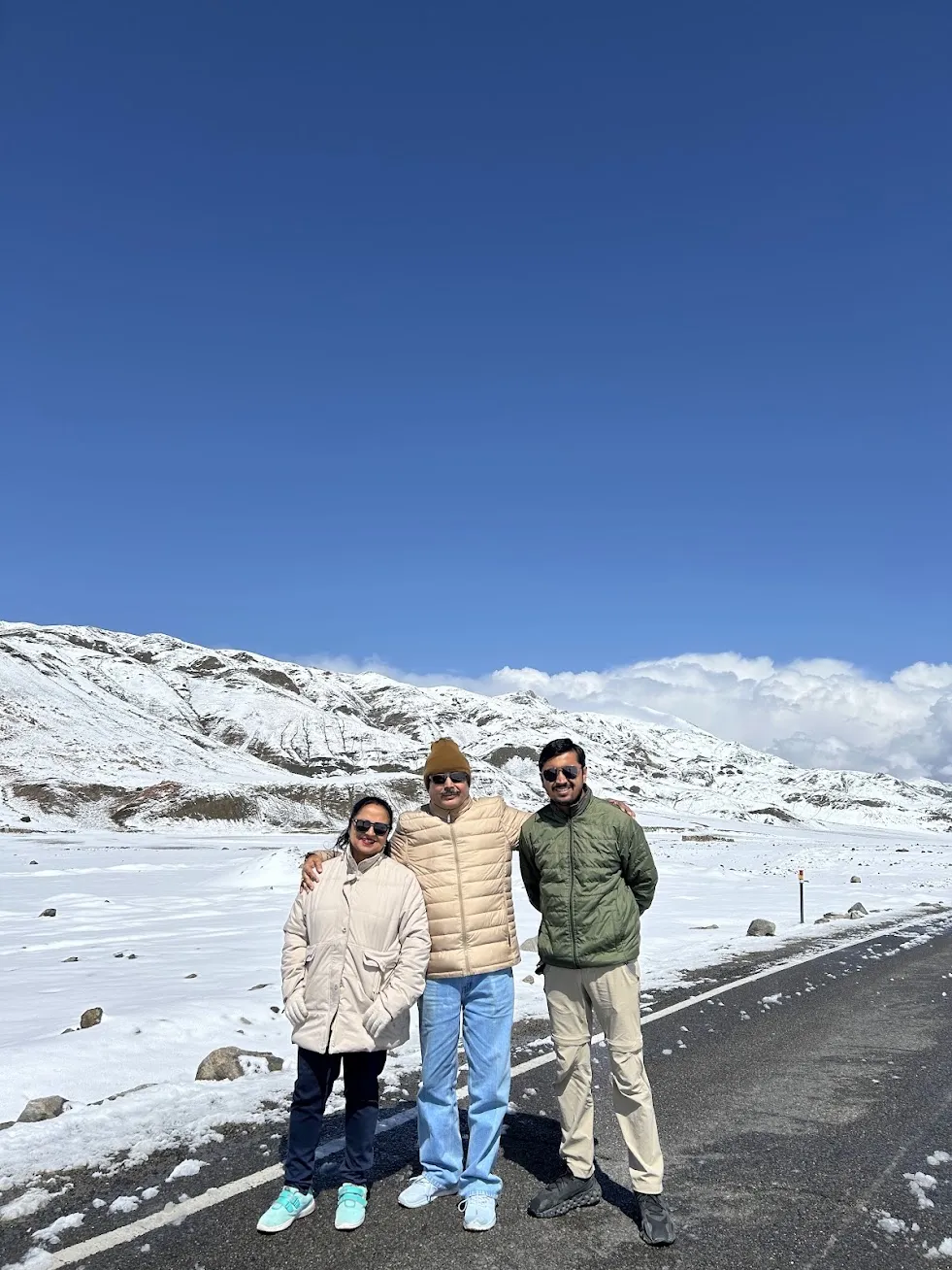
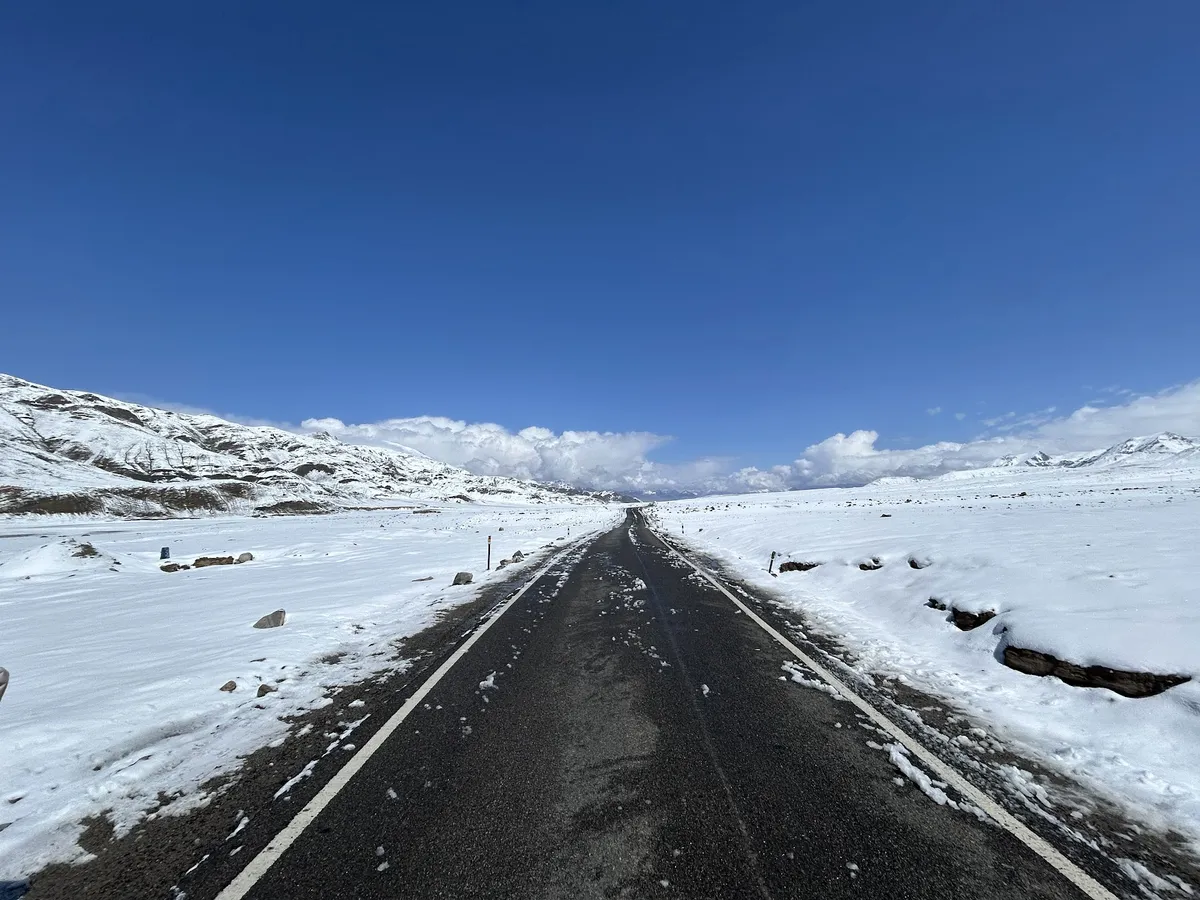
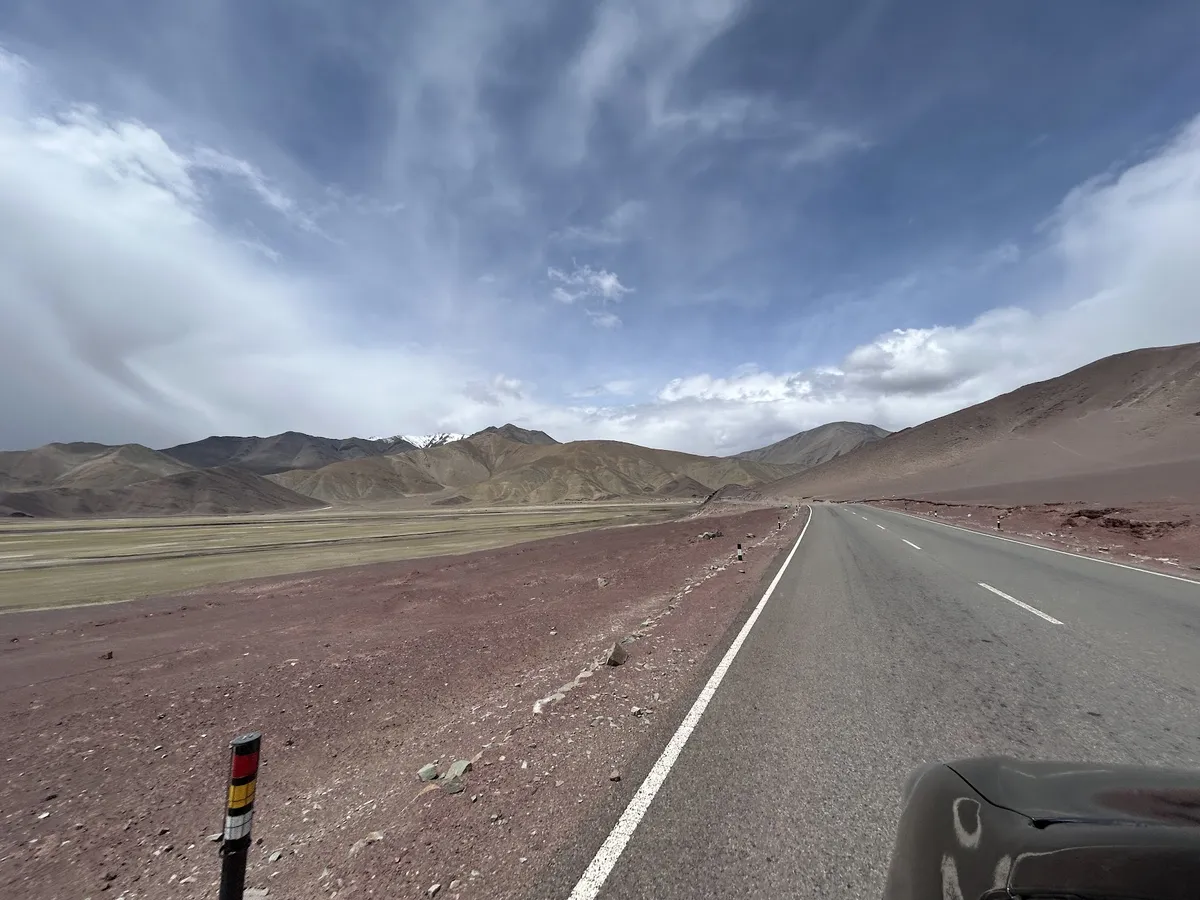
Soon after, the snow cleared up as we headed towards Leh. The Hanle-Leh journey is considerably smoother than the previous ones. The landscape dramatically changes colours, almost assuming a pinkish shade at some points, owing to a mix of unique minerals in the rock deposits. It is such a visual treat. We also stopped by at a hotspring - such a treat always to find one - at the Chumthang Hotspring.
The return path also encompassed visiting the Thiksey Monastery and the Shey Palace as they were on the way. The Thiksey Monastery had a steep climb, but I was fortunate to witness a live sitting of Buddhish monks in their prayer session - I've never seen one before. The Shey Palace was also remarkable in its grandeur and opulence.
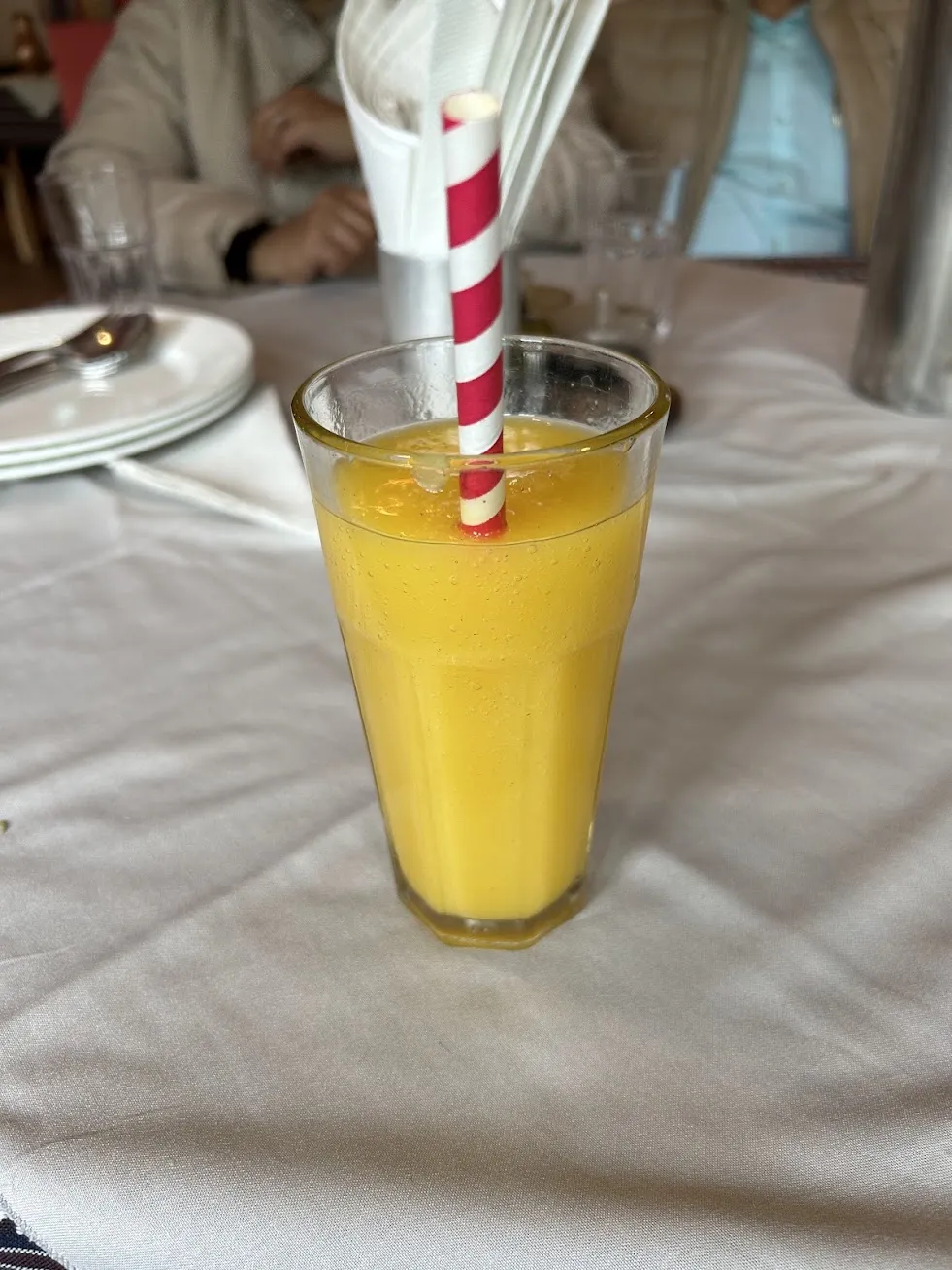
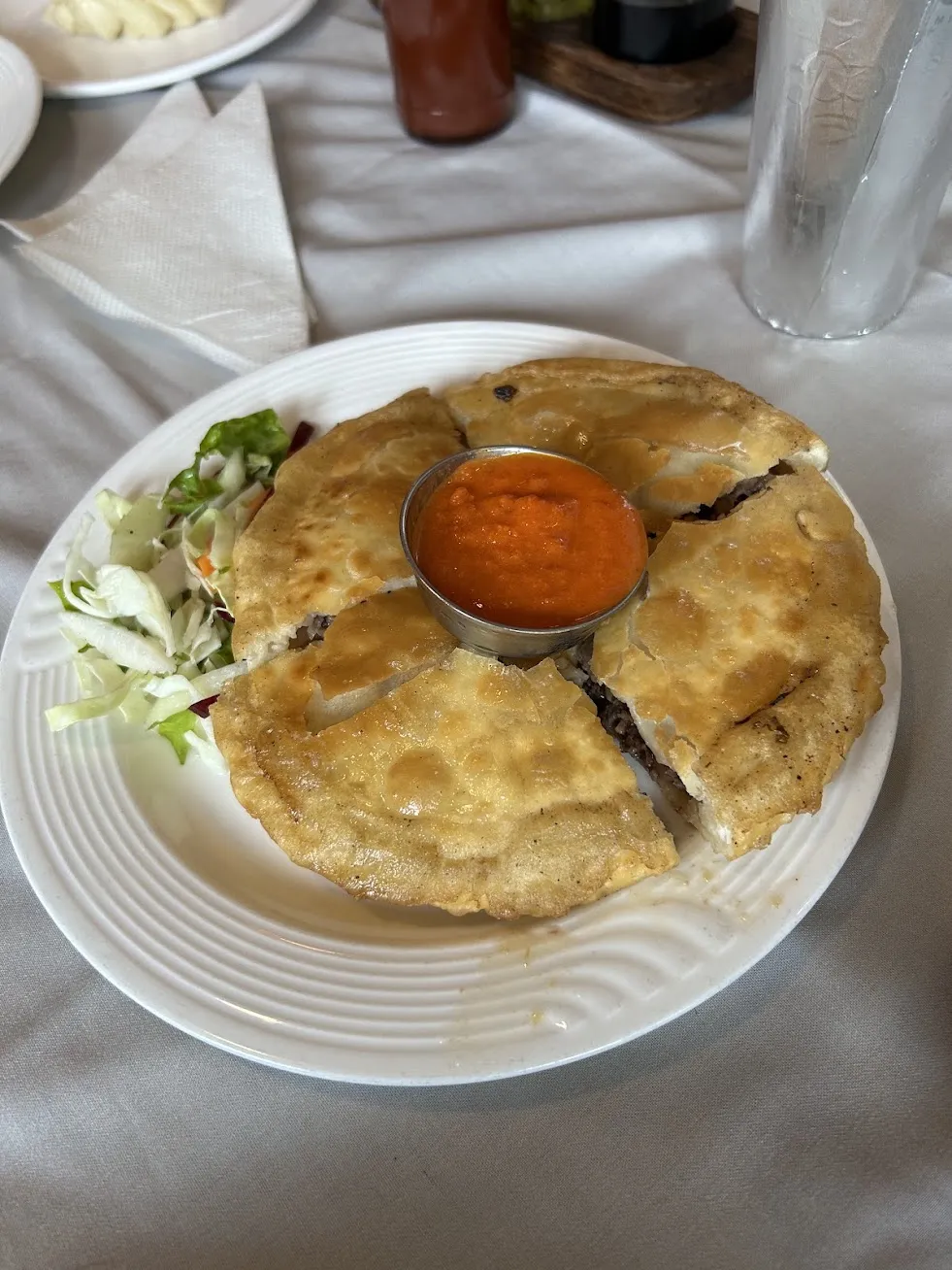
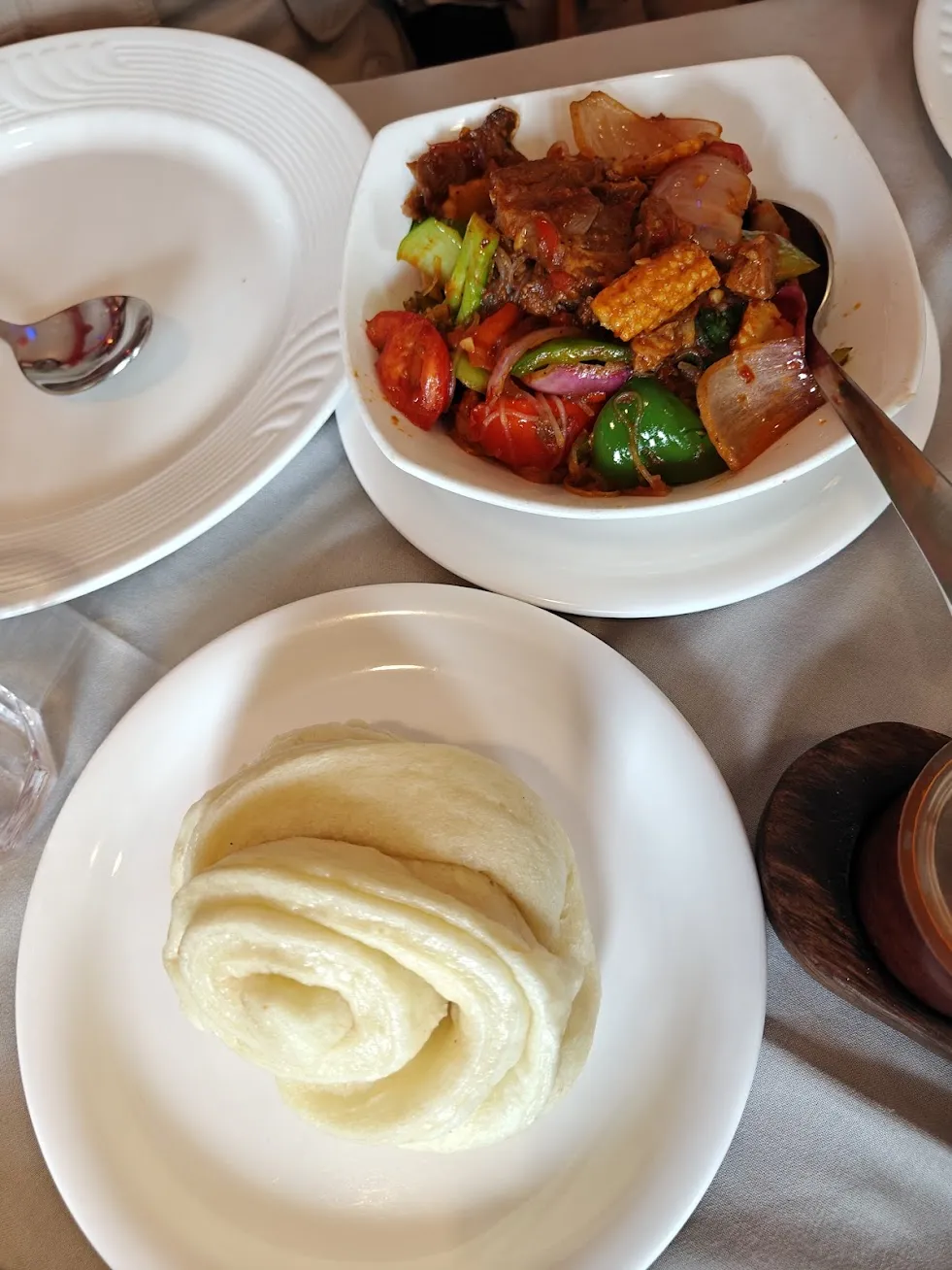
All spots covered for the day and finally approaching the evening, we walked into one of Leh's best cafe's: The Tibetan Kitchen. With the stomach growling, I settled on having the Bagleb - a traditional Ladakhi dish - and shared some soft Tingmo bread with my family. I also couldn't resist a fresh mango shake. The foodie in me was so glad :)
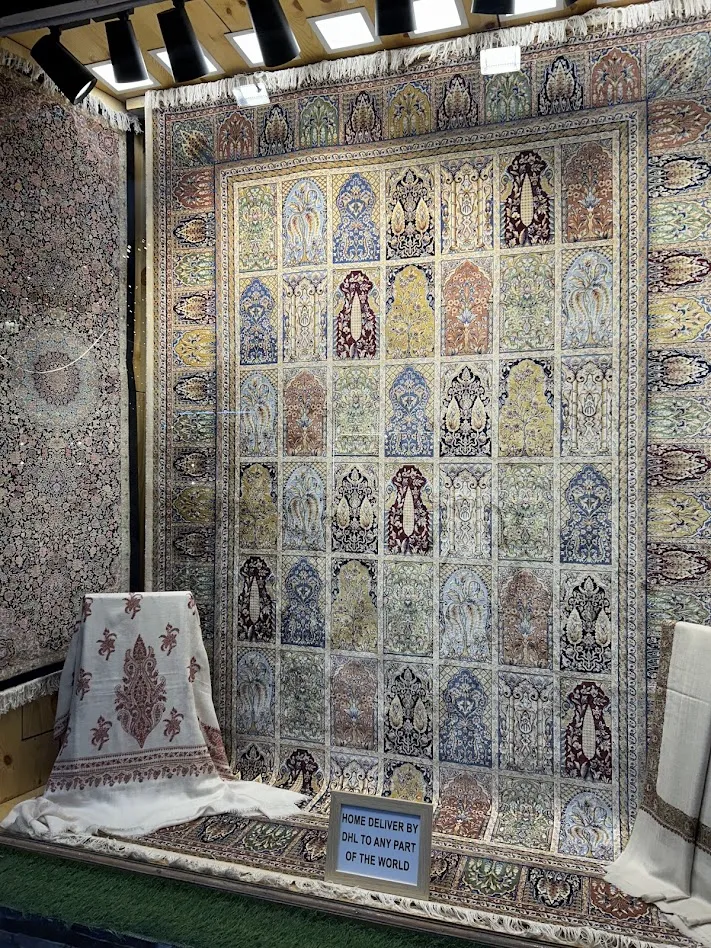
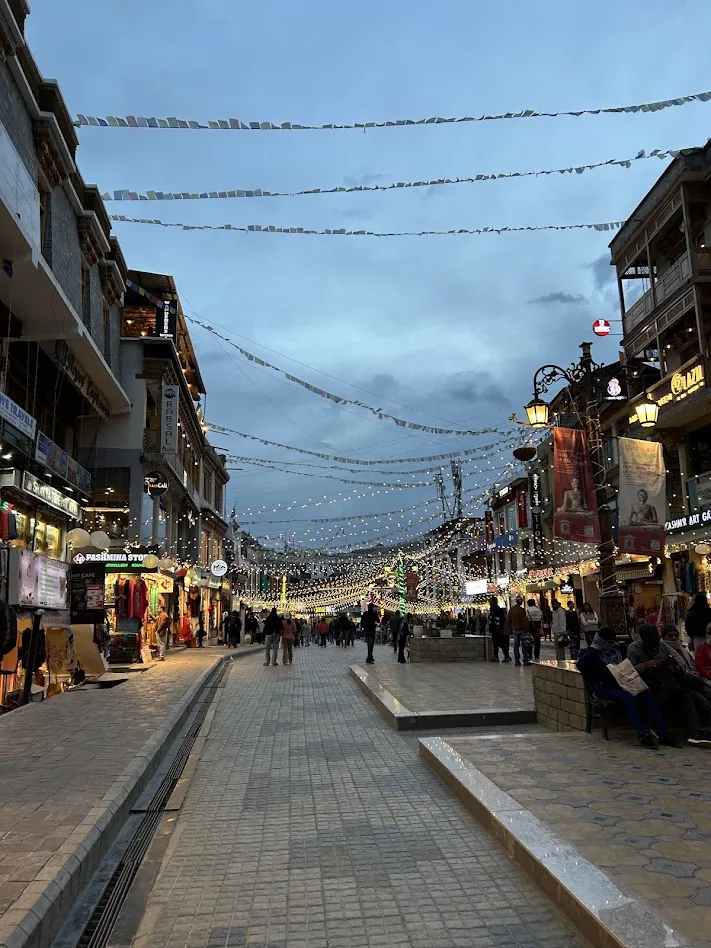
Having quenched our appetite, we landed at our designated hotel. This time around we were absolutely well acclimatized to the climate and elevation - so walking felt a lot easier. We also happened to make it right in time before the evening; that meant we could explore the markets today as desired. There is a smorgasbord of magnificent carpets on display; exquisite Ladakhi jewelry and handcrafts, and so much more. The evening glow added to the beauty; as dusk settled in, so did the quiet realization that this was it - the last evening of a trip that had given us far more than we'd bargained for.
Reflections, and a final goodbye
Ladakh turned out to be so much more than what the lore promises. I was also glad that my parents enjoyed alongside - that meant the world to me! What stayed with me most wasn't the landscapes - it was the people. Lives considerably harder than most, yet a warmth and humility that put the rest of us to shame. Each of them has their aspirations and dreams - and believe in the idea of India. I've written about one such story - Of Dreams and Destiny - of our guide Nazeer, who has now went on to become an Agniveer with the Indian Army.
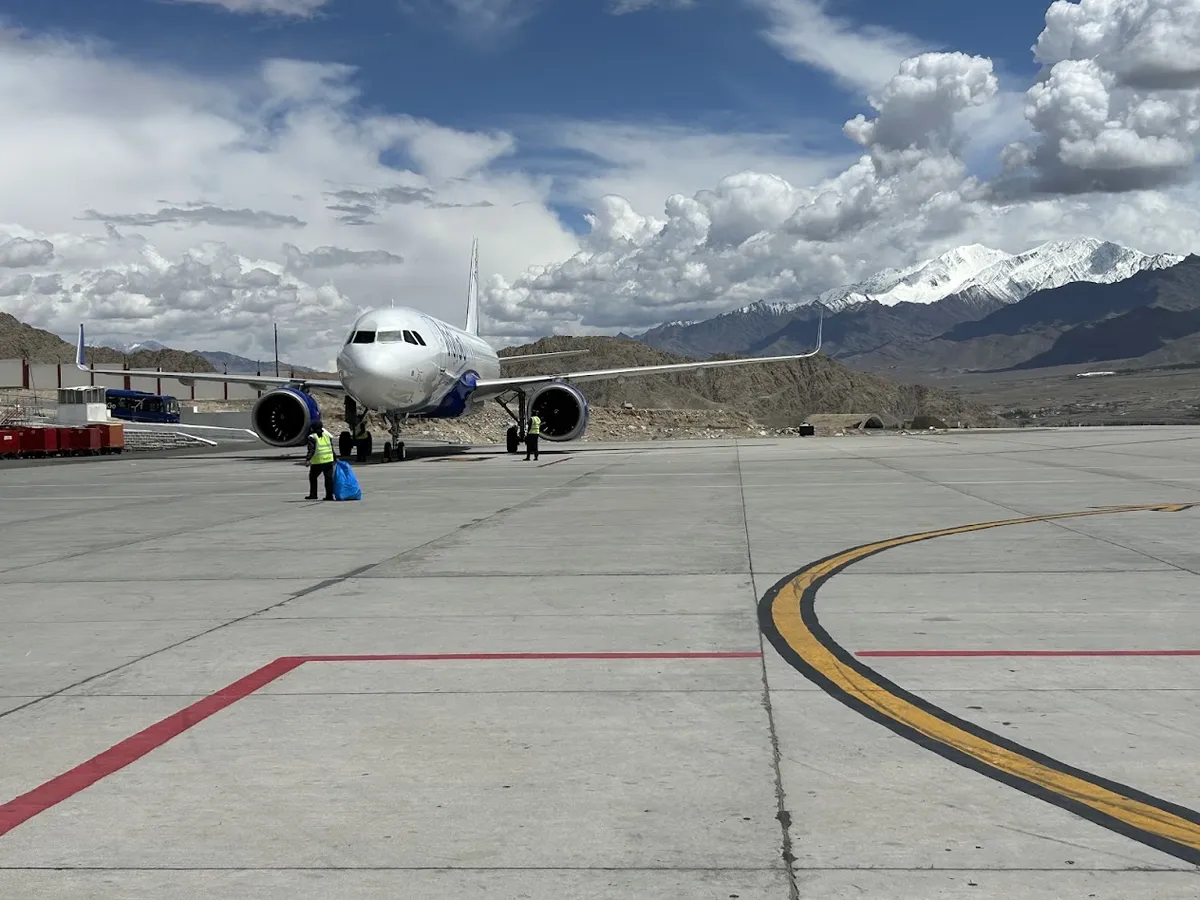
We flew out of the Leh airport on a Sunday. The airport is a sight in itself, with the Himalayas lapping up the runway top from all sides. As it takes off to the skies, the mountain peaks become visible from the window seats. One last gift from Ladakh - the peaks framed in the window, holding their pose until the clouds finally swallow them up.