A Northeast Sojourn: Tales from Nagaland's Hornbill & Dzukou Valley
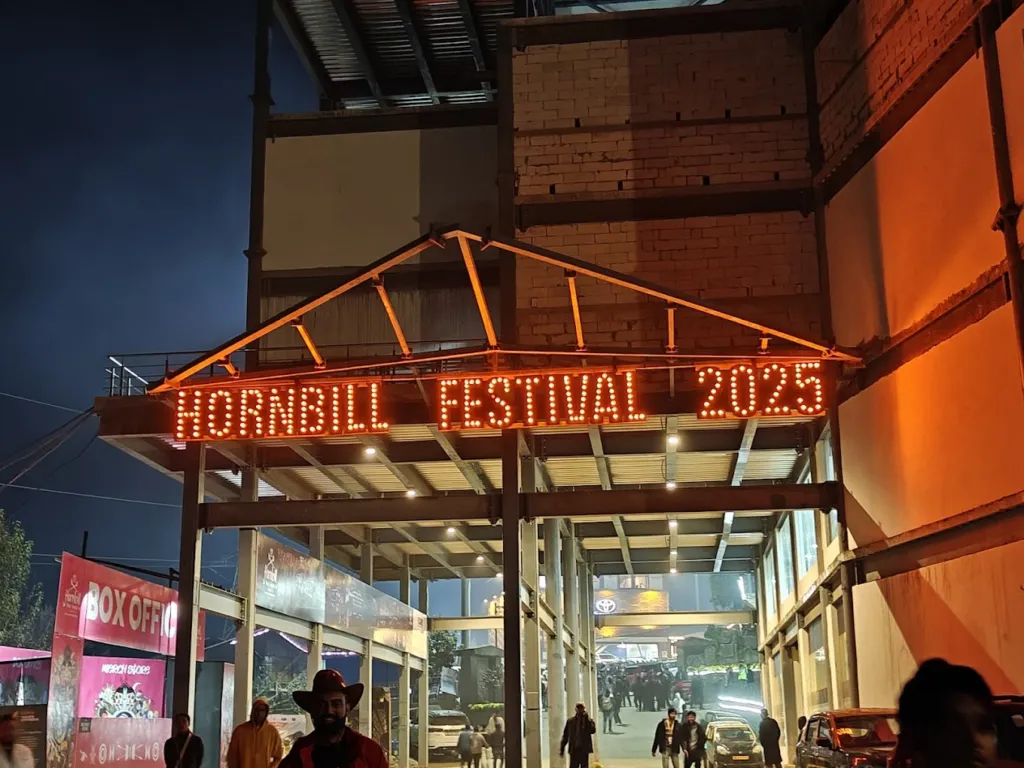
India's Northeast is a treasure trove for travelers. Beyond the stunning natural beauty the land provides, its people are some of the kindest, with humility woven into nearly everyone you meet. Around October, I began nudging my friends to consider a visit to Nagaland on the lines of the Hornbill Festival. The Hornbill Festival offers a full immersion into traditional Naga culture, with its vibrant food, music, tribal performances, and more. For someone who had never been to Nagaland - a destination often overlooked by most tourism portals- it felt like the perfect opportunity!
The Hornbill Festival typically runs from the last week of November to the first week of December. We got a decent package from Zo Trips (a subsidiary of Zostel, the hostel agency) for exploring Hornbill and Nagaland, between 5-11 December. This included passes for the Hornbill Festival entry, besides a one-night camping at Dzukou valley. Dzukou was the star attraction, but more on that later. The plan was now set in stone, and we were all looking forward to a great start. Until chaos struck.
Reaching Nagaland
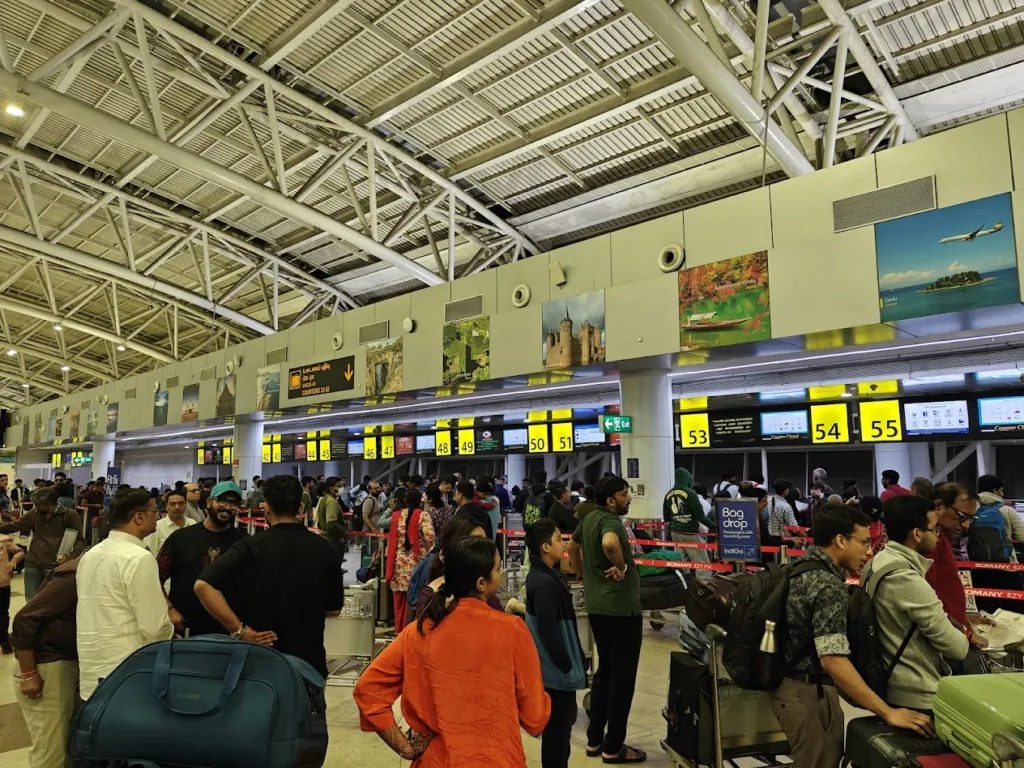
Owing to India's widespread aviation disruption between December 3 - 5, my flight to Guwahati - a gateway to many of Northeast's provinces - got cancelled at the last minute. I was already at the airport when I got notified that my flight was affected due to IndiGo's operational meltdown. As dejected as I was at that moment, I had a steely resolution to not let the untoward disruption affect my plans. I booked an alternative Air India flight the next morning out of Chennai for Guwahati, while still at the airport. I had no idea of how I would make the rest of the journey, but here I was.
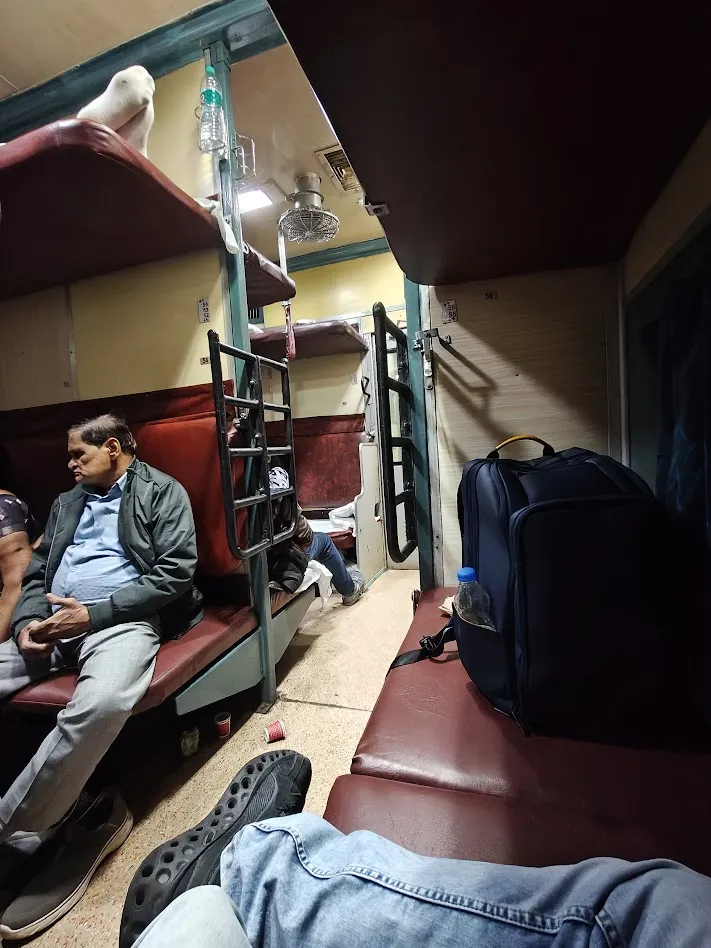
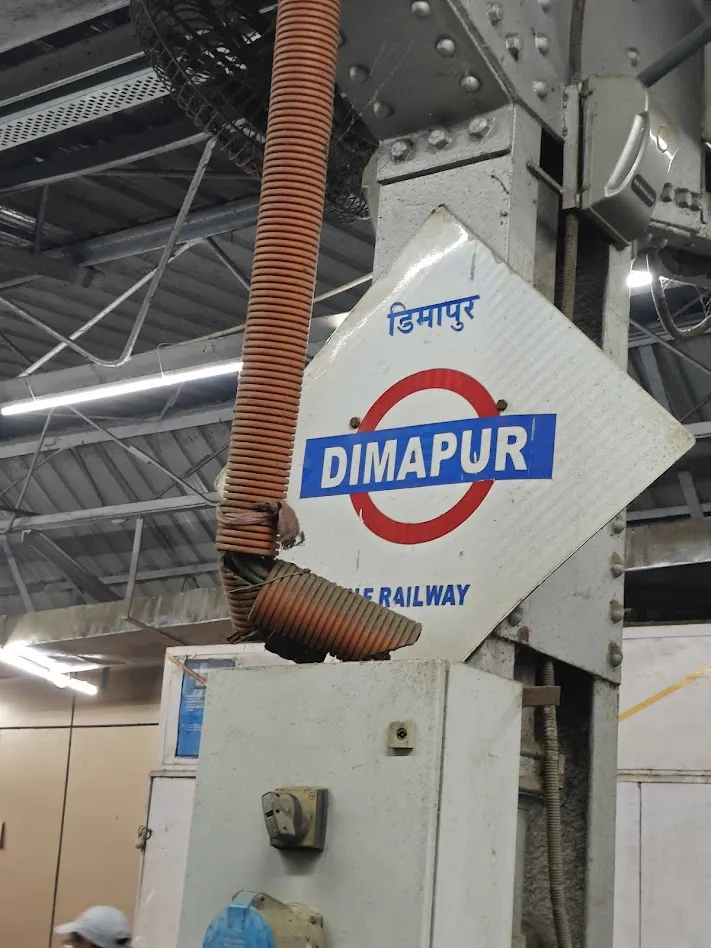
The rest of the co-travel group, barring a few who had got afflicted like me, had made it to Guwahati the evening prior. Therefore, they left for Dimapur on-road from Guwahati on 5th. The original plan was to take a night halt at Dimapur and then proceed towards Zakhama the next day. Zakhama is a quaint little village on the outskirts of Kohima town, which serves as the political capital. However, now that I was a day late - I had to figure out both, the journey itself, and play catch-up to reach Zakhama. Given a solo road journey would be extremely expensive - you have to pay a 'return' fee too (besides being boring), I was relieved to find that Indian Railways had a direct train from Guwahati to Dimapur! I booked myself a Premium Tatkal ticket on the BG Express.
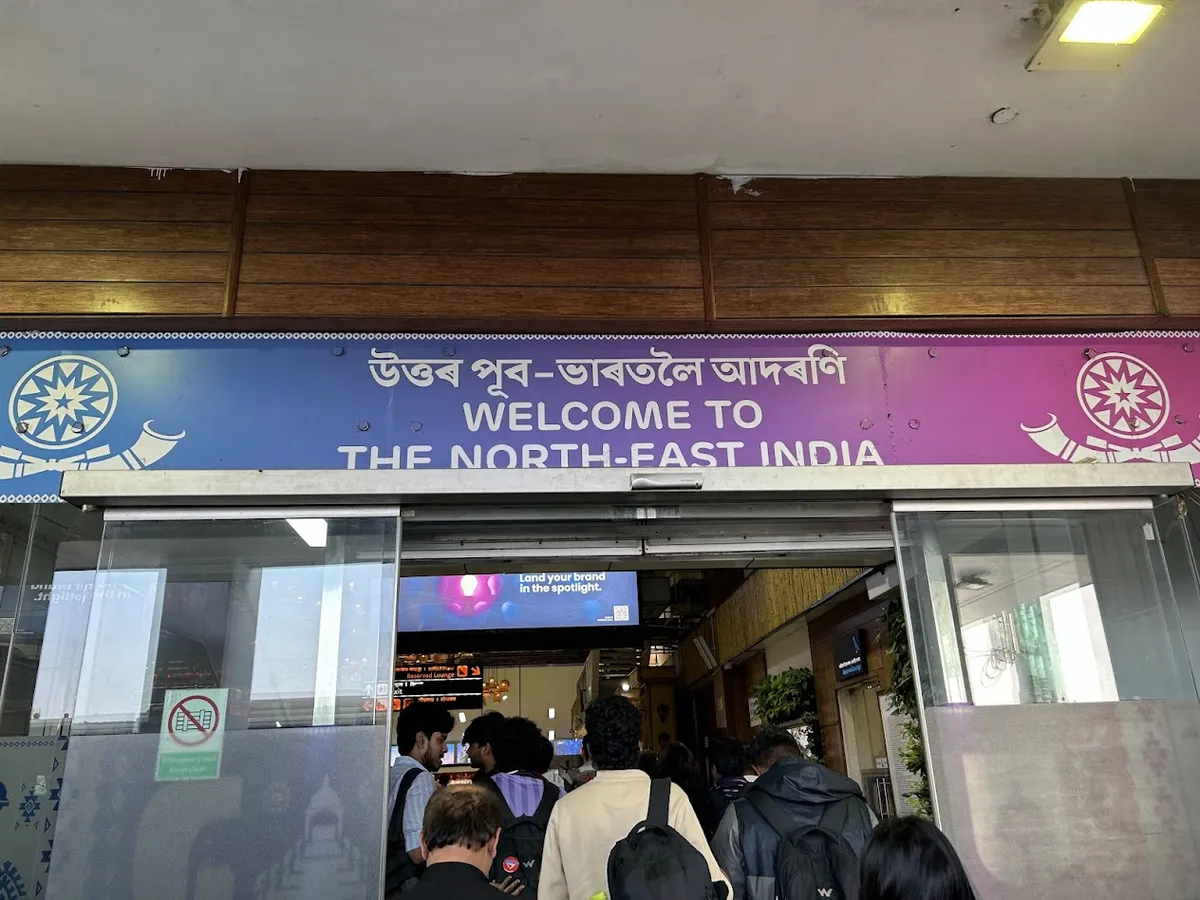
Come next day, the Air India Express flight fortunately took off on time and landed around ten in the morning at Guwahati. I had some time until the train, so I got myself a good lunch at a city cafe. Aboard the train, I met many from Assam, or areas bordering Nagaland. We had some great conversations, and one of my co-passengers was kind enough to give me a primer on what to expect at the festival. I was already excited, being so close to reaching my final destination. Once at Dimapur, I hired a taxi service that took me all the way to Zakhama. Effectively, my travel spanned across rail, road and air, and all of this in less than twenty-four hours. Quite a day.
A rather simple dinner at the homestay (Athuo Homestay, Zakhama) to close the night, tasted heavenly by all measures. Straight off to bed, with my excitement unbounded at what was coming ahead.
Exploring Zakhama and Hornbill Festival
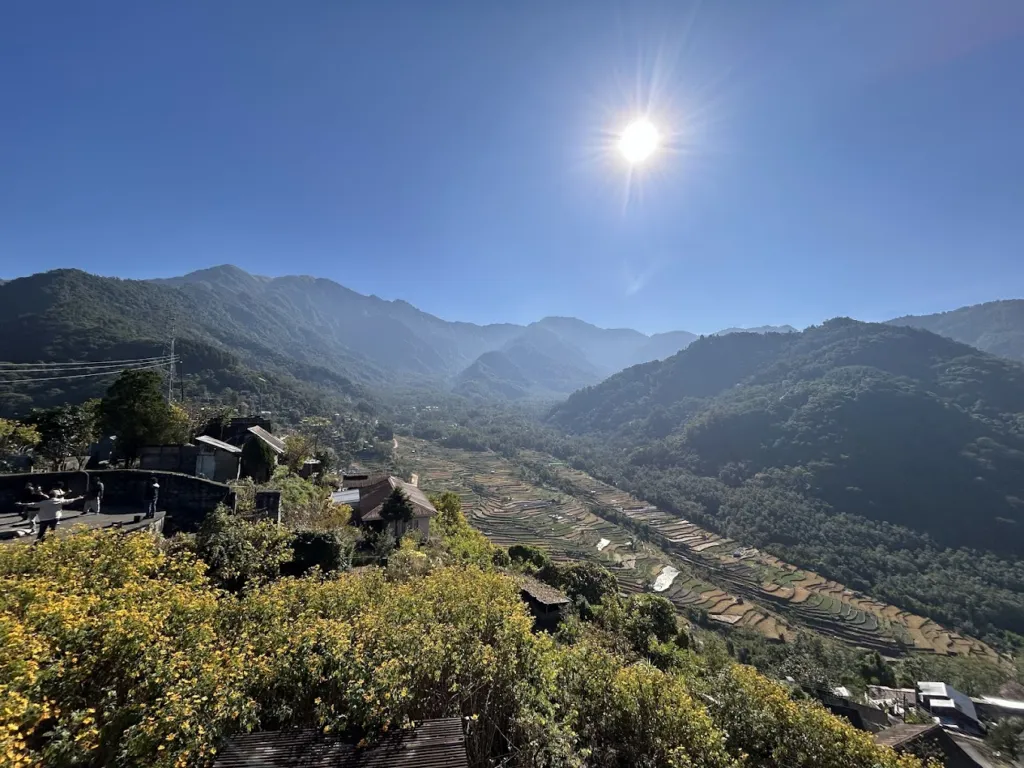
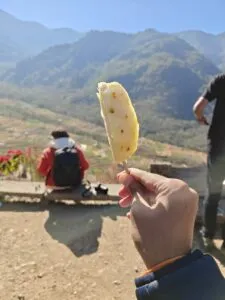
Early next morning, we started for Khonoma, a village nearby Zakhama. Khonoma offers spectacular views from an altitude overlooking a valley. It was an hour-long journey from Zakhama, but I was struck by how beautiful this small village was. There was Cherry Blossom all over; and the picturesque surroundings were all that I had hoped for. And take my recommendation: wild pineapples are the best!
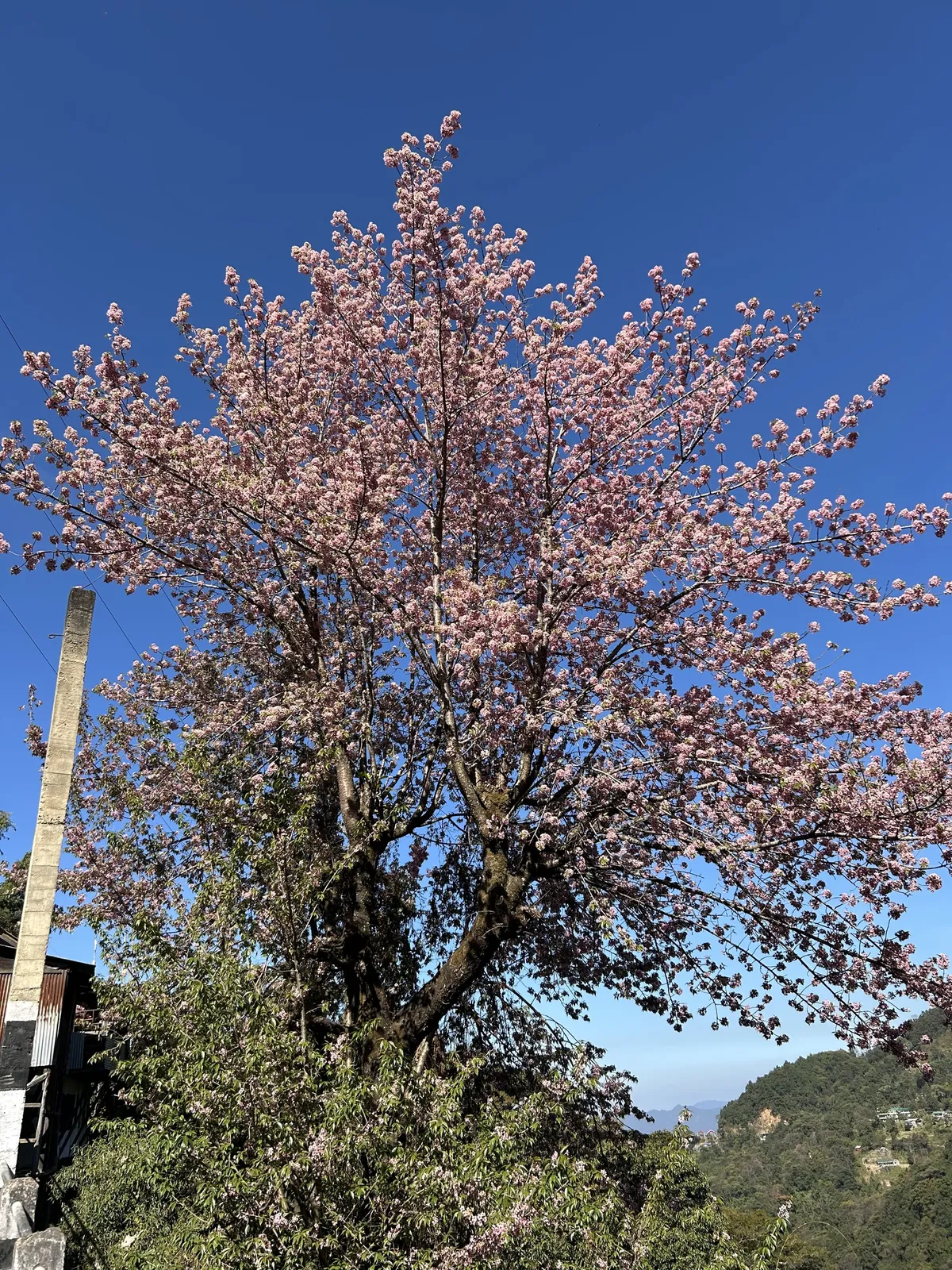
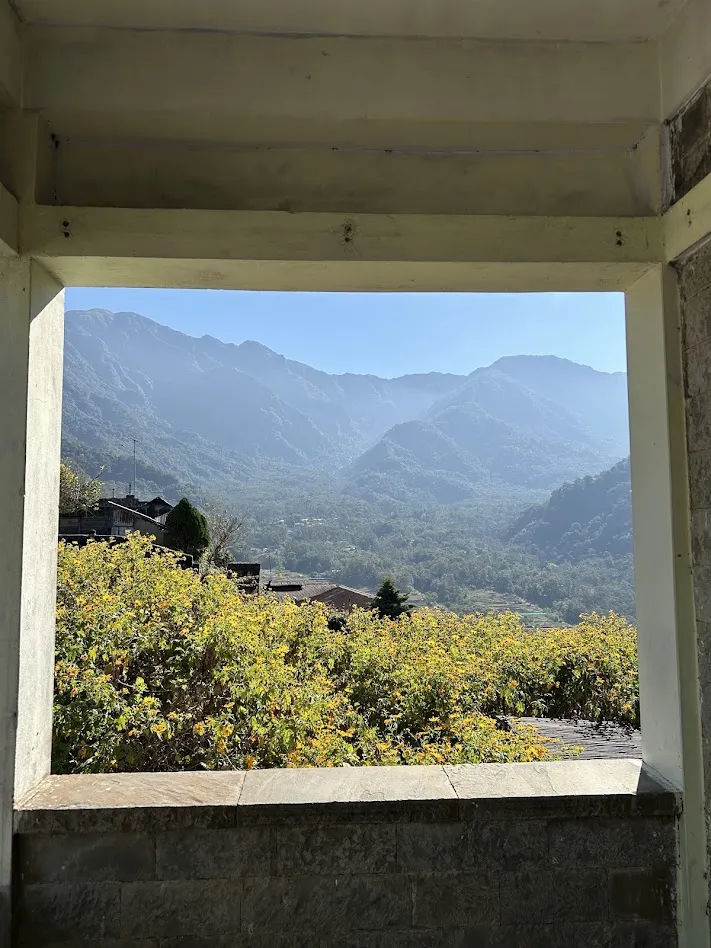
From there, we headed towards Kisama village, where the Hornbill festival was being celebrated. Kisama during this time of the year is a vibrant place to be, with enthusiasts from all over the country congregating to celebrate the Naga culture. It is a beautiful blend of shared passion and a zest to explore, that made our visit quite memorable.
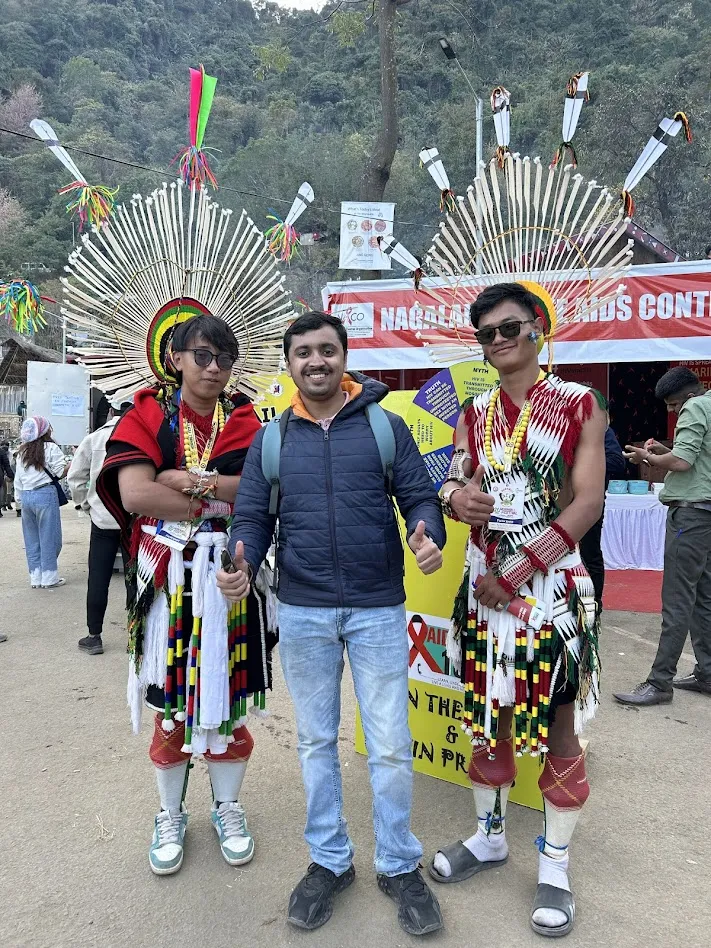
The event is structured around a central stadium with gallery seating, where the majority of the events take place. This stadium plays hosts to tribal dances and performances in the morning, and metamorphoses into a full-blown concert experience by the evening. The stadium is guarded by layers of Naga morungs (huts) that house the different tribal communities. Each segment is demarcated for stalls that these communities set up for the visitors, either to sell merchandise or to share a taste of their cuisine. Speaking of which, there is an immense variety in the spread that they offer! Besides essentials, these stalls offer a chance to taste Mithun meat (Indian Bison), grasshoppers, fried silkworms, and even dog meat. For the sake of propriety, I'll share some photos of me having Roselle Tea (Hibiscus Tea) and the traditional Rice Beer, which was surprisingly really good.
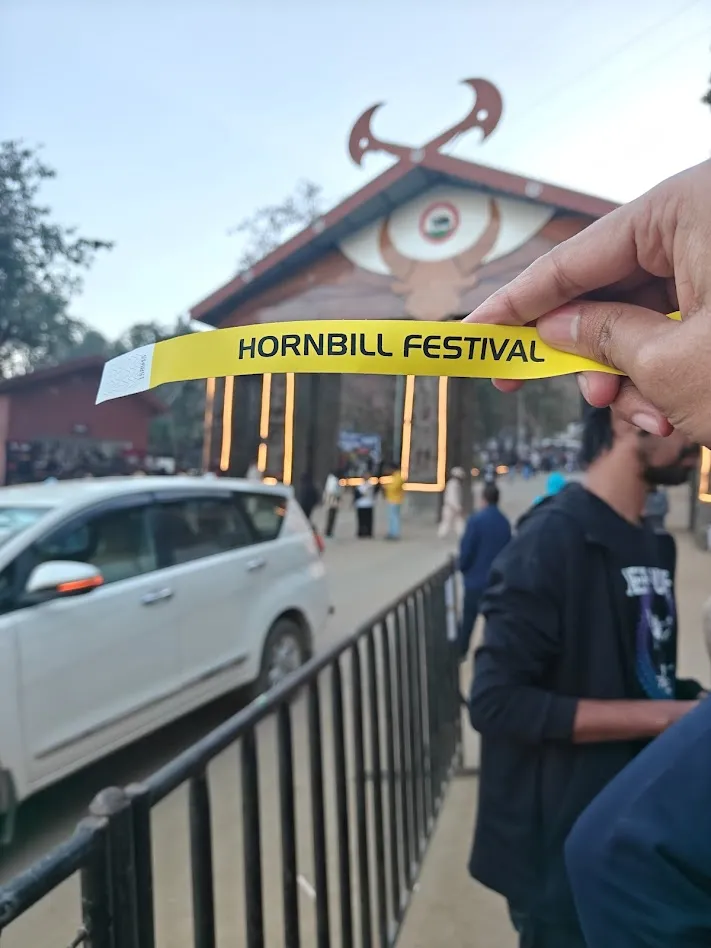
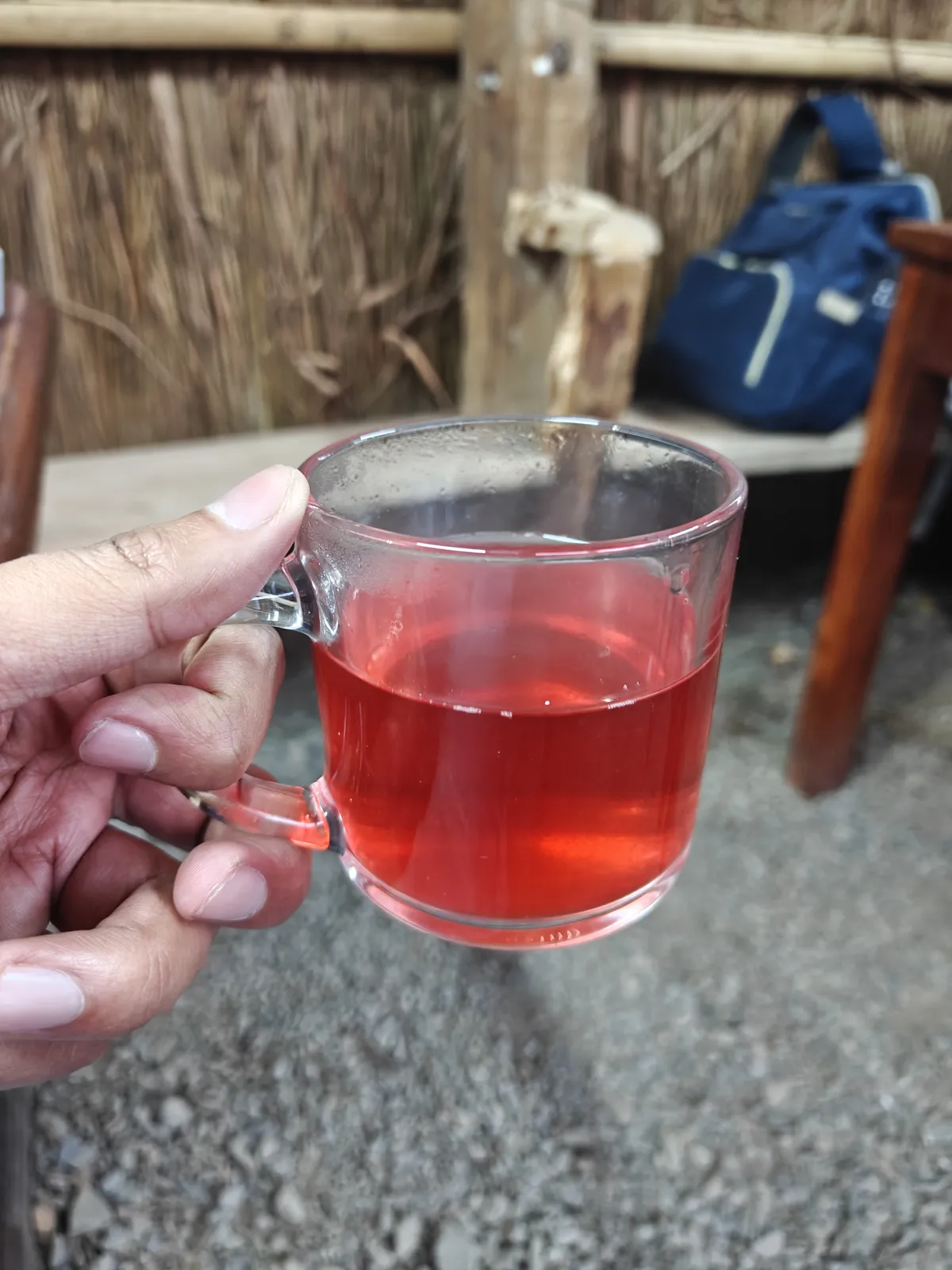
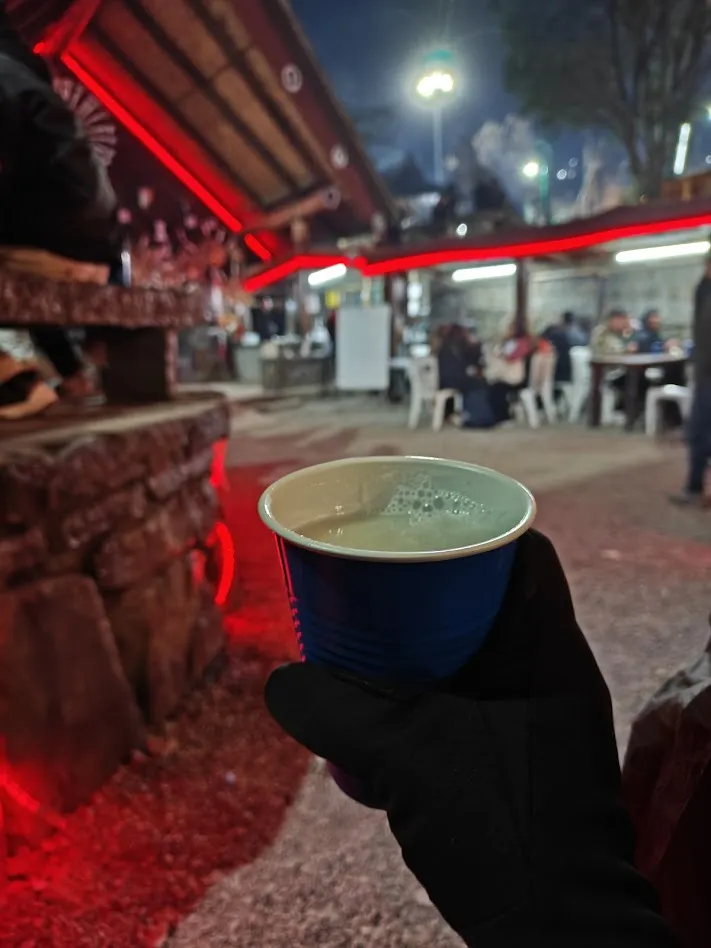
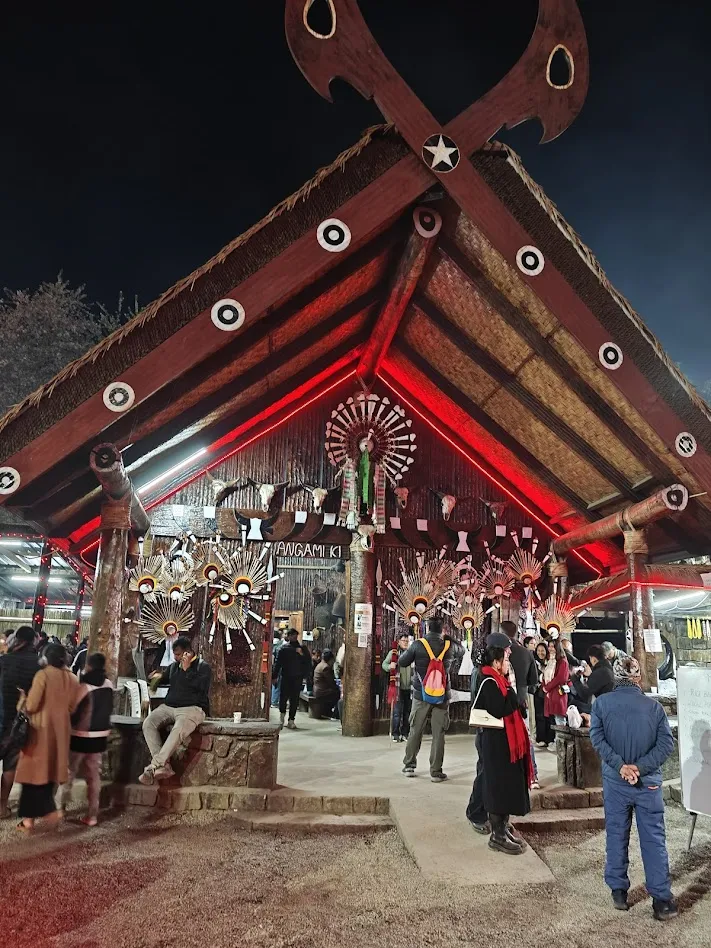
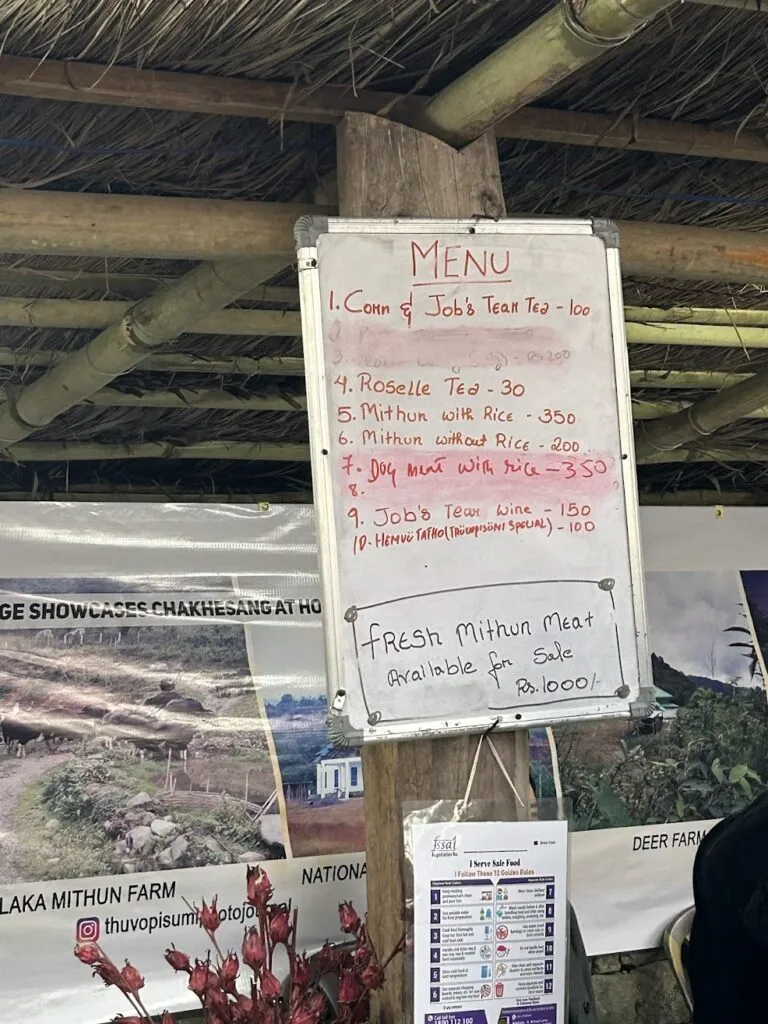
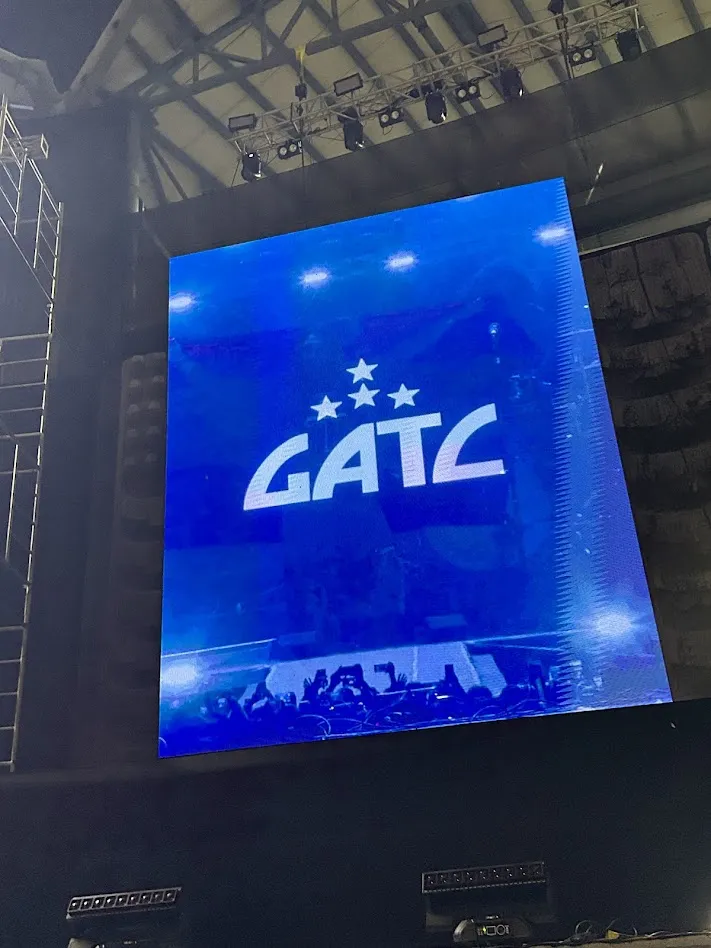
We were also looking forward to the much-awaited concert experience at the Hornbill. This year, the musical performances were sponsored by Spotify India. Honestly, it was refreshing to see a big name championing indie talent. Not every corporate takes that leap, but Spotify nailed it. The lineup included local talents like KL Pamei, and other artists/bands such as Gingerfeet, Temsu Clover & the powerhouse band, Girish and the Chronicles (GATC). Thanks to the event, I discovered a good set of new artists that I've now been obsessing over. KL Pamei, surely, tops that list!

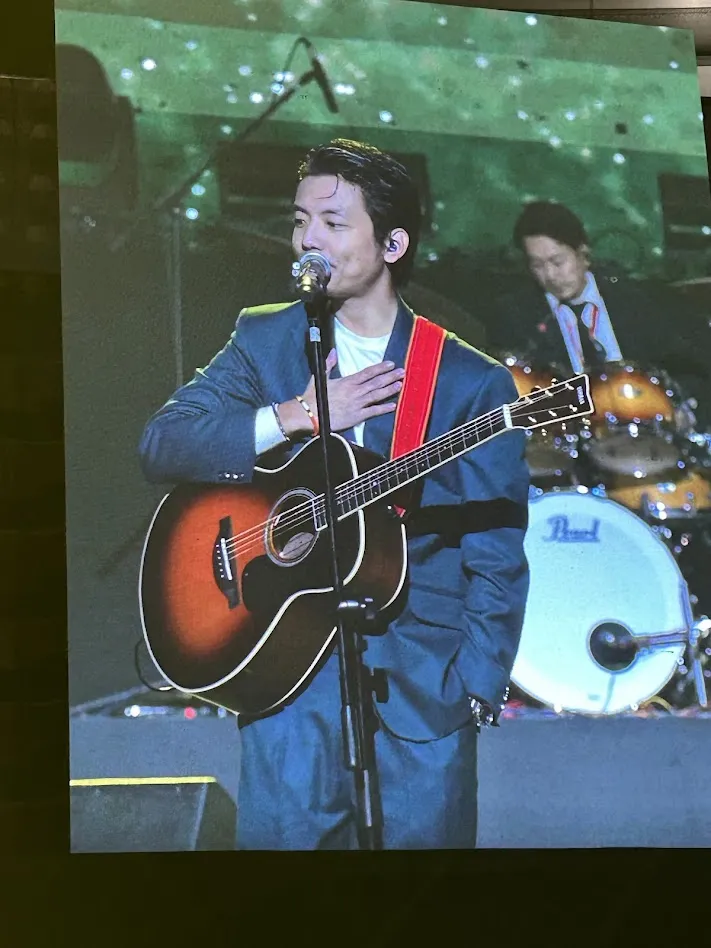
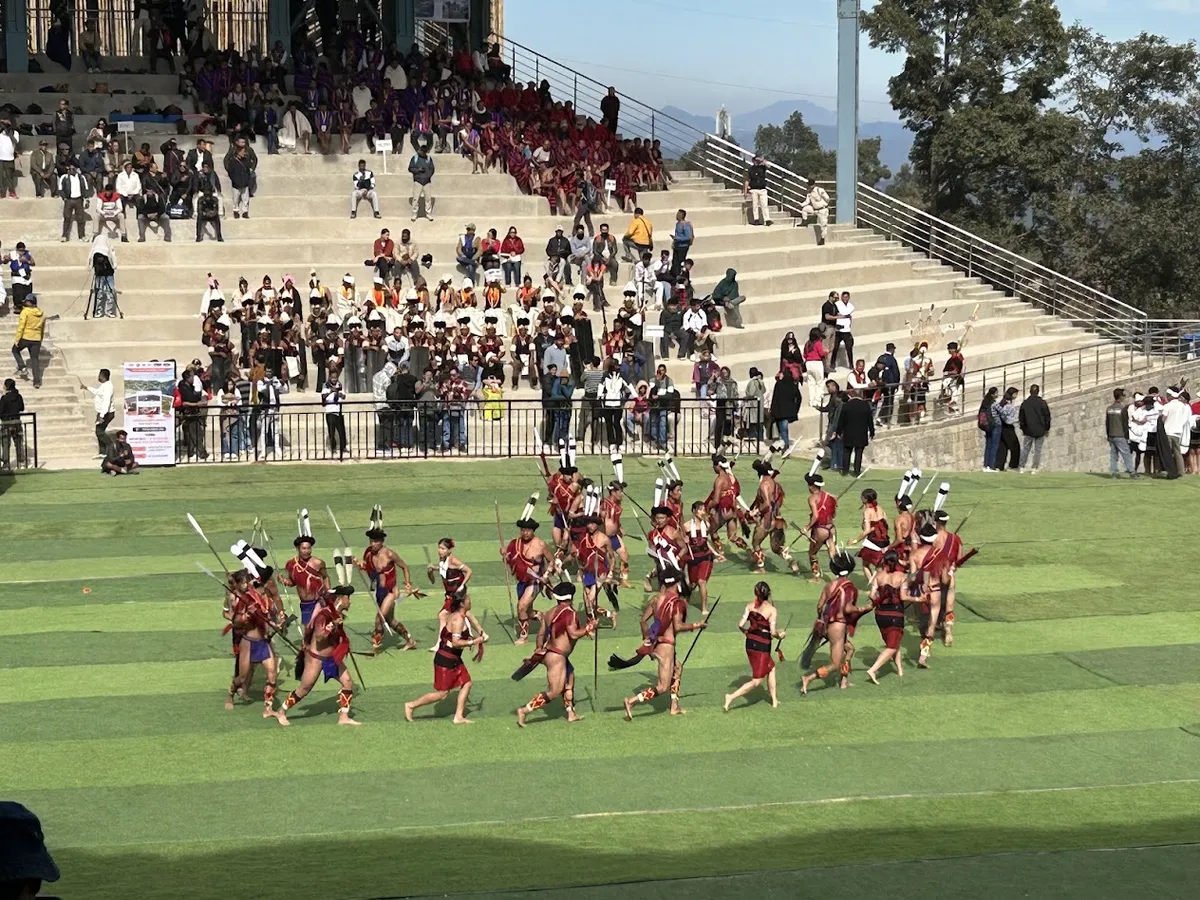
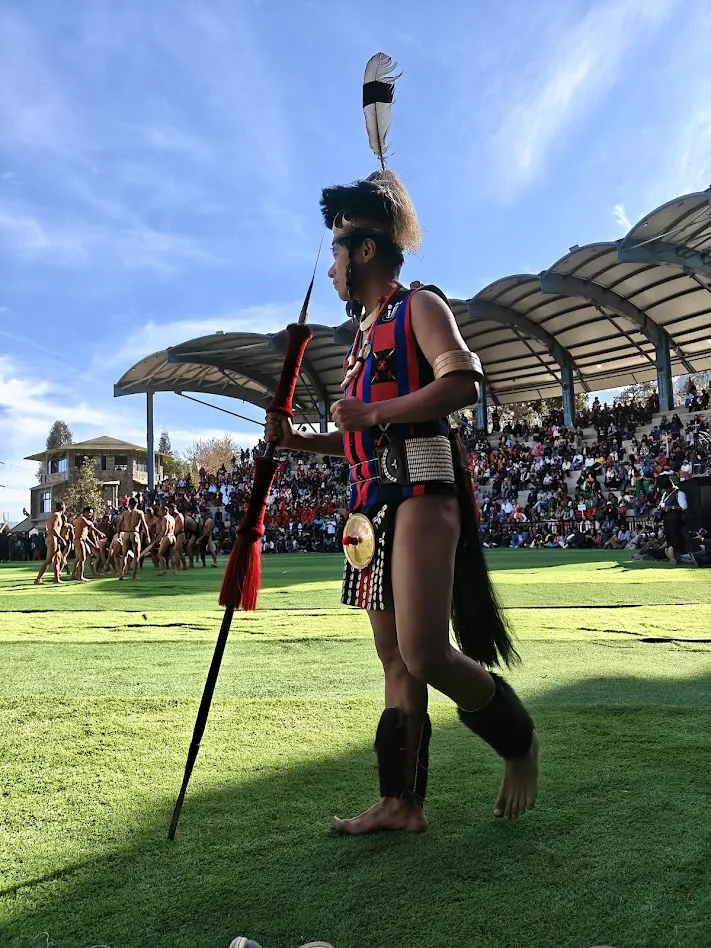
We were in for an absolute treat the next morning as the tribal celebrations were scheduled for the first half. Men and women adorned their colorful traditional wear with pride and represented their groups, which included the Ao, Angami, Chakhesang, Konyak, Phom, and many more. These performances included their war cries, games and dances. It was spectacular to experience a slice of the culture of such tribes.
It happens to be fairly chilly during December in Nagaland, and given it is centered on India's eastern longitudes, sunset dawns eerily fast. And with that, the temperature swoops down unlike anything I've seen before. I'm not lying- around 3PM, the temperature hovered around 16C. At 5, and it had come down to 9C! To battle it out, we went for another round of exploring the Naga cuisine and chugged some more rice beers along the way. We travelled back to Zakhama, gearing up for what would be the most exciting part of the journey yet the next day.
Uncharted Territories: Dzukou Valley
If I have one takeaway from the entire Dzukou trek, it is this: in life, higher the risk, higher the reward. Perhaps nothing summarizes the Dzukou experience better than that.
Next morning, having got done with our breakfast, we anticipated to travel to the trek point where the hike starts towards the valley. None of us had a slimer of idea on how challenging this trek would be, both physically and mentally. That is when reality hits you; our first introduction to the trek was this 'van' pictured below - more like the ones used to ferry cattle. The roads are so bad on the approach, that only such bare-bones vehicles can make it through. Lo and behold, we were on our way!
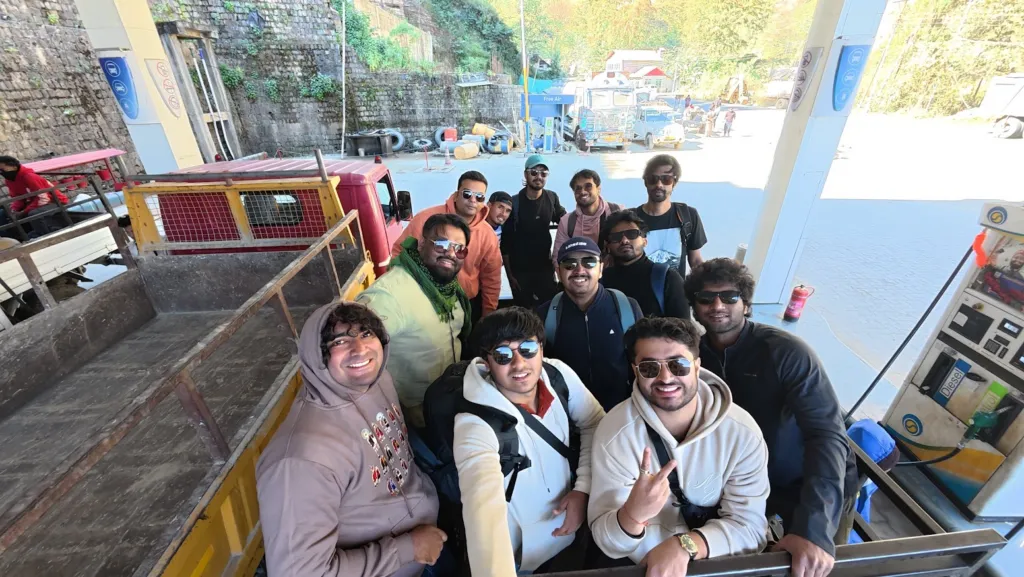
It was a wild ride, with us ducking and dodging obstacles- like low-hanging branches - every few meters while in the van. But if we thought that was tough, we were in for a surprise. Once we reached the trek point, we began our uphill climb.
Minutes passed, and the slope only grew steeper. We paused now and then to catch our breath, but the real challenge came soon after: an endless spiral of rough, steep stones that demanded every ounce of energy to conquer. It was exhausting, and even the fittest would agree it was no easy feat. The path kept getting steeper with each landmark we passed, and at some points, we had to rope-climb over rocks because there was simply no other way forward.
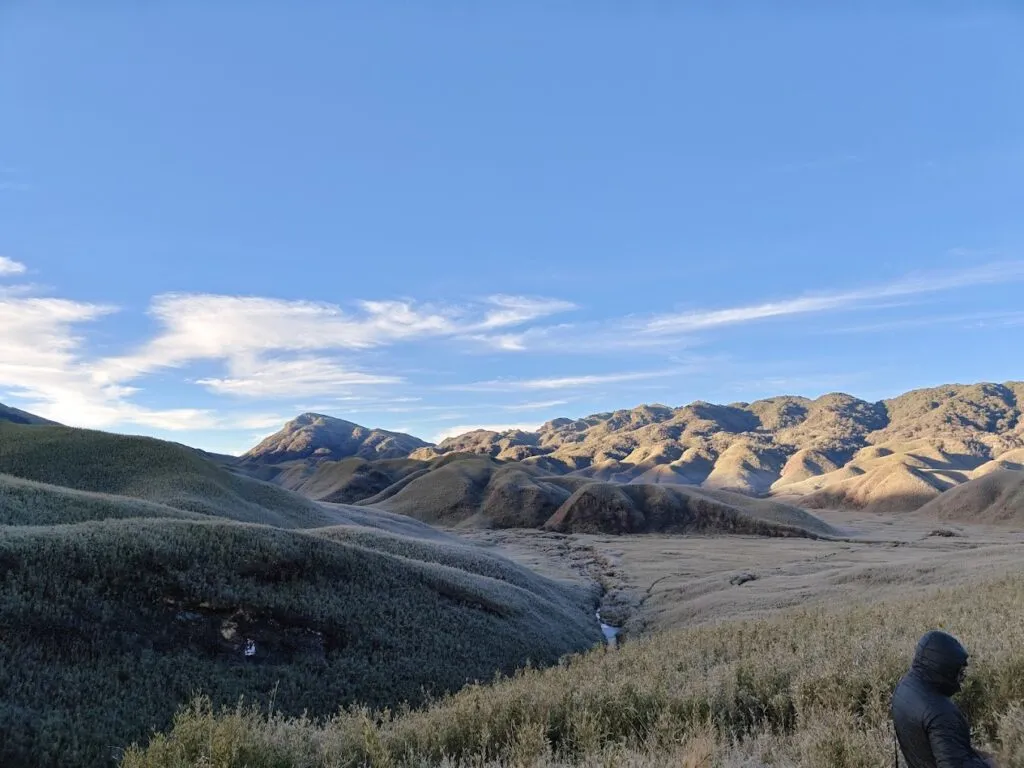
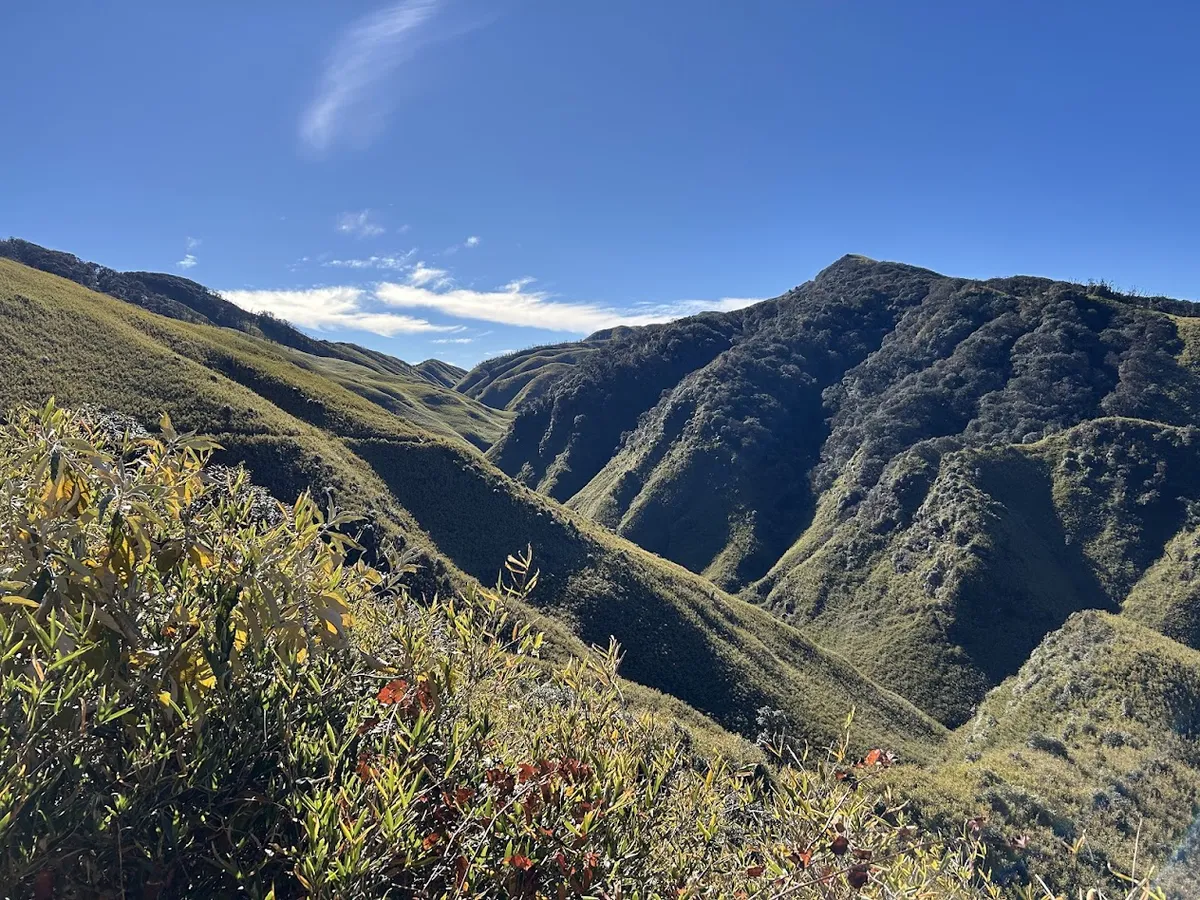
All of the efforts paid off soon, as we completed the steep ascend section of the trail, and were now headed for several kilometers (read eight) of trekking along bushes and valleys. The views, already alluring, started to get even more surreal with every milestone covered.
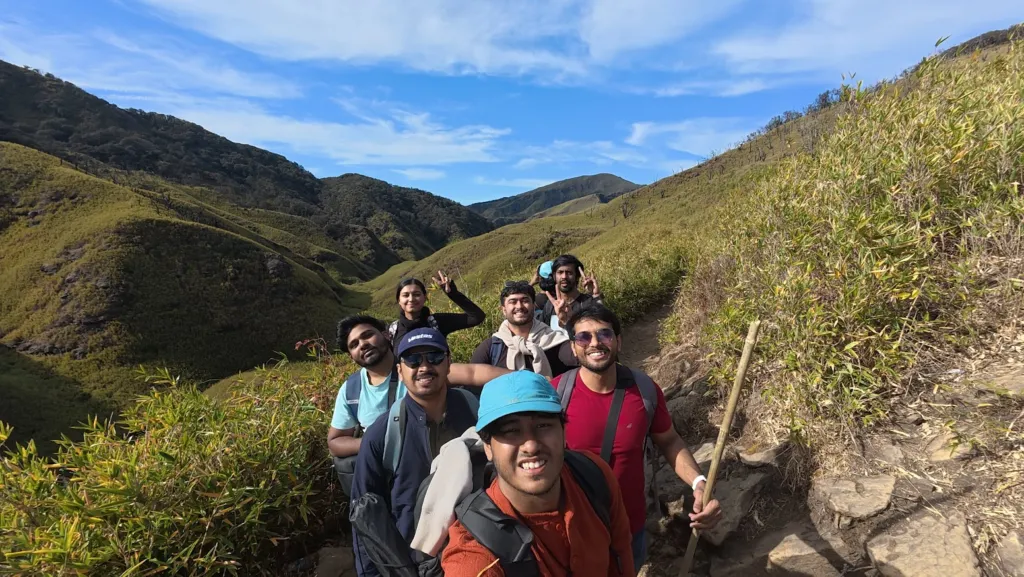
We kept marching ahead, determined to reach our base camp with every passing stride. Although the valley is lush green during the monsoons, it is harder to cross the stretch then due to a lot of slush and leeches that abound in the season. Comparatively, in the winters, the valley is amber green but has a lot more walkable route. After another couple of hours, we finally made it to the base camp!
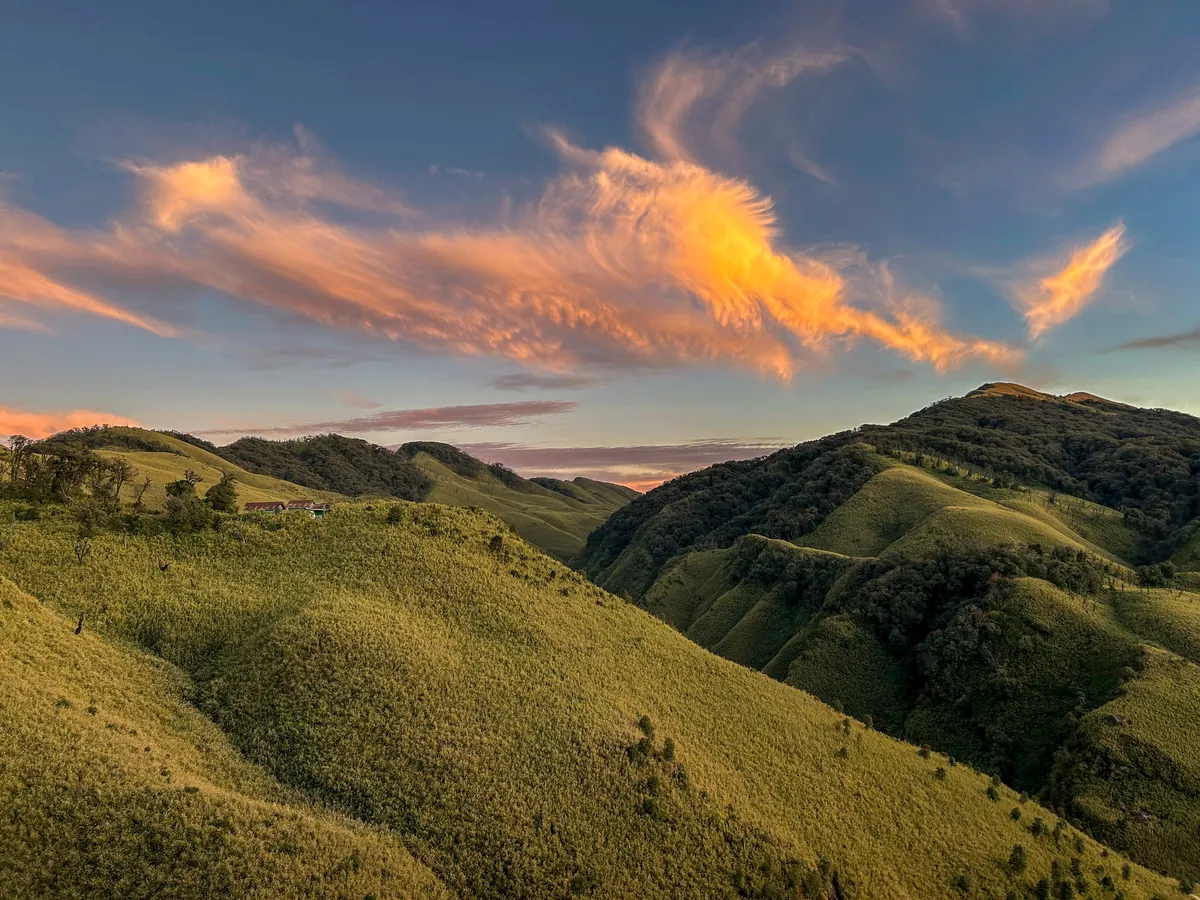
The evening glow was absolutely unreal. The infinite, undulating valleys of the Dzukou presented themselves in perfect order, with cirrus clouds providing the cherry-on-the-top finishing.
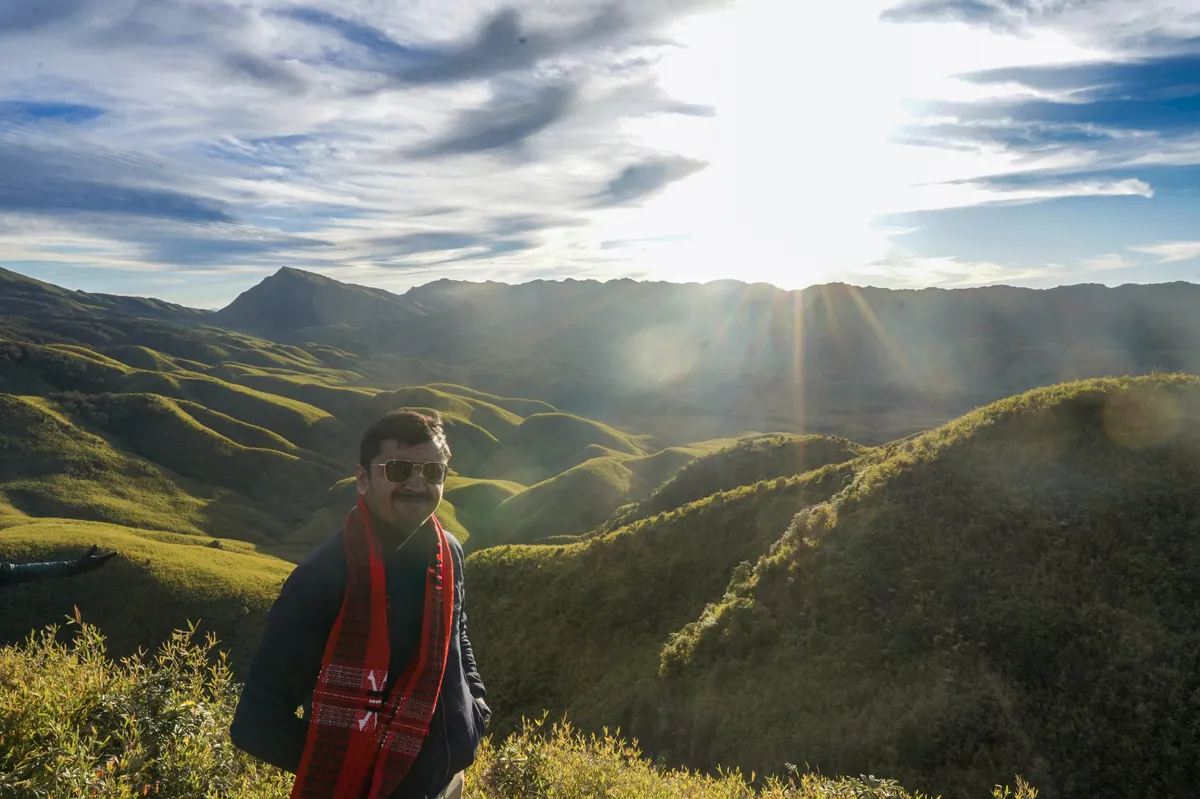
What followed was even better. With clouds being sparse and having dissipated for the most part, the heavens opened up their ethereal beauty. We could spot bands of the Milky Way and all of the major constellations, such as the Orion, or the Pleiades star cluster, the red giant Betelgeuse, and many more.
The Dzukou base camp, owing to its remote setup, has very minimal facilities. It even had an acute water scarcity when we reached, for which I had to survive with less than a litre of water for the day. As they say, when life gives you lemons, the best you can do is to make a lemonade! Despite all the challenges, there is a small kitchen hut from which dinner was served for all trekkers who had camped at the site for the night. Hot steamed rice, daal and a soyabean curry was on the menu. It was devoured instantaneously, given how hungry our stomachs were after an undoubtedly arduous day.
Around 8PM, I retreated into my tent. It was a tough night, and the cold felt like it pierced through the several layers I had donned. Next morning, the plan was to leave our camp at five in the morning to trek downwards to the bottom of the valley, which takes another hour. So, after getting a good nights' rest (or whatever we made of it), we left for the trek to the bottom of the valley.
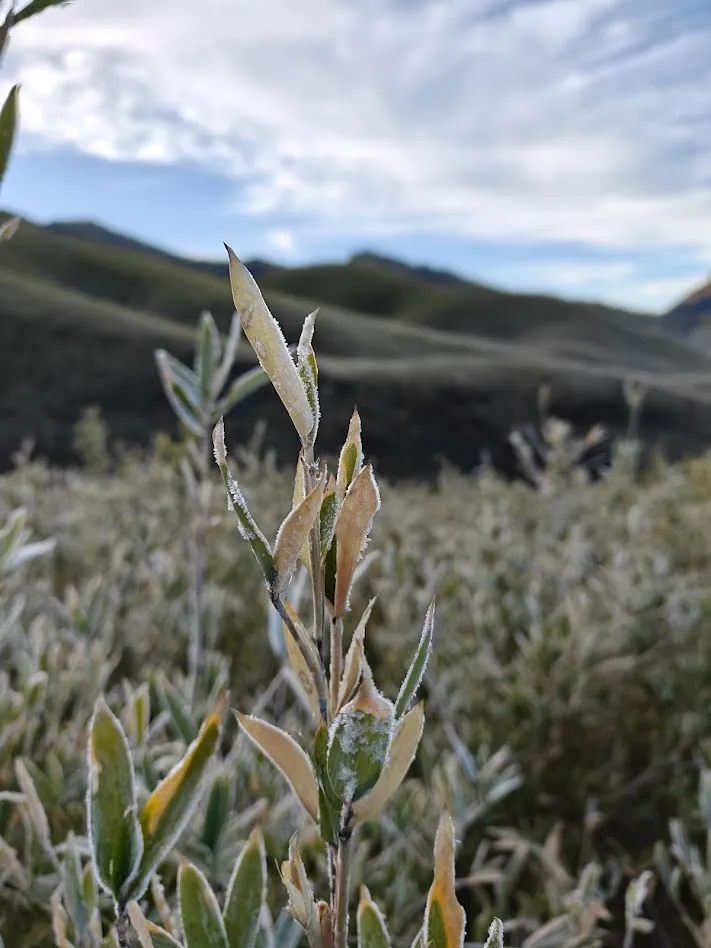
The sights kept getting better. The whole valley had a layer of frost to itself, due to the temperature inversion principle (thank god I remember geography!). It was incredibly cold, amplified by the frost all around us, but these are truly rare sights in what is mostly an untouched place.
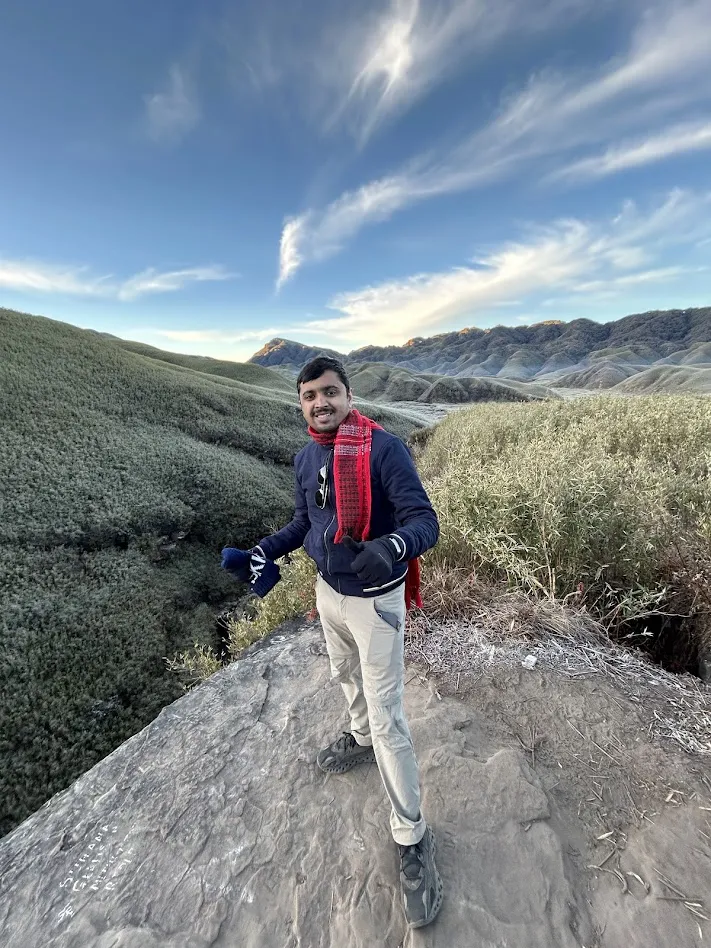
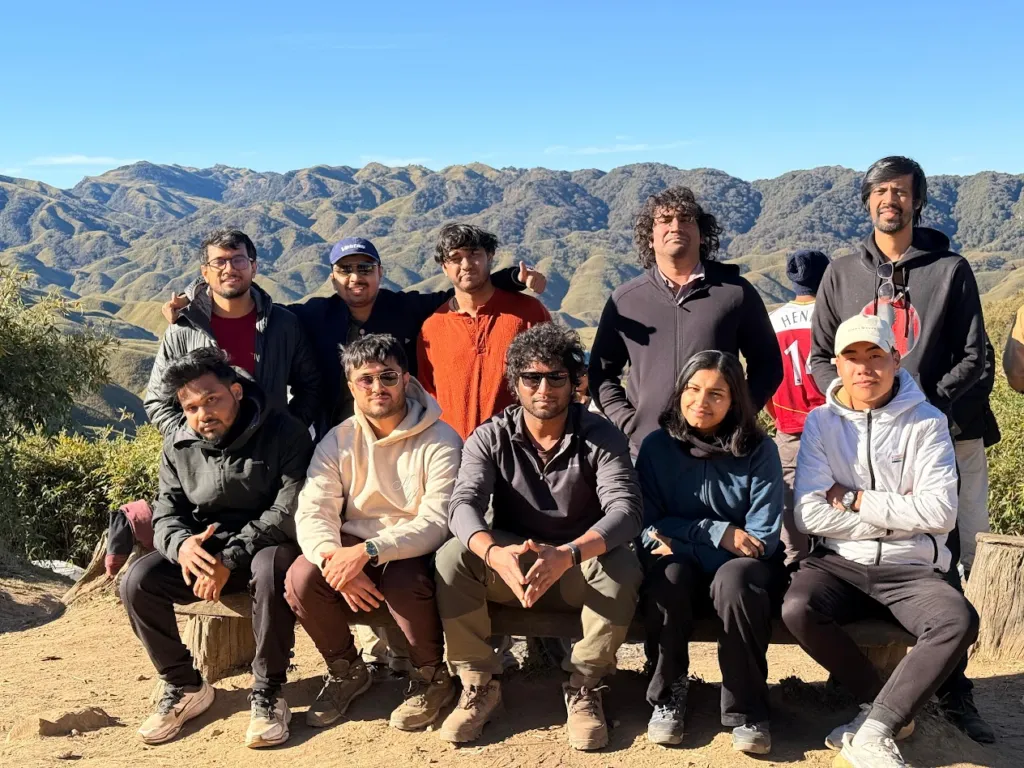
We hiked back to our base camp post our early morning adventure. After getting some protein bars for breakfast from our own reserves, we had to bid a goodbye to this beauty of a place. After getting a team click done, our legs had to carry us for another day worth of toil. I'm grateful my legs kept functioning till the end - a solid testament to why essential fitness matters.
All along the way, I kept thinking about the challenges we faced and how we still made it through. Maybe this is what life's all about! We often run into situations that seem impossible, but with a minute shift in perspectives, even the tallest mountain can be climbed. As the sun shone steadily on us during the descent, I took one last photo of the valley.
Reflections and thoughts
With Dzukou done, we wrapped up the Nagaland segment of our tour. My friends and I extended the trip with a visit to Meghalaya, but it was one we did in a very compact timeframe. I'll probably keep Meghalaya for a later chapter in the blog.
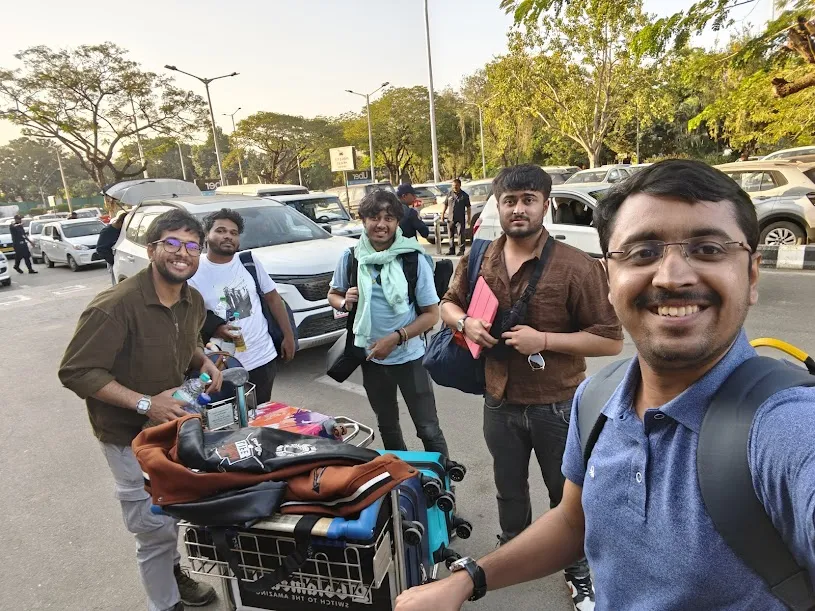
Nagaland was a revelation in every sense of the word. When I interacted with people cutting across socioeconomic boundaries, it was heartwarming to see the simplicity and humility with which they lead their lives. Sure, the state may not lead on HDI indicators, or the prosperity indexes. Yet, everyone is happy, their families still their primary social unit, and their communities a reinforcing support framework. Young Nagamese people are not afraid to take strides both domestically and globally, and aspirations have outpaced adversities.
My escapades can perhaps be encapsulated in what Rahi Masoom Raza beautifully penned:
Is saafar mein neend aise kho gai;
Hum na soye, raat thak kar so gai
On this journey, sleep deserted us;
we stayed awake while the night dozed off.— Rahi Masoom Raza
Travel experiences like these remind us of the value of staying grounded. Life in a metropolis often feels overwhelmingly complex, pulling us into a cycle of self-indulgence, inflated egos, and a maze of behavioral intricacies. Yet, when I witness how people in remote regions like Dzukou live, or how the sixteen Naga tribes coexist harmoniously despite their differences- it strikes a chord deep within. There's a quiet lesson in simplicity and unity that feels profoundly moving.
My mother says that India has everything you need to visit, all within the periphery of one national boundary. I couldn't agree more! Let your next travel be to places that make you discover the diversity of India's people, culture, cuisine and climate.